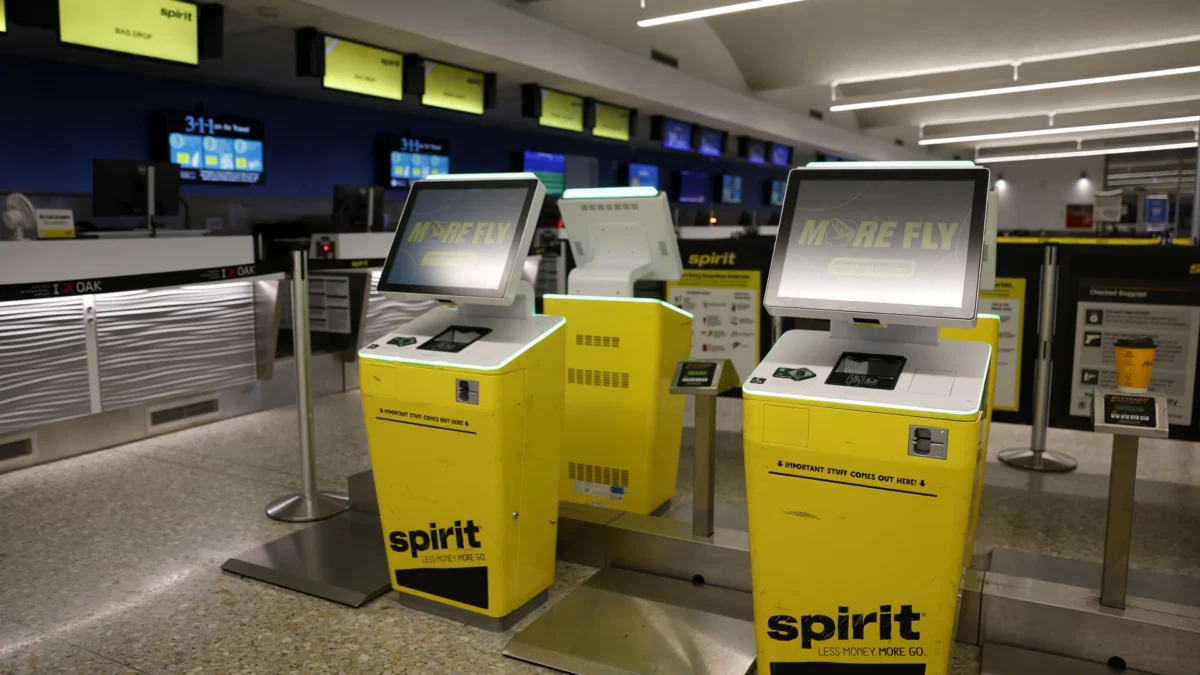
Spirit Airlines, a prominent budget carrier recognized for its distinctive yellow aircraft and a business model built on low base fares supplemented by numerous fees, has ceased all flight operations. The airline's abrupt shutdown follows its failure to secure a critical financial lifeline, ending its tenure in the skies. This development results in the loss of approximately 17,000 jobs and removes a significant volume of low-cost flight options from the market.
The airline's website now displays a message stating, "Spirit is winding down all operations," a stark contrast to the functioning booking homepage that was available for less than a day. This cessation of service leaves travelers holding Spirit tickets in a state of uncertainty. While the airline industry has seen closures in recent years, Spirit's scale and its extensive network connecting major U.S. cities such as New York, Miami, Detroit, and Los Angeles, along with numerous destinations across Latin America and the Caribbean, make its failure particularly impactful.
For passengers with existing Spirit tickets, the airline has stated that purchases made with a credit or debit card will be automatically refunded. The method of refund will be either a credit or a direct refund, depending on the original payment method. Travelers who booked their flights through third-party travel agencies are advised to contact those agencies directly to initiate refund requests. The airline also indicated that for bookings made using loyalty points, vouchers, or other forms of credit, the reimbursement process and timeline will be determined later as part of the bankruptcy proceedings.
However, industry experts express skepticism regarding the likelihood of compensation for those who used loyalty points or vouchers. Henry Harteveldt, founder of Atmosphere Research Group, a travel consulting firm, suggested that the chances of recovering value from such reservations are minimal. This outlook underscores the potential financial losses for a segment of Spirit's customer base.
Spirit Airlines has explicitly instructed its customers not to proceed to the airport. With the airline's thousands of employees now jobless, there will be no customer service representatives available at airports to assist passengers. This absence of on-site support could leave travelers with unanswered questions and logistical challenges. Nevertheless, other airlines have stepped in to offer assistance, including fare caps for affected Spirit passengers.
Several major carriers have announced measures to aid Spirit customers. United Airlines, JetBlue Airways, Frontier Airlines, and American Airlines are among those that have pledged support, mirroring their responses during natural disasters or other widespread disruptions. JetBlue, for instance, is capping one-way fares at $99 for affected travelers through May 6, provided they can show proof of a Spirit itinerary and call a dedicated reservation line. JetBlue is also offering a $299 fare cap on the Fort Lauderdale to San Juan route, a key corridor for Spirit, for new bookings made between May 1 and May 8.
Joanna Geraghty, CEO of JetBlue, highlighted the airline's strategic position in Fort Lauderdale and San Juan, enabling it to assist Spirit passengers and maintain affordable travel options amidst increased demand. Southwest Airlines has also implemented fare caps, setting domestic one-way fares at $200 for trips up to 500 miles, $300 for trips up to 1,000 miles, and $400 for longer journeys. These fares are accessible at Southwest's ticket counters. Additionally, Southwest is honoring Spirit's frequent flyer statuses and associated benefits, such as early boarding, for displaced Spirit customers.
American Airlines, Frontier Airlines, and United Airlines have similarly announced fare caps for Spirit passengers. Beyond passenger assistance, these airlines are also working to help Spirit's flight crews reach their home destinations. This coordinated effort among competitors aims to mitigate the immediate disruption caused by Spirit's sudden operational halt.
The underlying reasons for Spirit Airlines' shutdown are multifaceted. The carrier had faced significant headwinds even before this week's crisis. A proposed acquisition by JetBlue was ultimately blocked, removing a potential avenue for survival. The airline's business model was further strained by rising operational costs, which proved difficult to absorb. Compounding these issues, an engine defect led to the grounding of dozens of its aircraft, impacting its capacity and schedule reliability.
Broader market trends also played a role in Spirit's decline. The increasing popularity of premium and upscale travel among consumers has shifted demand, potentially reducing the market share for ultra-low-cost carriers. Simultaneously, legacy airlines began offering their own basic economy fares, which, while stripped down, provided a comparable price point to Spirit's offerings but were backed by larger networks, enhanced amenities like Wi-Fi and complimentary food, and access to airport lounges.
Spirit's financial struggles were evident prior to its final shutdown. The airline filed for its second bankruptcy in less than a year, signaling deep-seated operational and financial challenges. The attempt to secure a $500 million government bailout from the Trump administration, facilitated through bondholder negotiations, ultimately failed to materialize, pushing the airline toward liquidation.
Looking ahead, the exit of a significant low-cost carrier like Spirit is expected to influence airfare prices. Industry analysts anticipate a potential increase in fares, at least in certain markets, despite Spirit's recent efforts to scale back its operations. The vacuum left by Spirit's routes and capacity is likely to be filled by other airlines.
In response to Spirit's bankruptcy filing last year, other airlines had already begun increasing flights on some of Spirit's former routes and at major airports. This trend is expected to accelerate. JetBlue, for example, plans to operate its most extensive schedule ever out of Fort Lauderdale this summer, with 130 daily departures, a 75% increase compared to the previous year. The airline is also expanding its service from Fort Lauderdale to new domestic and international destinations, including Barranquilla and Cali in Colombia, Baltimore, Charlotte, Detroit, Chicago, and Houston.
The shutdown of Spirit Airlines marks the end of an era for a carrier that redefined budget air travel for millions of passengers. Its absence will undoubtedly reshape the competitive landscape of the U.S. airline industry and impact travel costs and options for consumers.


