SpaceX’s IPO shattered records on its first day of trading, lifting the rocket and AI company to a valuation above $2 trillion as its shares jumped 19%. Listed on the Nasdaq under the SPCX symbol, SpaceX closed at $160.95 after offering more than 555 million shares at $135 each, totaling roughly $75 billion raised and marking the biggest IPO in history. The debut underscores investor appetite for AI-enabled space platforms and signals continued capital deployment toward space-based infrastructure despite questions about profitability.
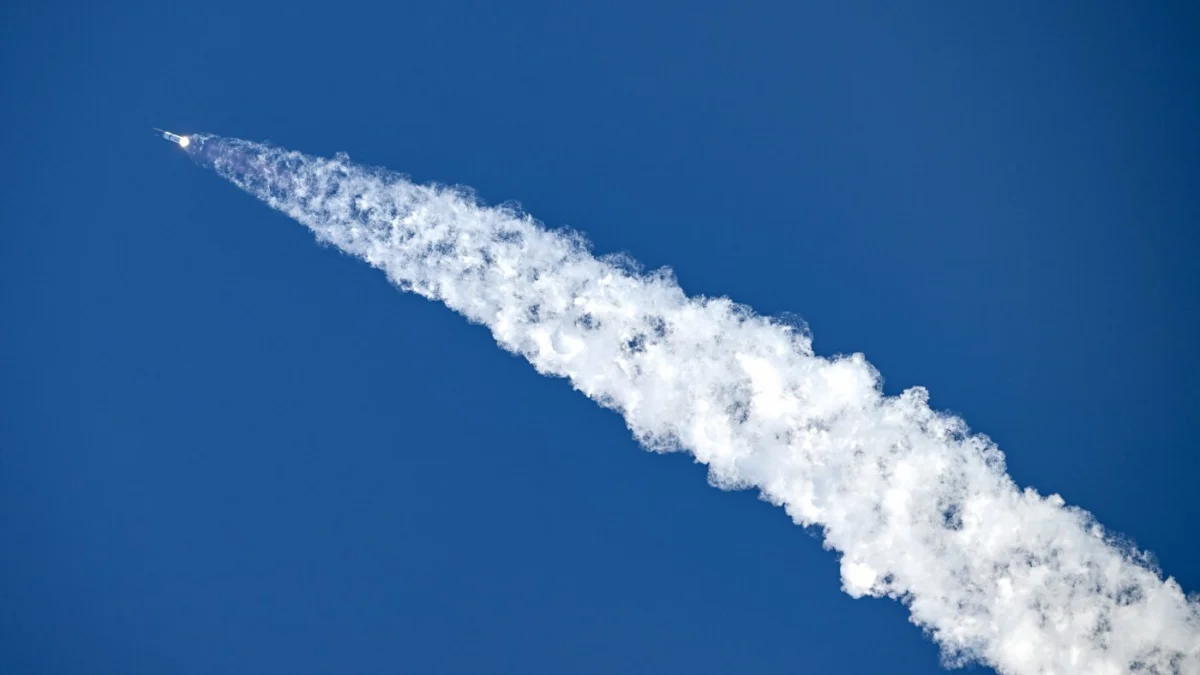
To punctuate the milestone, a SpaceX Falcon 9 rocket launched from Starbase, Texas, about an hour before the market opened, delivering Starlink broadband satellites on what was reported as the 650th flight by Spaceflight Now. At the Nasdaq ceremony, SpaceX’s leadership helped usher in the moment: Musk appeared from Starbase with a speaking role as executives including President Gwynne Shotwell and Chief Financial Officer Bret Johnsen rang the opening bell in New York. Musk remarked on SpaceX’s ambitions to reach the Moon, Mars, and beyond, and recalled his early days when he says he was told SpaceX had less than a 10% chance to succeed, a sentiment he said he shared with others who urged persistence for the sake of space travel advancement.
The company’s prospectus shows it is not yet profitable, reporting a net loss of $4.3 billion for the first quarter. Analysts have urged caution about the lofty valuation, noting governance concerns tied to Musk’s leadership across multiple ventures and the company’s heavy reliance on technology-driven growth and AI deployment. Morningstar analysts Nicolas Owens and Suryansh Sharma said uncertainty surrounding SpaceX’s business and its governance profile remains very high, highlighting risks from strategic execution, evolving technologies, market dynamics, regulatory frameworks, AI rollout, and dependence on key personnel.
In a filing with the Securities and Exchange Commission, SpaceX said it intends to expand its flagship rocket and satellite communications operations while doubling down on artificial intelligence, including plans tied to AI hardware and orbital AI compute infrastructure. Earlier this year SpaceX completed the acquisition of Musk’s AI startup xAI as part of its broader pivot toward AI and data-center expansion.
SpaceX is positioned as the first of three major AI-related IPOs expected to test investor appetite for the technology sector this year. OpenAI, which makes ChatGPT, and Anthropic, the Claude AI models developer, have signaled intent to list in the near term, though profitability timelines remain uncertain as the AI industry continues to burn cash to grow capacity and usage.
The IPO’s scale and SpaceX’s market debut come as investors reassess the pace of AI deployment and the path to sustained profitability for AI-heavy tech platforms, while policymakers and market observers scrutinize governance structures and capital-market implications for high-valuation, tech-enabled industrial bets.


