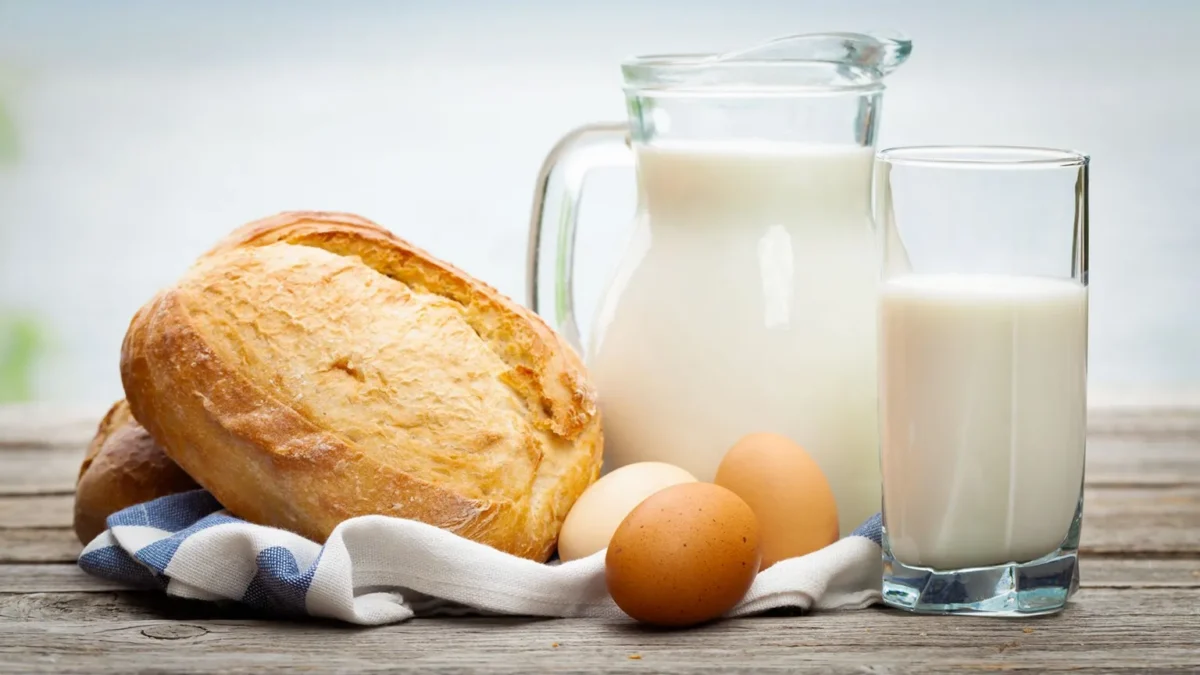
The Rising Cost of Staples
Many consumers have observed a significant increase in their grocery bills, even when purchasing the same staple items week after week. The total at the checkout often exceeds previous amounts, even without the inclusion of non-essential items like wine or biscuits. This article delves into the reasons behind the escalating prices of everyday essentials such as milk, bread, and eggs, examining their historical costs and the factors contributing to their current higher prices.
Eggs: A Price Surge Explained
In 2022, the average price for a box of six own-brand, free-range eggs at major UK supermarkets was approximately £1. Today, that same box commands a price of £1.80, according to market researchers Assosia, who analyzed pricing data from Tesco, Sainsbury’s, Asda, and Morrisons for the BBC. This sharp increase in egg prices is largely attributed to the UK’s most severe outbreak of avian flu between 2021 and 2023, which led to the culling of millions of hens. The resulting scarcity of laying hens, coupled with the increased energy expenditure required to keep birds housed indoors due to restrictions, created shortages. Consequently, supermarkets imposed purchase limits on eggs, and both producers and retailers raised prices to mitigate their losses.
A substantial portion of the cost associated with egg production stems from the feed for the hens, the energy needed for heating their enclosures, and the transportation of the final product. The cost of grain, a primary component of hen feed, saw a significant rise following Russia’s full-scale invasion of Ukraine in 2022, a major global supplier of grain. This conflict also contributed to a surge in energy prices, a trend that is currently being observed again due to the ongoing war in the Middle East. Despite these persistent price pressures, demand for eggs remains robust, partly due to the popularity of high-protein diets.
Milk: Production Costs and Farmer Incomes
Milk prices have also seen a notable increase. In 2022, a four-pint carton of semi-skimmed milk typically cost £1.29. Currently, the same product is priced at £1.65, according to Assosia’s data on supermarket budget ranges. The dairy industry is highly energy-intensive, with significant energy consumption in milking, processing, and transportation. Therefore, the energy price hikes that followed the war in Ukraine had a considerable impact on the dairy sector, driving up production costs and, subsequently, prices. Although milk prices experienced an initial spike, they have stabilized somewhat in recent years due to a global oversupply. However, dairy farmers are reportedly receiving 25% less for each litre of milk, with many operating at a loss, as indicated by agricultural analysts The Andersons Centre. Farmers and producers are responsible for maintaining the supply of essential products like eggs, milk, and bread, but their operational costs have escalated well beyond the general rate of inflation over the past year. Data from the Office for National Statistics (ONS) shows that the prices producers pay for materials and goods increased by 7.7% in the year leading up to April, marking the largest rise in over three years. In contrast, factory gate prices—the amount producers charge retailers or other wholesalers—saw a more modest increase of only 4% over the same period.
Danni Hewson, head of financial analysis at AJ Bell, explained that contracts between producers and supermarkets are typically agreed upon in advance. She noted that without foresight, it is impossible to predict future costs of raw materials, energy, or fuel when these contracts are finalized. While this allows farmers to renegotiate terms when a contract is up for renewal, mid-contract price surges can be difficult to accommodate. Consequently, some producers may have to absorb a portion of these increased costs, as Hewson suggests.
Bread: Wheat Prices and Supply Chain Fears
The price of a standard loaf of medium-sliced white bread has risen from 65p in 2022 to an average of 74p in major supermarkets. Assosia does not track prices at discount retailers like Aldi and Lidl, but the larger supermarkets often engage in price matching to remain competitive. The increase in wheat prices, which contributed to rising bread costs following Russia’s invasion of Ukraine, has largely stabilized. However, recent conflict in the Middle East has introduced new global supply concerns, according to The Andersons Centre. Hewson identified a confluence of factors—a “perfect storm”—including rising costs for raw materials, energy, and labor, alongside changes in packaging regulations, as drivers of increased prices for these essential goods.
Supermarket Profits: A Closer Look
Despite the rising prices consumers face at the checkout, the perception that supermarkets are profiting excessively is being challenged. UK supermarket sales have grown substantially, increasing from approximately £130 billion to around £160 billion between 2020 and 2024. However, when operating expenses are factored in, the profit margins for the major retailers have not seen an increase over the past two decades. While these figures do not specify the proportion of sales attributed to food or the profit margins on specific product categories like fresh produce, meat, or dairy, experts point to the highly competitive nature of the UK supermarket industry. An investigation by the Competition and Markets Authority (CMA) in July 2024 into the groceries sector found no evidence of supermarkets artificially inflating prices. Notably, the CMA’s findings indicated no price spike in 2022 and 2023, a period when food prices surged due to the global energy crisis following Russia’s invasion of Ukraine.
Hewson further emphasized the intense competition within the UK supermarket sector, suggesting that many retailers sell certain staple products at a loss to attract customers. In such scenarios, the supermarket absorbs these losses, which in turn impacts their overall profit margins. She stated that these businesses do not generate substantial profits per pound sold and must work diligently to achieve profitability. Andrew Opie, director of food and sustainability at the British Retail Consortium, an industry body representing supermarkets, asserted that the UK offers some of the most affordable grocery shopping in Western Europe. He added that as food inflation has risen, supermarkets have intensified their focus on providing value for everyday staples, sometimes selling products below cost and absorbing the financial impact to offer savings to customers.


