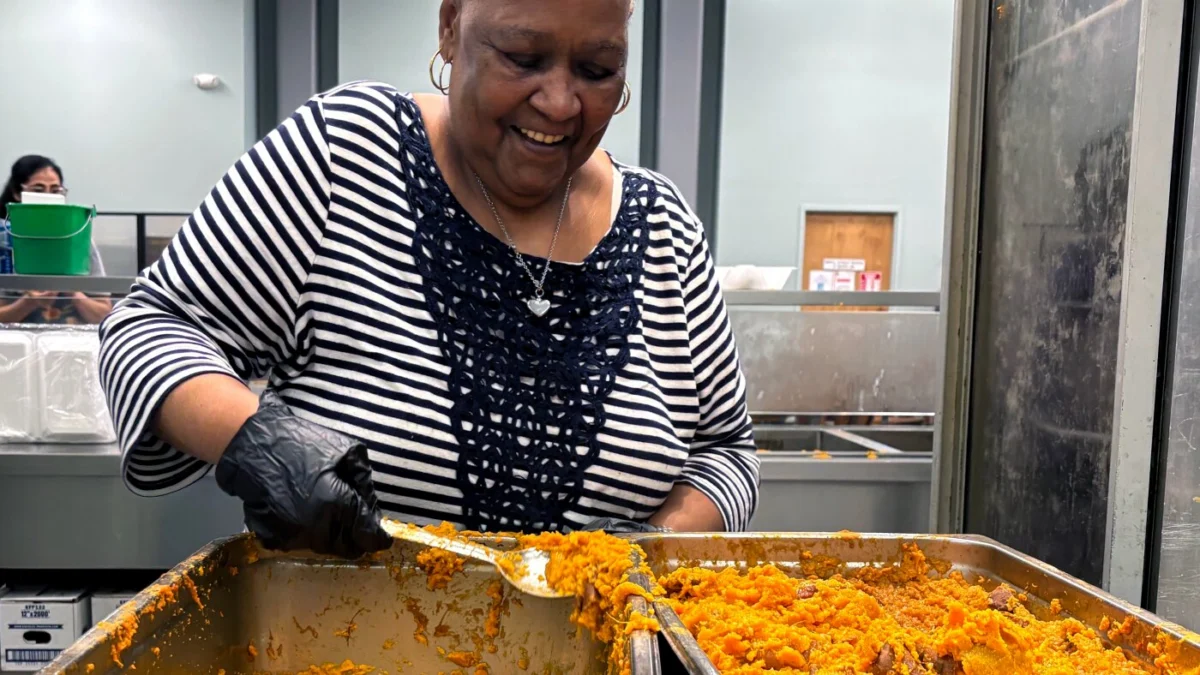
Dalene Basden, who has dedicated over three decades to assisting families with special needs children in Lynn, Massachusetts, is now experiencing financial strain that mirrors that of the clients she serves. Her role as a program director at the Children's Friend and Family Services Clinic, a division of the Justice Resource Institute, requires her to travel extensively to meet families in various locations, such as playgrounds, schools, and grocery stores, where she provides guidance on budgeting and identifying deals.
Several evenings each week, Basden volunteers at My Brother's Table, a local soup kitchen that many of her clients frequent. She actively engages with individuals there, checking on their progress with job applications and addressing issues like missed volunteer shifts. Her involvement also includes assisting in the kitchen and serving meals, demonstrating a profound commitment to her work and community.
Despite earning a respectable salary from her full-time position and her husband's income from driving a van for people with disabilities, the couple's financial stability is being eroded by escalating costs. Basden reports that their combined monthly expenditure on gasoline has surged from a previous range of $300 to $400 to over $600, significantly impacting their household budget. She describes the situation as a sudden shift, where affordability has seemingly vanished almost overnight.
Basden's personal financial struggle is indicative of a broader national trend. According to a new NPR/PBS News/Marist poll, eight out of 10 Americans are finding it difficult to make ends meet. Compounding her challenges, Basden is also contending with the rising cost of food. She notes that her family's diet has become restricted, primarily consisting of chicken due to the prohibitive cost of beef, which they could previously afford without issue. "All we eat is chicken," she stated. "I'd love to have some beef, but it's just way too expensive. But six months ago, if I wanted to buy beef, I went in the store and bought beef. Now, [we only] buy chicken because it's the cheapest."
To manage expenses, Basden is implementing cost-saving measures, including reducing non-essential travel. She has begun skipping some trips to drive her adult son with disabilities to his physical therapy sessions, a decision that weighs on her as it impacts his health regimen. "It's keeping him healthy," she remarked, highlighting the difficult choices she is forced to make.
Adding to her financial strain is a recent cancer diagnosis. While she is grateful for good health insurance through her employer, the co-payments for her medical treatment are substantial. Furthermore, the logistical costs associated with her care, such as the approximately hour-long drive to a hospital in Boston for five appointments this month, along with parking fees, are placing an additional burden on her finances. "The co-pays are crushing," she said.
Basden and her husband have found a grim irony in anticipating potential savings on gasoline due to her upcoming surgery, which will temporarily limit her travel. "We said, 'We'll save some money then,'" she remarked, acknowledging the unsettling nature of finding financial relief through medical necessity. "Yeah, that's kind of crazy when you think about it like that."
The rising cost of gasoline directly affects Basden's ability to support her clients. She often uses her own car to assist them, whether by delivering meals, helping young women prepare for special events like a prom, or driving clients to job interviews. The increased expense of fuel has forced her to decline some of these requests, suggesting alternative, less convenient options like cycling to clients. "So, I've had to say, 'No, like maybe you can ride your bike,'" she explained.
Back at the soup kitchen, a young man expresses remorse for missing a volunteer shift. Basden reassures him, promising to resolve the situation. "That's what you always say," he replies. "And don't I always fix it?" Basden asks. "Yes," he answers, confirming her reliability.
Despite the immense personal challenges, Basden remains committed to her work, finding purpose and motivation in assisting others. She acknowledges the eventual need to retire but firmly states that she is not ready to slow down. "I know there is going to be a time when I'm going to have to slow down, but not today," she declared. "Heck no. Today is not that day!" She emphasized her resolve to continue her efforts, stating that her work is helping to keep her alive.
As the day concludes, Basden departs the soup kitchen, but her responsibilities continue. Her evening includes a meeting with a family struggling to meet their rent obligations, underscoring the persistent demand for support services in the face of widespread economic difficulties.
The escalating costs of everyday necessities like gasoline and groceries are creating significant challenges for individuals and families across the nation. This situation is particularly acute for those in lower-income brackets and for service providers like Dalene Basden, whose work is directly impacted by these economic pressures. The ripple effect of inflation extends beyond individual budgets, affecting the capacity of support systems and the well-being of vulnerable populations. The NPR/PBS News/Marist poll highlights the widespread nature of these financial struggles, with eight out of 10 Americans reporting difficulty in making ends meet. This economic pressure is forcing difficult choices for many, including cutting back on essential services and even seeking assistance from food pantries, as exemplified by Basden's own situation. The rising cost of living is not only impacting household budgets but also the ability of individuals and organizations to provide crucial support to those in need.


