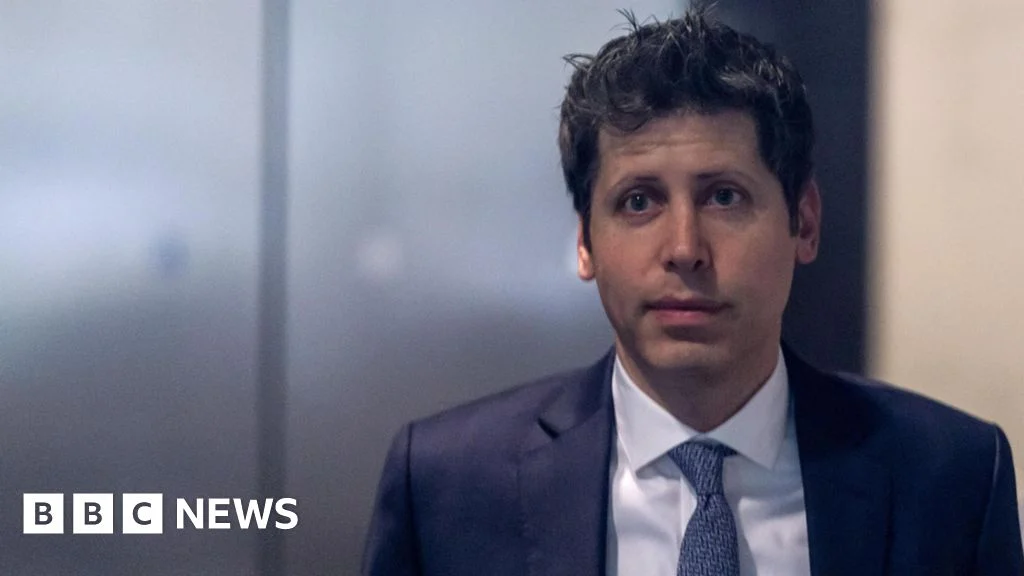
Sam Altman, co-founder and chief executive of OpenAI, revealed to a federal jury that Elon Musk had sought significant control over the artificial intelligence company, even proposing that control could be transferred to his children upon his death. Altman's testimony came during a lawsuit filed by Musk against OpenAI and Altman, in which Musk alleges that Altman "looted a charity," referencing OpenAI's origins as a non-profit organization. The trial is taking place in Oakland, California.
Altman stated that Musk not only supported the transition of OpenAI into a for-profit entity but also desired long-term control. "A particularly hair-raising moment was when my cofounders asked, 'If you have control, what happens when you die?' He said something like '…maybe it should pass to my children,'" Altman recounted to the jury, detailing conversations from when Musk was attempting to increase his influence over OpenAI after its founding in 2015.
During this period, Musk explored various avenues to gain leverage. Beyond seeking additional board seats and the chief executive position, Altman testified that Musk suggested OpenAI become a subsidiary of Tesla, his electric vehicle company. The primary objective, according to Altman, was to "get more money faster" through restructuring OpenAI into a more conventional for-profit business. Musk reportedly believed his prominence as a business figure would be instrumental in securing financial backing for the company.
"If I make one tweet about this, it's instantly worth a ton," Altman recalled Musk saying, emphasizing the perceived value of his public profile for fundraising. However, Altman, along with OpenAI co-founders Greg Brockman and Ilya Sutskever, concluded that granting Musk such extensive control in exchange for easier or increased financing would undermine OpenAI's core mission and its pursuit of artificial general intelligence (AGI).
Altman expressed significant discomfort with the prospect of Musk's absolute control. "I was extremely uncomfortable with it," Altman stated. "One of the reasons we started OpenAI was because we didn't think any one person should be in control of AGI." AGI is generally understood within the AI community as a hypothetical AI system capable of outperforming humans across most tasks.
Ultimately, Musk departed from OpenAI in early 2018 and ceased his quarterly donations of $5 million. Altman described an email from Musk as "burned into my memory," in which Musk asserted that OpenAI "had a zero percent chance, not a one percent chance, of success" without his involvement.
When OpenAI established a for-profit subsidiary in 2019, Altman offered Musk the opportunity to invest. Musk declined, reportedly stating, "He said no because he would no longer invest in any startups he didn't control." This statement highlights Musk's insistence on maintaining directorial authority over ventures he supports financially.
The legal proceedings are examining the complex relationship and disagreements between Musk and the leadership of OpenAI, particularly concerning the company's direction and governance. The testimony from Altman is central to the case, providing the jury with his perspective on Musk's intentions and the founders' decisions regarding the company's structure and control.
Musk's lawsuit claims that Altman and others ousted him from the board and improperly converted the non-profit into a capped-profit entity. OpenAI and Altman have denied these allegations, asserting that Musk's claims are baseless and that his departure was voluntary due to his desire for control and his subsequent departure from the board.
The trial is expected to delve further into the early days of OpenAI, the motivations of its founders, and the evolving dynamics that led to the current legal dispute. The jury's decision will likely hinge on the interpretation of communications and agreements from OpenAI's formative years and the extent to which Musk's alleged demands for control were met or rejected.
Altman's testimony aims to establish that while Musk was an early proponent and investor, his subsequent demands for control became incompatible with the collaborative and mission-driven ethos that OpenAI's leadership sought to maintain. The case underscores the high stakes involved in the development of advanced AI and the governance challenges faced by pioneering technology companies.
Further details regarding the financial arrangements and the specific nature of Musk's proposed control mechanisms are expected to emerge as the trial progresses. The jury will weigh the evidence presented by both sides to determine the validity of Musk's claims regarding the alleged misappropriation of OpenAI's founding principles and assets.
This legal battle represents a significant moment in the history of AI development, highlighting the intense competition and differing visions for the future of artificial intelligence among its key figures. The outcome could have implications for corporate governance in the rapidly evolving tech sector.


