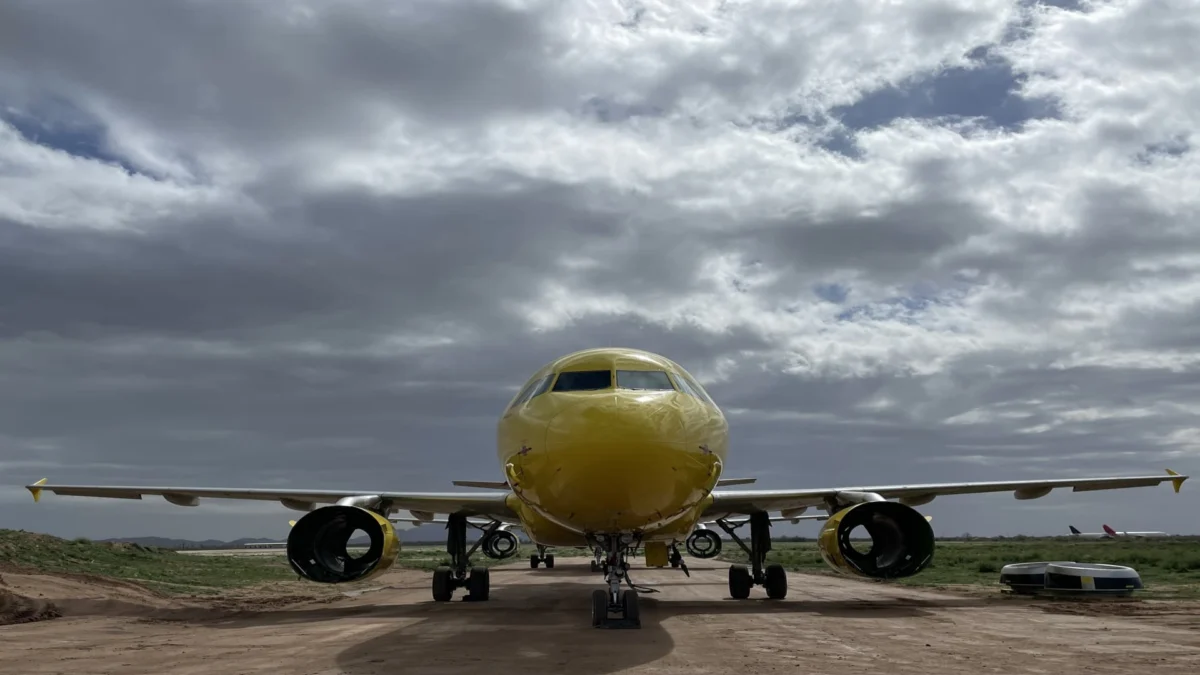
As Spirit Airlines abruptly ceased operations on May 2, a significant logistical undertaking began: the repossession and relocation of its fleet. Specialized aviation company Nomadic Aviation Group, led by managing partner Steve Giordano, orchestrated the complex operation to ferry over 20 Spirit Airlines planes from various airports across the United States to the arid climate of the Arizona desert. This move is a critical step in the liquidation process following the airline's collapse, the largest in the U.S. in a generation.
Giordano described the operation as a "massive repossession" for lessors seeking to reclaim their aircraft. In a span of just over a week, his team successfully transported 23 Spirit planes to specialized storage facilities located outside Phoenix and Tucson, Arizona. These Airbus A320 jets, once carrying passengers on discount routes, were flown without any customers on board, marking a somber end to their service with the now-defunct carrier.
The decision to park aircraft in desert environments is a long-standing industry practice. The dry, stable climate significantly minimizes the risk of corrosion and other environmental damage, preserving the aircraft's condition. This strategy was widely employed during the COVID-19 pandemic when thousands of planes were grounded due to the drastic reduction in air travel.
Nomadic Aviation Group, co-founded by Giordano and Bob Allen, specializes in aircraft transportation and, on rare occasions, repossessions. This particular operation, however, was one of the least frequent types of missions the company undertakes. The complexity of such an operation extends far beyond simply flying the aircraft. Nomadic is responsible for arranging fuel, ensuring necessary inspections are completed, and assembling flight crews, all while operating with a leaner structure than a major airline's dedicated dispatch and maintenance departments.
Spirit Airlines' downfall has initiated a lengthy process of dismantling the carrier within bankruptcy court. A key component of this liquidation involves returning leased aircraft to their owners. Court filings indicate that Spirit operated a fleet of 114 Airbus A320 planes, with a substantial 66 of these being under lease agreements. The repossession flights represent the physical return of these assets to the lessors.
Giordano recounted personal anecdotes from the repossession flights, highlighting the unusual circumstances. He mentioned being so focused on the mission that he initially forgot to eat, only to discover that the galley carts on the Spirit plane were still stocked with snacks. He enjoyed some of the airline's usual offerings, like Milano cookies and cheese snack boxes, while also having to pay for Wi-Fi on his flight from Philadelphia to Arizona.
The ultimate destination for each of Spirit's repossessed aircraft remains uncertain. The airline had already been in the process of reducing its fleet and scaling back routes in the years leading up to its bankruptcy filing, an effort to conserve cash amidst mounting financial pressures.
One area of potential high demand following the collapse is the market for aircraft engines. Specifically, engines that were not affected by the significant Pratt & Whitney recall – an issue that had grounded Spirit's jets and negatively impacted the airline's operations even before its bankruptcy filing – could be particularly valuable. This recall had already posed challenges for Spirit's fleet availability.
According to aviation consulting firm IBA Group, the market value for a Pratt & Whitney PW1127G engine was approximately $14.5 million in January. This represents a notable increase from the $11.3 million valuation from three years prior. The ongoing supply chain disruptions that have persisted since the COVID-19 pandemic have generally driven up the value of secondhand aircraft parts, with engines being among the most sought-after components, although hundreds of other parts also contribute to an aircraft's overall value.
Stuart Hatcher, IBA's chief economist, commented on the demand for operational engines, stating, "The engines that were operational will be very welcomed." He also noted that the turnaround times for engine maintenance and repair at service centers remain significantly longer than usual, likely doubling the expected duration.
For pilots like Giordano, the experience of flying the final Spirit plane out of a particular airport carried a sense of finality. He described the feeling as "surreal" to be piloting the very last Spirit aircraft to depart from Philadelphia International Airport, knowing it was a historic, albeit somber, moment.
The collapse of Spirit Airlines has triggered a series of events, including the ongoing dismantling of its operations and the repossession of its leased fleet. The situation has also drawn attention to potential future scenarios, such as the possibility of a bailout, as previously discussed in relation to bondholders weighing options. The airline's financial struggles were exacerbated by factors including the Pratt & Whitney engine issues and the failed merger attempt with JetBlue, which was blocked by the Department of Justice due to antitrust concerns.
Industry observers are assessing the impact of Spirit's failure on the broader airline market. Questions arise about who stands to lose if a proposed acquisition, such as the one involving JetBlue, does not materialize. The airline's financial health had been precarious for some time, with reports indicating it had avoided making difficult decisions regarding its financial strategy, contributing to its eventual bankruptcy.
The repossession flights to Arizona represent a tangible consequence of Spirit Airlines' financial collapse. These aircraft, once symbols of affordable travel, are now being relocated to storage facilities, awaiting their next chapter, whether that involves being re-leased to another carrier, sold for parts, or dismantled entirely. The operation highlights the intricate network of leasing firms, aviation service providers, and regulatory bodies that underpin the global aviation industry.


