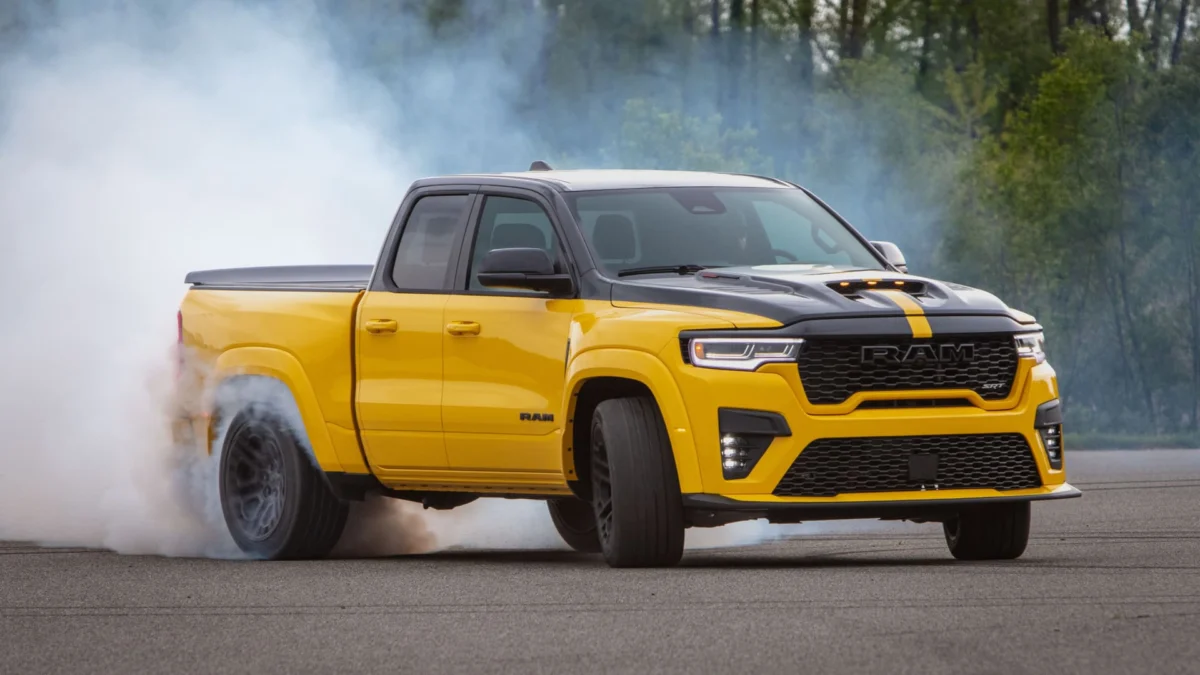
Ram Introduces Rumble Bee Muscle Trucks
Stellantis is set to launch a new lineup of performance-oriented pickup trucks, dubbed “muscle trucks,” under its Ram brand. These vehicles, named the Rumble Bee, will feature powerful V-8 engines, distinctive design elements, and a range of performance specifications, aiming to capture a segment of the market that values power and style. The automaker announced on Wednesday that the Rumble Bee pickup trucks will feature V-8 engines, specialized parts, and unique designs, alongside a spectrum of performance specifications. This strategic move arrives despite the current backdrop of elevated gasoline prices, a factor that has historically influenced consumer choices in the truck market.
The flagship model, the SRT Hellcat, is slated to feature a formidable 6.2-liter supercharged Hemi V-8 engine. This top-tier variant is expected to deliver an impressive 777 horsepower and achieve a targeted top speed of 170 miles per hour, placing its performance metrics in direct competition with some sports cars. These specifications rival those of high-performance automobiles, underscoring Ram’s commitment to power and speed in its truck offerings.
Ram’s boss, Tim Kuniskis, described the launch as a bold and decisive moment, stating, “This is absolutely a ‘hold my beer,’ watch this, push the chips in moment.” He made these remarks during a media event held at the company’s Chelsea Proving Grounds in Michigan, signaling a confident and aggressive approach to introducing these high-performance trucks. Kuniskis believes the timing is critical, noting the significant expansion of full-size pickup trucks into luxury and off-road segments. He also pointed to a perceived gap in the market for traditional muscle car offerings, as many automakers, including Stellantis, have increasingly shifted their focus toward all-electric vehicles.
“We chased electrification, and that tide changed. This tide will change as well,” Kuniskis told reporters after the trucks were revealed, suggesting a belief that the market’s appetite for traditional internal combustion engines, particularly powerful V-8s, is not diminishing. He expressed optimism that by the time the trucks reach showrooms, gasoline prices might stabilize, potentially mitigating consumer concerns about fuel costs. Kuniskis also highlighted the financial strategy behind high-performance models, explaining that while their sales volumes are typically modest, they generate significantly higher profit margins compared to average vehicles. He described these models as “halo products,” designed to draw attention to the entire brand and potentially boost sales of other Ram offerings.
Halo vehicles are characterized by their unique designs and high-performance capabilities, serving as flagship models that enhance a brand’s image and attract consumer interest. Kuniskis declined to disclose specific sales volume targets for the Rumble Bee trucks but expressed confidence in the company’s ability to easily recoup its investments. He noted that the new trucks will share many components with existing Ram models, with the addition of specific performance-enhancing parts, a strategy that likely helps manage development and production costs. The company aims to build these trucks at Stellantis’ plant in Saltillo, Mexico.
Pricing and Availability
Stellantis has not yet released official pricing for the Rumble Bee trucks, which are anticipated to arrive in U.S. dealerships starting this fall. Kuniskis offered a comparison for potential buyers, suggesting that an entry-level model equipped with the 5.7-liter Hemi V-8 engine might be priced comparably to a “well-equipped” current Big Horn model, which can exceed $60,000. He indicated that the SRT model could serve as a new halo product, positioned alongside the $100,000 TRX off-road performance truck. The lineup will initially launch with the 5.7-liter Hemi V-8 model later this year, followed by the Rumble Bee 392 and Rumble Bee SRT variants during the first half of 2027.
The new muscle trucks, which will feature quad cabs with smaller backseat doors than most full-size pickups sold in the U.S., represent a strategic bet by Stellantis. Ram Trucks boss Tim Kuniskis, who also oversees Stellantis’ other U.S. brands, was present during the reveal of the company’s new Hemi V-8 engine-powered Rumble Bee pickup trucks in May 2026. This initiative comes as Stellantis prepares for its first investor day under CEO Antonio Filosa, focusing on key brands like Jeep and Ram in the U.S. and Fiat and Peugeot in Europe, with an agenda to detail cost reduction strategies and outline a path back to profitability after a net loss of 22.3 billion euros (US$26.3 billion) last year.
Filosa has been actively promoting the return of Ram’s Hemi V-8 engine, which was previously canceled under former CEO Carlos Tavares, as a positive catalyst for investors. This is particularly noteworthy given the current high gas prices in the U.S. Kuniskis stated that Hemi production continues to increase, though demand still outpaces supply. “It’s ramping up; it’s not where we need it to be yet,” he said, adding that the engine mix is “significantly better” than at the beginning of the year.
S&P Global auto analyst Stephanie Brinley commented on the strategy, expressing that she does not anticipate Ram will sell major volumes of these muscle trucks. However, she believes they should effectively draw attention to the brand, particularly in retaining its current customer base. “The SRT is kind of a nice counterpoint to the off-road version, but, again, that’s not gonna be high volume,” she said. Brinley added, “The combination of having it all can drive some excitement into the brand.”
Kuniskis acknowledged the unconventional nature of this strategy, stating during the event, “There is no market research that’s going to tell you what we’re doing is a good thing. It’s not even a safe bet. … It’s been done before and it has never worked.” He qualified this by adding, “But we think the last time it was done the strategy was not right.” This suggests a belief that a different approach, combined with current market conditions, could lead to success where previous attempts failed.
Performance trucks are not a new concept in the automotive industry, though they have often been short-lived ventures. Ram, formerly a division of Dodge, has a history of offering performance-oriented trucks, including off-road variants like the Rebel and TRX. The brand also previously offered Rumble Bee models and a pickup truck approximately 20 years ago that shared a V-10 engine with the company’s then-Dodge Viper sports car. This historical context provides a backdrop for the reintroduction of the Rumble Bee nameplate.
The decision to reintroduce Hemi V-8 powered muscle trucks by Ram, a Stellantis brand, is significant as it challenges the prevailing industry trend towards electrification and heightened fuel costs. By focusing on performance and higher-margin niche segments, the company aims to bolster brand perception and potentially influence sales of its broader truck portfolio. This strategy could resonate with a specific segment of truck buyers who prioritize power and performance over fuel efficiency.
The market relevance of this launch is considered high due to the strategic positioning of Ram within the competitive pickup truck segment and Stellantis’ broader corporate strategy. The primary theme revolves around companies and their product strategies, particularly concerning internal combustion engine performance vehicles in an era of increasing electrification. Affected sectors include the automotive industry, with specific entities like Ram and Stellantis at the forefront. Key numbers include the 777 horsepower and 170 mph top speed of the SRT Hellcat model, alongside pricing comparisons reaching up to $100,000 for the TRX model. Investors and industry observers will be watching consumer demand for V-8 engines, gasoline price trends, and Stellantis’ overall profitability in the coming periods.


