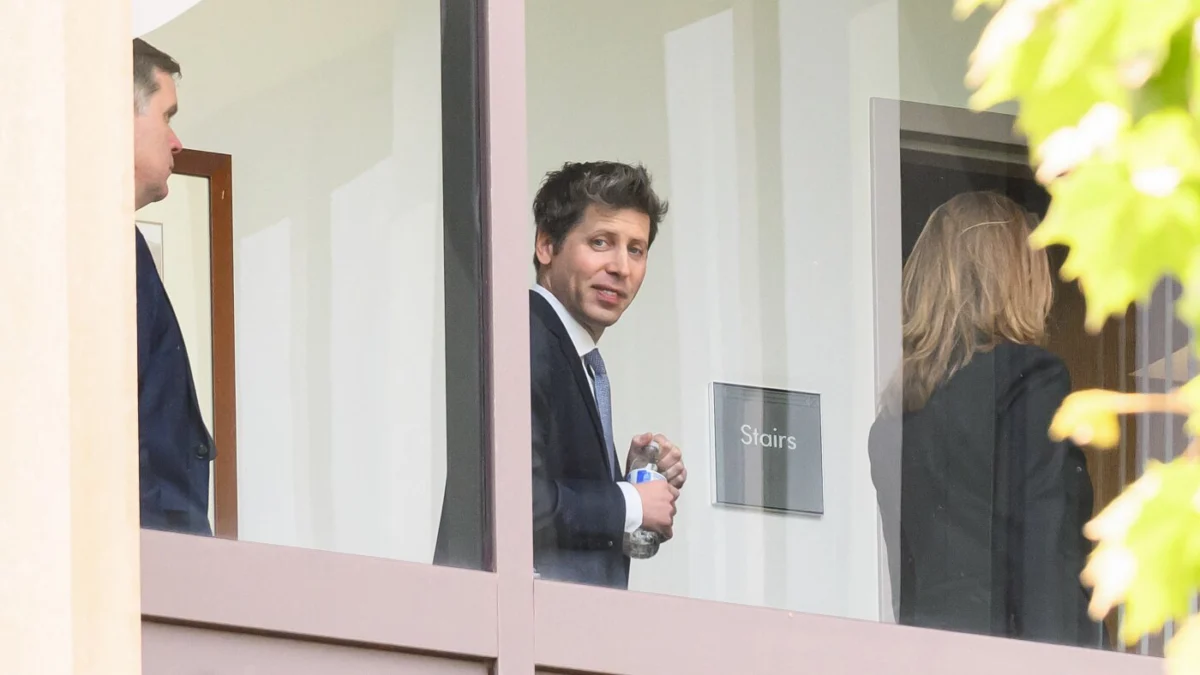
OpenAI CEO Sam Altman took the witness stand Tuesday, directly confronting accusations from co-founder Elon Musk that he "stole a charity" by transforming the ChatGPT maker into a for-profit enterprise. The ongoing trial, now in its third week, features a high-stakes legal battle between two prominent figures in the technology industry, with potential ramifications for the future of artificial intelligence development.
Musk's legal team has contended that OpenAI, under the leadership of Altman and OpenAI President Greg Brockman, along with significant investment from Microsoft, deviated from its original mission. This mission, as argued by Musk's lawyers, was to establish a non-profit entity dedicated to developing advanced AI for the benefit of all humanity. Instead, they allege that the company's structure was manipulated to create a for-profit subsidiary that now holds substantial control, leading to personal enrichment for its leaders.
Altman, however, has pushed back against these claims, suggesting that Musk's motivations are rooted in a desire to harm a competitor. During his testimony, Altman stated that Musk actively attempted to undermine OpenAI, including launching a rival AI company, xAI, and trying to recruit OpenAI's employees. He also alleged that Musk engaged in "business interference" aimed at disrupting OpenAI's operations.
The dispute traces back nearly a decade to a pivotal moment when the founders, including Musk, recognized the necessity of establishing a for-profit arm. This move was deemed essential to attract top-tier talent and secure the substantial funding required to develop cutting-edge AI technology. Musk, who had initially contributed $38 million to OpenAI, sought control over this for-profit entity, a proposition that was met with resistance from other co-founders.
Altman testified that the co-founders collectively believed that no single individual should wield control over artificial general intelligence (AGI). He further articulated that Musk's leadership style was not compatible with the company's ethos, leading to Musk's departure from the board in 2018. Altman characterized Musk's exit as a positive development for employee morale, citing concerns over his "hardcore" approach.
The trial has provided an unprecedented glimpse into the internal dynamics and strategic debates among some of Silicon Valley's most ambitious entrepreneurs. Discussions have centered on the future trajectory of AI, investment strategies, and the crucial issue of control over OpenAI, a company that rose to global prominence with the 2022 launch of ChatGPT.
OpenAI's legal counsel has utilized internal communications, including text messages and emails, in an effort to portray Musk as driven by a desire for power. They have presented evidence suggesting his initial support for plans to establish a for-profit subsidiary to attract substantial investments. The defense has also sought to question Musk's credibility by highlighting messages that appear to indicate his attempts to recruit OpenAI staff prior to his departure from the board. Furthermore, they pointed to communications with then-board member Shivon Zilis, who is also the mother of some of Musk's children, suggesting he remained informed about OpenAI's decisions after leaving.
Conversely, Musk's attorneys have focused on demonstrating that Altman and Brockman were primarily motivated by personal financial gain, despite OpenAI's original non-profit status. While OpenAI's non-profit foundation continues to exist and legally owns the for-profit subsidiary, now valued in the hundreds of billions of dollars, Musk argues that its influence has been significantly diminished.
During cross-examination, Musk's attorney, Steven Molo, questioned Altman's trustworthiness. Altman responded affirmatively when asked if he believed himself to be trustworthy, but conceded that there may have been instances in his life where he had not been entirely truthful. When asked if he had ever been called a liar by business associates, Altman acknowledged that he had heard such remarks.
If the U.S. District Court for the Northern District of California finds Altman, Brockman, and Microsoft liable for the two civil claims brought by Musk – "breach of charitable trust" and "unjust enrichment" – Musk is seeking the disgorgement of up to $150 billion to the non-profit entity. Additionally, he is requesting the dissolution of the for-profit structure and the removal of Altman and Brockman from their leadership positions. Such an outcome could fundamentally alter OpenAI's structure and potentially impede its AI development initiatives.
Closing arguments in the case are scheduled for Thursday, with a decision from the advisory jury and Judge Yvonne Gonzalez Rogers anticipated sometime next week. This legal proceeding could set significant precedents for the governance and operational structures of AI companies moving forward.


