Global oil prices experienced a significant surge, reaching their highest point since 2022, following reports that the United States military is preparing to brief President Donald Trump on new options for potential military action against Iran. The benchmark Brent crude oil price climbed by nearly 7% at one point, exceeding $126 per barrel before experiencing a subsequent decline. This escalation in oil prices comes as peace negotiations with Tehran appear to have stalled, and the critical Strait of Hormuz waterway remains effectively impassable.
According to a report by the news site Axios, US Central Command has developed a plan that includes a series of "short and powerful" strikes aimed at Iran. The objective of these proposed strikes is reportedly to break the deadlock in ongoing negotiations with the Iranian government. The BBC has reached out to both US Central Command and the White House for official comment on these developments.
The Strait of Hormuz is a vital chokepoint for global energy trade, with approximately 20% of the world's oil and liquefied natural gas (LNG) typically passing through its waters. The current conflict has severely disrupted this flow, leading to a sharp increase in global energy prices. Brent crude reached a high of $126.31 a barrel on Thursday, a level not seen since the full-scale invasion of Ukraine by Russia. However, the price later retracted significantly, settling around $114 a barrel by the end of the day.
Analysts attribute the sharp fluctuations in oil prices partly to the expiration of futures contracts. Naveen Das, a senior oil analyst at Kpler, explained that the expiry of the current Brent futures contract for June delivery on Thursday contributed to the price drop. The more actively traded July contract was trading at a lower price, around $110 a barrel.
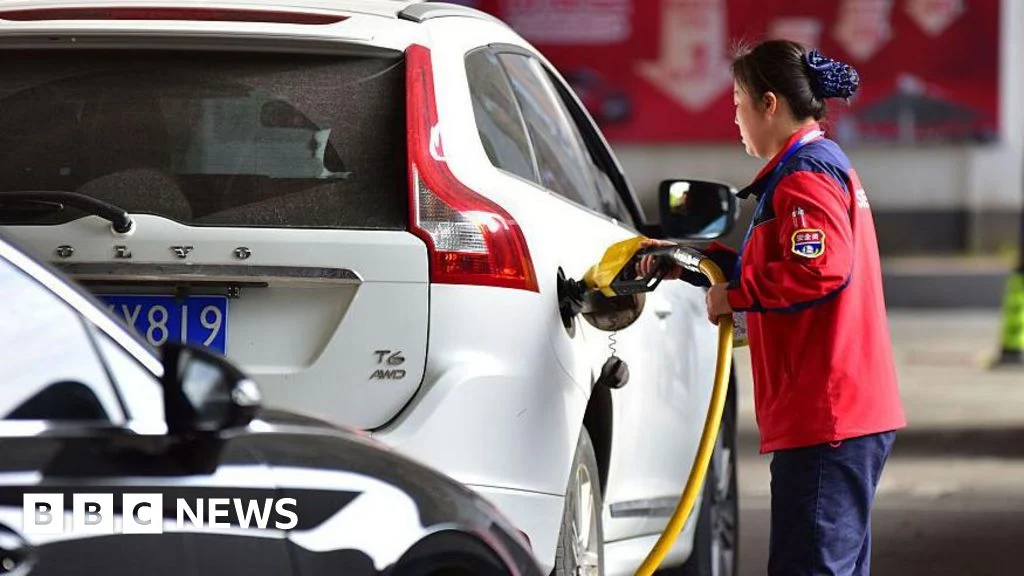
The impact of these rising oil costs extends beyond the energy markets, directly affecting consumers at the pump. Crude oil is a fundamental component in the production of petrol and diesel. In the United Kingdom, the average price of petrol has risen to 157 pence per litre, an increase of 24 pence compared to pre-conflict levels. Diesel prices have also climbed to 188.5 pence per litre, up by 46 pence from their pre-war price. Simon Williams, head of policy at the motoring group RAC, noted that while pump prices have seen some reduction, the wholesale cost of petrol for retailers is currently at its highest since the conflict began. He added that diesel prices, despite a recent 3 pence per litre decrease, remain well below their peak wholesale cost during the conflict, suggesting potential for further price reductions.
The broader economic implications are significant, with the UK government warning of potential increases in the cost of energy, food, and flight tickets due to the ongoing conflict. Some airlines have already begun adjusting their fares upwards or reducing flight schedules in response to the changing economic landscape. Furthermore, rising fertilizer prices could lead to a ripple effect on food prices globally.
Details from the Axios report, citing anonymous sources, suggest that the proposed strikes could target Iranian infrastructure. Another potential plan discussed involves occupying a portion of the Strait of Hormuz to facilitate the reopening of commercial shipping lanes, a scenario that could potentially involve deploying ground troops. These reports highlight the escalating tensions and the range of military options being considered.
In parallel, a statement attributed to Iran's Supreme Leader, Mojtaba Khamanei, asserted that Tehran would ensure the security of the Strait of Hormuz and counteract "the enemy's abuses of the waterway." Khamanei also indicated that a "new chapter" for the region has been unfolding since the commencement of the US-Israeli conflict with Iran on February 28. The United States has previously stated its intention to blockade Iranian ports for as long as Tehran continues to threaten vessels attempting to transit the Strait of Hormuz, a move that would severely disrupt global energy shipments.
Iran had previously retaliated against US-Israeli airstrikes by threatening to target ships in the Strait of Hormuz. The market had already reacted to reports on Wednesday that Washington was preparing for an "extended" blockade of Iran, causing oil prices to surge by 6%. "It does seem as though escalation in the war is back on the table," commented Naveen Das, who also noted that an oil price approaching $125 per barrel is a threshold at which businesses and policymakers tend to become increasingly concerned.
Susannah Streeter, chief investment strategist at Wealth Club, suggested that elevated oil costs could persist into the following year. She pointed out that shipments of urea, a key component in fertilizer, are currently blocked, leading to soaring costs for farmers worldwide who had not secured advance stock. The concern is that these increased costs will be passed through supply chains, ultimately driving up the prices of everyday goods later in the year and into the next.
Further fueling market anxieties, energy executives reportedly met with President Trump on Tuesday to discuss strategies for mitigating the impact of the conflict on American consumers. This meeting raised concerns about potential prolonged disruptions to energy supplies. Will Walker-Arnott, an investment manager at Raymond James, expressed his view on the "Today" program, questioning how long the Trump administration could withstand the economic pressure. He added that the public is growing increasingly worried about the inflationary effects stemming from the rise in oil prices.
Financial markets reacted to the news with mixed results. Stock markets in Asia closed lower, with Japan's Nikkei index falling by 1.1% and South Korea's Kospi index declining by 1.4%. Conversely, European markets showed gains, with London's FTSE 100 index rising by 1.6%, Germany's Dax climbing by 1%, and France's Cac 40 index experiencing a slight increase of 0.1%. These movements reflect the link between geopolitical events and global economic sentiment.


