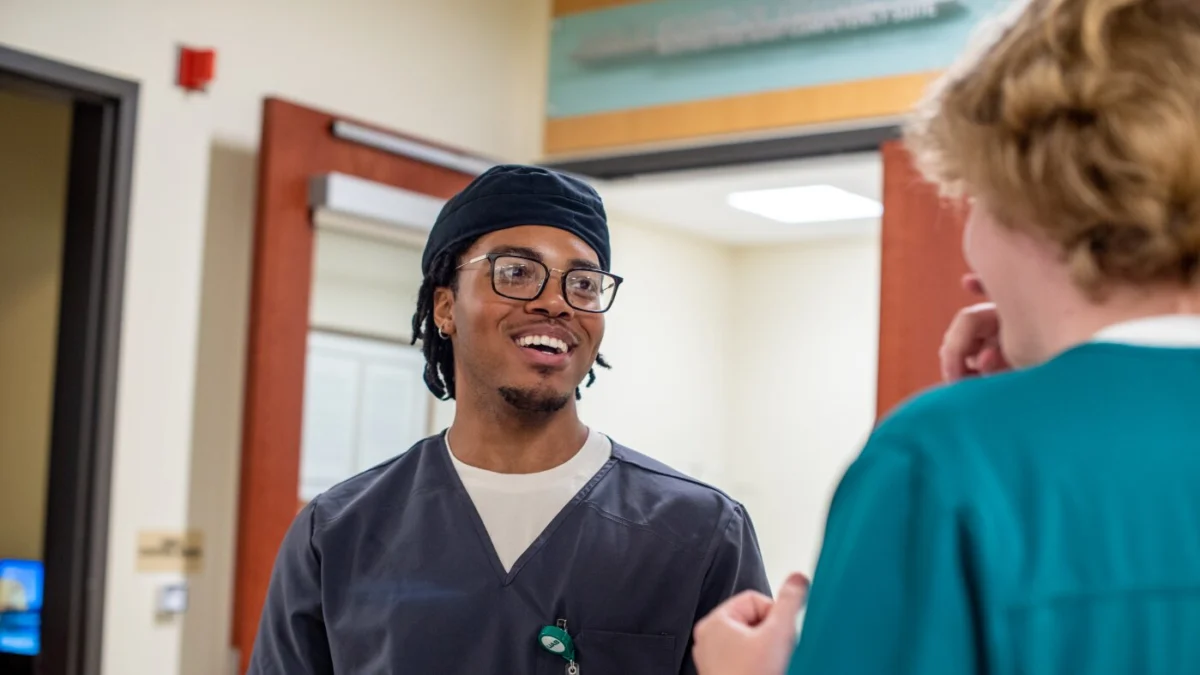
Healthcare demand has made nursing one of the nation’s most sought-after professions, and universities are increasingly targeted in their efforts to recruit men into the field. At the University of Alabama at Birmingham (UAB), the shift is already visible: almost one in six nursing students are men, a share that outpaces the national average, and nearly one in five nursing faculty members are men. The campus has built a work environment and outreach strategy designed to welcome men into nursing, with male representation in marketing materials, targeted outreach to high schools, and an employee resource group for men in nursing at the university hospital.
The growth in male participation arrives amid a robust healthcare job market. The Labor Department projects about 189,000 job openings for registered nurses each year over the coming decade, underscoring why students see nursing as a stable, well-compensated career path. Students such as Amiri Saadiq and Hatim Nasser describe why they chose nursing: Saadiq is headed for a role in the bone marrow transplant intensive care unit, while Nasser is set for the heart and lung transplant ICU. Both anticipate working in settings where patient care is in high demand and where nurses’ responsibilities are expanding with technological advances.
The appeal for men is reinforced by the professional and personal dimensions of nursing. For many, nursing blends technical skill with compassionate care. Steven Parsons, an adjunct instructor and cardiovascular operating room nurse at UAB, notes that operating rooms increasingly rely on robotics and sophisticated equipment—elements that resonate with men drawn to mechanical and tech-driven work. The school’s leadership argues that improving male representation could contribute to better patient outcomes, including for male patients who may respond more positively when treated by providers who resemble them.
Nursing has also confronted gender stereotypes head-on. Professors and senior nurses describe efforts to normalize men’s presence in all nursing roles, from NICU to transplant ICU. Misperceptions persist—such as male nurses being mistaken for doctors or receiving inappropriate discounts—but leaders say these challenges are part of the cultural shift toward a more inclusive profession. Some male students recall how the image of nursing as “women’s work” still lingers, while noting that family and patient interactions grow more comfortable as men become visible in care roles.
Personal motivation for many male nursing students often stems from family experiences or the desire for a career with meaningful daily impact. Connor Aderholt, inspired by his grandmother’s stroke care, recalls witnessing compassionate, steady support during a difficult moment and deciding to pursue nursing to offer similar steadiness under pressure. Others point to the job’s stability and the satisfaction of helping people during critical health events as core reasons for joining the field.
Looking ahead, nursing educators and professional associations aim to broaden pathways for men. Bordelon, central to this effort, says real progress has been made but acknowledges more work lies ahead. A notable development is the designation of men’s health as a nursing specialty, a move that could further encourage men to specialize and advance within nursing. The momentum reflects both demographic shifts in the labor market and sustained efforts within healthcare education to broaden nursing’s appeal to diverse student groups.
For students like Saadiq and Stinson, the near-term future is defined by training and opportunity. Stinson, who is nearing graduation, expects to enter a psychiatric unit, viewing nursing as a practical way to build a steady, meaningful career in a sector with persistent demand. The broader portrait is of a profession increasingly shaped by technology, patient-centered care, and a growing, more inclusive workforce that could strengthen healthcare delivery regionally and beyond.
As the nursing workforce matures, the question remains how quickly more schools and hospitals can replicate UAB’s approach nationwide. The current data and experiences at UAB suggest that a well-planned strategy—emphasizing visibility, targeted recruitment, and professional development—can attract more men to nursing, with potential benefits for patient outcomes and the broader health system.
Looking to the horizon, Bordelon is preparing to take the helm of the American Association for Men in Nursing, a national advocacy group. He recognizes there is still substantial work to do but believes in moving the needle: “Can we help move the needle a little faster? Sure, there are opportunities for that.” He notes a recent collaboration with Purdue University School of Nursing that secured men’s health as a nursing specialty, a milestone that could broaden career pathways for men in the field. In his view, expanding men’s health nursing not only supports gender equity but could also contribute to addressing broader health disparities related to men’s health needs.
Across the university, the experience of students like Saadiq and Stinson underscores a broader trend: a labor market in which nursing skills are in high demand, technology is reshaping practice, and inclusivity efforts are slowly changing long-standing stereotypes. As more men enter nursing and more institutions pursue targeted recruitment and development, the profession may increasingly reflect the diverse patient populations it serves—and, in turn, contribute to improved health outcomes and a more resilient healthcare system.


