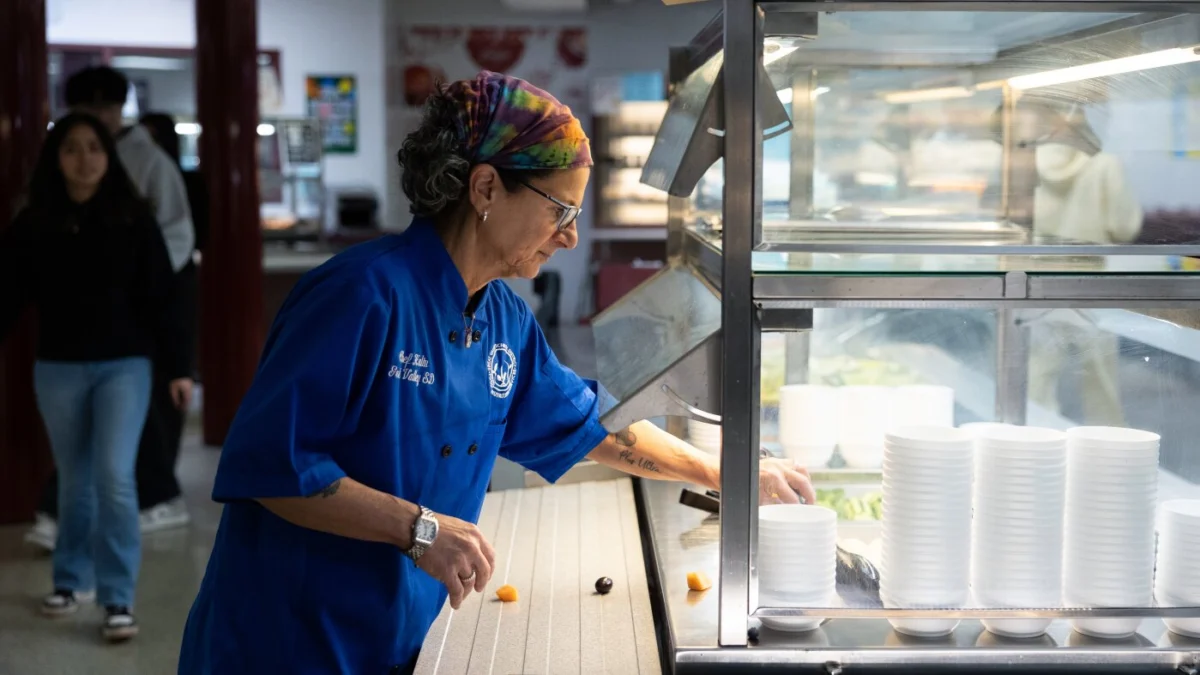
U.S. school districts are facing increased concerns about the cost of preparing meals under new federal dietary guidelines, a challenge exacerbated by recent cuts to programs that previously supported local food procurement. The "Make America Healthy Again" (MAHA) initiative's updated guidelines, announced by Health Secretary Robert F. Kennedy Jr., are set to influence school cafeterias nationwide by advocating for reduced consumption of highly processed foods and an increased emphasis on "high-quality, nutrient-dense" protein sources at every meal. These directives form the foundation of federal nutrition standards that all schools participating in federal meal programs must adhere to.
However, a substantial number of school districts currently rely on processed, pre-made food items due to persistent budget constraints and ongoing labor shortages. Protein, identified as a key component of the new guidelines, is already the most expensive ingredient in school meals, leading to significant concerns about escalating operational costs for districts already struggling to meet existing nutritional requirements. The U.S. Department of Agriculture's (USDA) reimbursement rate for schools in the contiguous 48 states is approximately $4.60 per meal for a student eligible for free lunch, $4.20 for a student eligible for a reduced-price lunch, and $0.44 for students paying full price, according to the School Nutrition Association (SNA).
Nichole Taylor, supervisor of food and nutrition services at the Great Valley School District in Malvern, Pennsylvania, has observed a growing engagement among students with their school meals, largely influenced by social media trends. "I don't have a TikTok account, but they're telling me, 'Hey, I saw this on TikTok. Can you make this? Can we do this?'" Taylor remarked, noting that today's students are considerably more vocal about their food preferences than in previous generations. She has been actively working to enhance the suburban Philadelphia district's meal program since taking over a year and a half ago, striving to incorporate more scratch-cooked meals while navigating tight budgets and a scarcity of skilled kitchen staff. The new federal guidelines, however, introduce an additional layer of complexity and potential expense.
Federal and state funding represent the primary revenue streams for districts like Great Valley, covering essential operational costs such as staff wages, kitchen equipment, food procurement, and utilities. While Taylor expressed support for the nutritional objectives of the updated federal standards, she voiced significant concerns about their practical implementation for schools already facing financial pressures. "We want to follow the guidelines, because we are that voice that says, 'No, you can eat healthy and still eat really well,'" Taylor stated. "But we also have to be realistic and say we need the funding for it." This sentiment underscores a common dilemma faced by school nutrition programs: balancing aspirational nutritional goals with the stark financial realities of operating within federal reimbursement limits.
Agriculture Secretary Brooke Rollins, at a press conference in January announcing the revised guidelines, emphasized their potential to enhance child nutrition. "Right now, that is going to be the single most important, from my perspective, move forward — is the school lunches and making sure that we're getting the right amount, the best amount and the most nutrient-dense foods into the schools," Rollins said. The MAHA blueprint specifically promotes whole foods and limits processed items, aligning with a broader public health agenda. However, the practical application of these ideals within the structured environment of school food service presents significant logistical and financial hurdles that have yet to be fully addressed by federal policy.
Despite the stated goals, some members of the medical community have raised objections to the new food pyramid, particularly its emphasis on saturated fat sources like red meat and full-fat dairy. Christopher Gardner, a nutrition expert from Stanford University and a former member of the Dietary Guidelines Advisory Committee, told NPR that the new recommendations "go against decades and decades of evidence and research." This divergence of expert opinion highlights the ongoing debate surrounding optimal dietary strategies and the potential for conflicting scientific interpretations to influence public policy, including school nutrition standards.
The Department of Agriculture (USDA) has indicated that it is still in the process of updating the specific nutrition standards for institutions participating in the National School Lunch Program and the School Breakfast Program, which collectively served 30 million children last year. In an emailed statement, the USDA described the new guidelines as a "pivotal step to Make America Healthy Again through real, nutrient-dense foods" and noted that their release initiates a multi-year effort to revise program rules through a formal rulemaking process that will include opportunities for public comment. This phased approach suggests that the full impact of the new guidelines on school meal programs will unfold gradually, allowing for adjustments but also creating a period of uncertainty for district administrators.
Mara Fleishman, CEO of the Chef Ann Foundation, an organization dedicated to assisting schools in preparing more meals from scratch, acknowledged the positive shift away from highly processed foods but cautioned that the transition would be challenging. "The conundrum is that often animal protein in school food is one of the most highly processed components," she explained. Fleishman cited chicken nuggets as a ubiquitous example in school cafeterias, often containing around 35 ingredients and requiring minimal preparation beyond reheating. In contrast, preparing chicken strips from scratch would involve fewer ingredients but demand greater resources in terms of labor, kitchen facilities, and waste management. This contrast illustrates the trade-offs schools face when attempting to move from convenience-based, highly processed options to more wholesome, minimally processed alternatives.
Adding to these challenges, the Trump administration has reduced funding for programs that supported schools in purchasing local food from farmers. In March of the previous year, the School Nutrition Association reported that the USDA terminated the Local Food for Schools Cooperative Agreement Program (LFS), eliminating an estimated $660 million in funding. The LFS program provided financial assistance for schools to procure "unprocessed or minimally processed foods, such as meat, poultry, fruit, vegetables, seafood, and dairy" directly from local or regional producers. This cut represents a significant loss for districts that had integrated local sourcing into their meal programs, impacting both their ability to offer fresh, regional produce and their support for local agricultural economies.
The USDA stated that both the Local Food for Schools Cooperative Agreement Program and the Local Food Purchase Assistance Cooperative Agreement Program (LFPA), which supports feeding initiatives like food banks, are being "sunsetted at the end of their performance periods." The department noted that over half a billion dollars in funding was disbursed through these programs last year, with remaining funds still available for states. However, the termination of these programs removes a crucial avenue for schools to access funding for local food procurement, potentially forcing them to rely more heavily on national supply chains and processed ingredients, which may run counter to the spirit of the new dietary guidelines.
Furthermore, the USDA paused funding for the Patrick Leahy Farm to School grant program for the 2025 fiscal year, citing a response to an executive order targeting diversity, equity, and inclusion (DEI) programs. While the program was reinstated for the 2026 fiscal year with up to $18 million in awards, the application process was streamlined, and DEI components were removed. Agriculture Secretary Rollins asserted that these grants are "one of the best ways we can deliver nutritious, high-quality meals to children, while also strengthening local agriculture." The temporary suspension and subsequent restructuring of these grants reflect broader policy shifts that could affect the availability of funding for farm-to-school initiatives, which are vital for connecting students with fresh, local food sources.
For years, school administrators and child nutrition advocates have argued that school cafeterias, often described as the largest restaurants in the country, operate under severe budget constraints due to inadequate reimbursements from the federal government. Federal initiatives such as the National School Lunch Program and the School Breakfast Program provide billions of dollars in funding each year to schools across the U.S. to keep their meal programs afloat. Reimbursement rates are adjusted annually based on the consumer price index, but school nutrition directors say that the increases are not enough and that Congress needs to revisit the reimbursement formula altogether, as meal programs become more expensive to operate. "It all comes down to funding," said Stephanie Dillard, SNA president and the nutrition director of an Alabama school district. "The sky would be the limit if we had the funding. We could cook all day long."
In a survey released in January by the SNA, nearly 95% of school nutrition directors expressed concern about the financial sustainability of their programs over the next three years. Jennifer Gaddis, an associate professor of civil society and community studies at the University of Wisconsin-Madison who studies school food systems, stated, "The current reimbursement rate isn't even quite enough for the current status quo, let alone to do the holistic transformation that we need in order to make school meals really important engines of public health and economic vitality in our communities."
Additionally, Gaddis noted that the heat-and-serve model prevalent in the past allowed schools to spend less money by hiring fewer workers for shorter shifts. Preparing meals from scratch would necessitate longer working hours for staff and require kitchens to be equipped for cooking, presenting additional costs. Many school meal programs receive state funding in addition to federal dollars, but these amounts vary significantly. According to the SNA, nine states have dedicated state funds to provide universal free school meals.
Despite the budget and logistical constraints, an increasing number of schools are finding ways to expand their efforts to cook meals from scratch. The Chef Ann Foundation, for example, is dedicated to assisting schools in preparing more meals from scratch. The foundation's work highlights a growing movement towards healthier, more wholesome school food, even as financial and policy challenges persist. The emphasis on fresh, minimally processed ingredients aligns with the new federal dietary guidelines, but the practical implementation remains a significant hurdle for many districts. The desire to provide nutritious meals is strong, but the financial resources to achieve this goal are often lacking, creating a persistent tension between nutritional aspirations and operational realities.
The USDA's reimbursement rates, while adjusted annually for inflation, are widely considered insufficient by school nutrition directors. They argue that Congress must re-evaluate the entire reimbursement formula to adequately address the rising costs of operating school meal programs. The current system, they contend, does not account for the true cost of providing nutritious meals, especially as schools aim to meet evolving dietary standards and student expectations. The reliance on processed foods, while often a cost-saving measure, is increasingly at odds with the push for healthier, whole-food-based meals. This creates a difficult choice for administrators who must balance nutritional quality with budgetary limitations.
The shift towards scratch cooking, while beneficial for nutrition and potentially for supporting local agriculture, requires significant investment in staff training, kitchen equipment, and potentially longer operating hours. This investment is difficult to justify when reimbursement rates barely cover current expenses. The absence of robust federal and state funding streams specifically for these transitions leaves many districts in a precarious position. The success of initiatives like the Farm to School program, which connects schools with local producers, is directly tied to the availability of funding. When these programs are cut or restructured, it disrupts established supply chains and reduces opportunities for schools to access fresh, local ingredients.
The ongoing debate about the nutritional content of school meals reflects a broader societal conversation about health, wellness, and the role of government in promoting healthy eating habits. The MAHA guidelines represent a significant policy intervention aimed at improving public health through dietary recommendations. However, their implementation in the complex environment of school food service highlights the intricate relationship between policy, funding, and practical execution. The challenges faced by school districts underscore the need for a comprehensive approach that addresses both nutritional goals and the financial realities of school meal programs. Without adequate funding and support, the ambitious goals set forth by the new dietary guidelines may prove difficult to achieve, leaving students with meals that are neither as healthy nor as cost-effective as intended.


