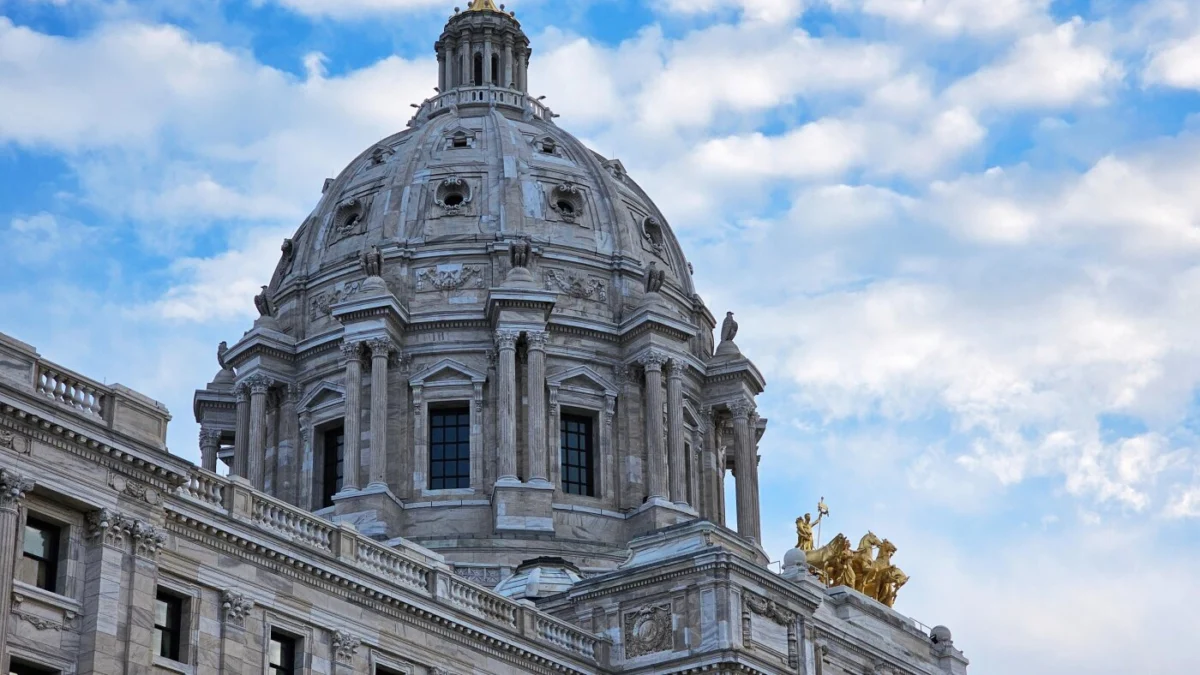
Minnesota has taken a significant step by becoming the first state in the nation to enact a law banning prediction market platforms such as Kalshi and Polymarket. Governor Tim Walz signed the legislation, which constitutes the most extensive crackdown to date on these increasingly popular services. The new law, set to take effect in August, criminalizes the hosting and advertising of prediction markets within the state. It defines a prediction market as any system allowing consumers to wager on future outcomes, encompassing events ranging from sports and elections to weather, entertainment, and global affairs.
The prohibition extends to ancillary services that could facilitate circumvention of the ban, including virtual private networks (VPNs) used to mask a user's location. This measure effectively compels platforms like Kalshi and Polymarket to cease operations in Minnesota or face potential felony charges. The law includes specific carve-outs for event contracts designed as insurance against harm or loss, as well as for the trading of securities and other commodities.
Representative Emma Greenman, a Democrat who sponsored the bill, stated that the state must determine the appropriate regulations for gambling to safeguard public safety and protect children. The legislative action in Minnesota arrives amid a broader national debate and increasing legal challenges concerning the oversight of prediction markets. While dozens of states have pursued legal actions against the industry, Minnesota's law marks a distinct escalation by establishing a statewide ban.
Beyond Minnesota, legislative efforts to curb prediction markets are underway in at least seven other states, according to the National Conference of State Legislators. Bills aiming for statewide bans are pending in Hawaii and North Carolina. Experts observe that the legal uncertainties surrounding prediction market applications have not hindered their rapid expansion. Melinda Roth, a professor at Washington and Lee University's School of Law specializing in the industry, noted that states are employing various tactics to challenge these companies. However, she also pointed out that prediction markets have achieved a level of mainstream adoption that makes them "too big to fail," suggesting that reversing their growth will be difficult.
The legal landscape for prediction markets is already fraught with contention. Over 20 lawsuits have been filed concerning whether states or the federal government should regulate this industry. In Nevada, a legal challenge led to Kalshi temporarily halting its sports betting operations after a judge deemed them indistinguishable from state-regulated sports gambling. The Commodity Futures Trading Commission (CFTC) has initiated federal lawsuits against five states, including Arizona, Wisconsin, and New York, seeking to preempt state regulators' efforts to control these betting sites.
The CFTC asserts its exclusive jurisdiction over prediction markets. However, former CFTC officials and legal scholars argue that the scope of these markets, which include wagers on events like football games, potential presidential statements, and celebrity appearances, extends beyond the CFTC's traditional purview. Kalshi has characterized Minnesota's ban as a "blatant violation" of the law, with spokeswoman Elisabeth Diana comparing the move to attempting to ban the New York Stock Exchange. She further argued that such prohibitions harm users by reducing competition and driving activity to offshore platforms.
A spokesperson for Polymarket echoed this sentiment, stating that Minnesota's ban contradicts the federal government's established regulatory framework for prediction markets. While Minnesota permits tribal-owned casinos, online gambling and sports betting remain illegal in the state. Prediction markets have provided access to sports betting for individuals in states where it is prohibited, largely because the Trump administration has regulated these sites as "event contracts" rather than traditional gambling, which falls under state gaming authorities' jurisdiction.
Despite this regulatory classification, sports gambling constitutes a significant portion of the activity on these platforms. On Kalshi, for example, over 85% of trading volume is linked to sporting events, often involving high-risk "parlay" bets that combine multiple outcomes. The sheer volume of trades, reportedly in the billions of dollars weekly, raises ongoing concerns about insider trading and the potential for market participants to manipulate real-world events to their advantage. The legal and regulatory battles over prediction markets highlight a fundamental disagreement about their nature and appropriate oversight, with states increasingly seeking to assert control in a rapidly evolving digital marketplace.


