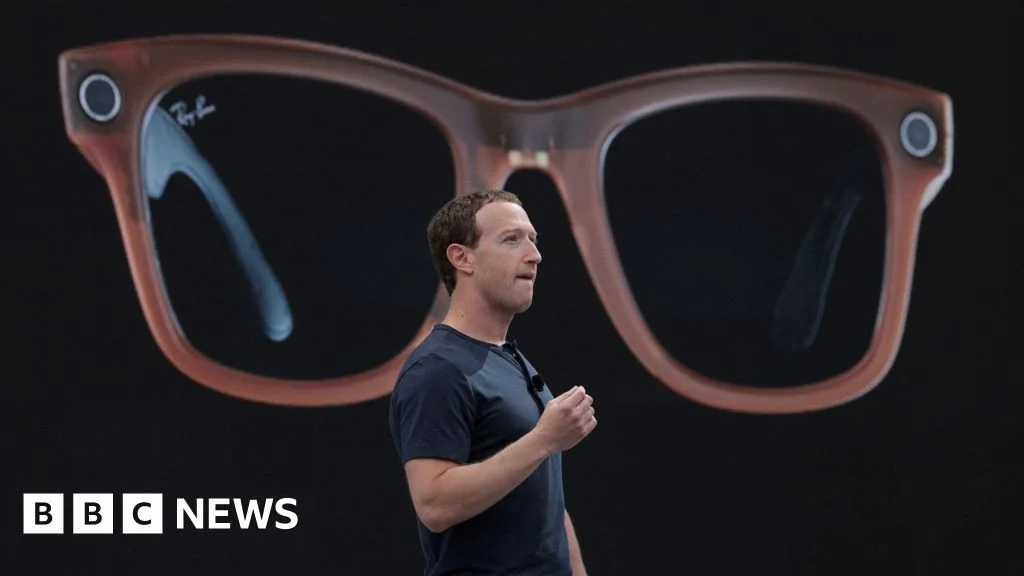
A new generation of "smart glasses" is rapidly gaining traction in the consumer electronics market, with Meta's Ray-Ban branded eyewear leading the charge. Despite mounting concerns over privacy invasions and potential misuse, the company reports selling millions of pairs, signaling a significant shift in wearable technology adoption. These devices, equipped with cameras and audio capabilities, are becoming increasingly prevalent, raising complex questions about personal space and consent in public.
Women in public spaces have reported being approached by individuals wearing Meta's smart glasses, often to record their reactions to casual interactions or pick-up lines without their knowledge. These videos frequently surface online, sometimes leading to widespread mockery or abuse. Victims often discover they have been filmed only after the content has gained significant traction, and their legal recourse is limited, as photography in public is generally permitted. In some instances, individuals who requested the removal of such recordings were informed that it would incur a fee.
Meta's smart glasses, a collaboration with EssilorLuxottica, have captured a dominant market share, estimated to account for over 80% of all smart or AI-enabled glasses sales. The product's appeal lies in its discreet design, resembling classic Ray-Ban frames, while incorporating an almost invisible camera, small speakers, and lenses capable of displaying information to the wearer. Users can initiate video recording or capture photos with a simple touch on the frames, a feature that can be so unobtrusive that even wearers have reportedly been caught off guard by their device's activity and data sharing.
Further complicating the narrative, former Meta workers in Kenya, tasked with reviewing videos captured by the glasses for AI training data, alleged they were exposed to graphic content, including sexual acts and bathroom usage. This revelation led to two lawsuits from individuals who claimed they were unaware their videos were being captured or subsequently shared for human review. Meta has stated that its terms of service inform users about the potential for human review under certain circumstances, yet sales continue to climb, with the company announcing over seven million pairs sold to date.
Meta's chief executive, Mark Zuckerberg, recently highlighted the product's success, calling them "some of the fastest-growing consumer electronics in history." A Meta spokesperson, Tracy Clayton, emphasized the importance of responsible technology use, stating that while the company dedicates resources to combating misuse, the ultimate responsibility lies with individual users to avoid exploitation. This stance comes as other major technology firms are preparing to enter the smart glasses arena, potentially establishing it as a significant new product category.
Apple is reportedly developing its own smart glasses, with a potential release next year, while Snap plans to launch a new version of its "Specs" this year. Google is also revisiting the smart glasses market, more than a decade after its initial Google Glass venture faced significant privacy backlash and was eventually withdrawn. These upcoming devices are expected to integrate artificial intelligence (AI) and augmented reality (AR) technologies, similar to Meta's offering, which typically necessitates camera functionality.
Despite the privacy concerns, some users find practical benefits in smart glasses. Mark Smith, a partner at advisory firm ISG specializing in enterprise software, uses his Meta Ray-Bans daily. He appreciates their basic features for listening to music or podcasts without isolating ambient sounds, making calls convenient, and capturing quick photos or videos while traveling without constantly retrieving his phone. However, even Smith acknowledges potential privacy issues, noting that the recording indicator light can be difficult to see in daylight and that most people are unaware he is wearing anything other than standard eyewear.
If predictions hold true, with researchers expecting up to 100 million people to purchase smart glasses in the coming years, the enforcement of existing laws and norms in sensitive locations like courthouses, museums, and hospitals could become significantly more challenging. The proliferation of cameras embedded in everyday eyewear presents a novel regulatory and societal hurdle. David Kessler, an attorney leading the US privacy practice at Norton Rose Fulbright, noted that many corporate clients are already confronting these issues, expressing concern about the societal implications of constant potential recording.
Meta's marketing for its glasses, under the tagline "Designed for privacy, controlled by you," suggests users should avoid recording individuals who do not wish to be filmed and to disable the devices in sensitive areas. However, these guidelines appear to be frequently disregarded. A common use case involves recording pranks on unsuspecting individuals, such as fake petition signings, retail workers interacting with unpleasant scents, or capturing food theft at drive-thrus. The discovery that one is being recorded by smart glasses often elicits a negative reaction, as experienced by influencer Aniessa Navarro, who felt distressed upon realizing her aesthetician was wearing Meta glasses during a private session.
Andrew Bosworth, Meta's chief technology officer, recently commented on the perceived "stigma" surrounding smart glasses, suggesting that the high sales volume of Meta Ray-Bans indicates widespread public acceptance. Conversely, David Harris, a former Meta AI researcher and current advisor on AI policy, anticipates that this generation of AI smart glasses will encounter similar privacy challenges that led to the downfall of Google Glass. He predicts that such technology is inherently an invasion of privacy and will likely face increasing public opposition.
Evidence of this growing opposition is emerging. In December, a man who complained online about a woman breaking his Meta glasses on the New York City Subway was met with widespread public support for her actions, with many hailing her as a hero. This incident, alongside reports of individuals being secretly filmed for social media content and subsequent online trolling, underscores the escalating tensions between technological advancement and the fundamental right to privacy. The legal and ethical frameworks surrounding wearable cameras are being tested as these devices become more integrated into daily life, prompting a critical re-evaluation of consent and surveillance in the digital age.
The potential for Meta to introduce facial recognition technology into future versions of its glasses further amplifies these privacy concerns. Such an advancement would not only enable surreptitious recording but also the rapid identification of individuals, creating a more pervasive surveillance capability. This development adds another layer of complexity to the ongoing debate about the ethical deployment of AI-powered wearables and the need for robust regulatory oversight to protect individuals from potential misuse and unwarranted intrusion into their personal lives. The rapid adoption rate and the increasing capabilities of these devices necessitate a proactive societal and legislative response to define acceptable boundaries for their use.


