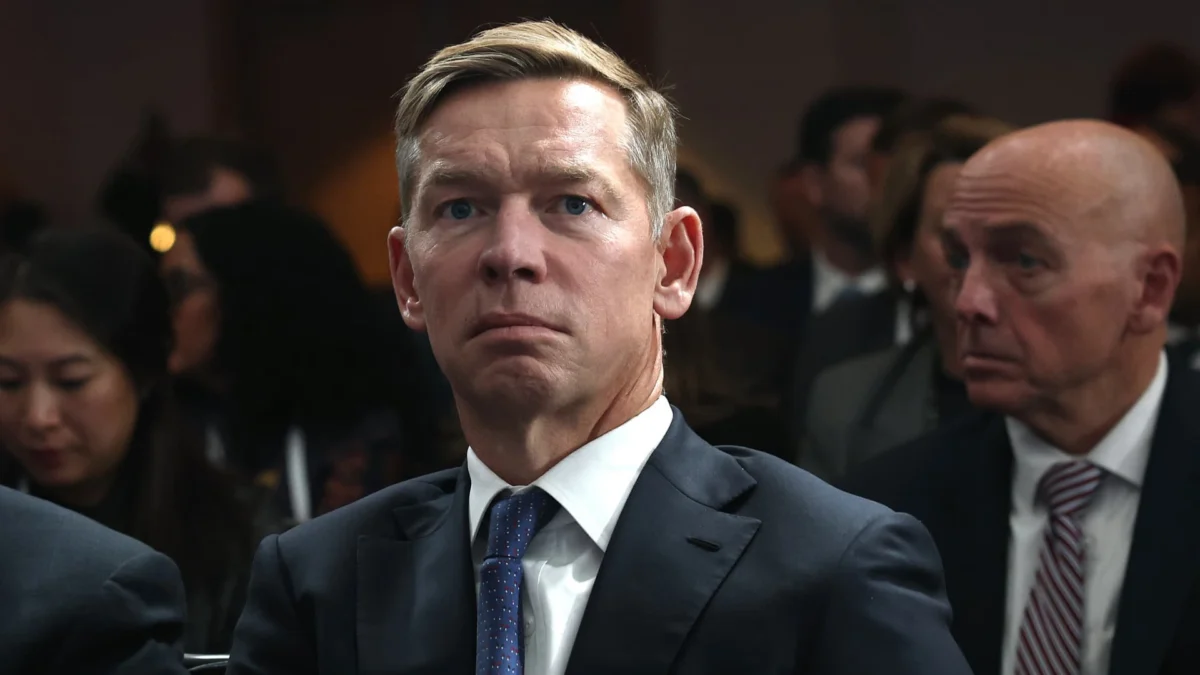
McDonald's reported first-quarter earnings and revenue that surpassed analysts' expectations, even as CEO Chris Kempczinski expressed concerns about the current consumer spending environment. The fast-food giant announced its results on Thursday, with shares initially seeing a modest increase in premarket trading before paring some of those gains.
Kempczinski acknowledged that McDonald's delivered a strong quarter despite operating in "a challenging environment." However, he also indicated that consumer spending conditions are not improving and may be deteriorating. "I think probably it's fair to say that … it's certainly not improving, and it may be getting a little bit worse," Kempczinski said on the company's earnings conference call. He added that the company's focus remains on "what we can control," and expressed confidence in navigating the remainder of the year.
Elevated gasoline prices, reportedly caused by the U.S. war with Iran, are contributing to a decline in spending among low-income consumers. Kempczinski stated, "Clearly, when you have elevated gas prices, which is the core issue that I think we're all seeing about in the press right now, gas prices, inflation on that, that is going to disproportionately impact low-income consumers." He anticipates that these pressures will continue.
This economic backdrop has also been observed impacting other major restaurant chains. Companies such as Domino's Pizza and Chipotle Mexican Grill have reportedly experienced softened sales trends in March, following the onset of these geopolitical conflicts.
McDonald's is strategically leveraging its value offerings as a key differentiator to capture market share from rival restaurant chains, even as consumers broadly dine out less frequently. The company's financial report revealed first-quarter net income of $1.98 billion, or $2.78 per share, an increase from $1.87 billion, or $2.60 per share, in the same period last year. Excluding restructuring charges and other items, the chain earned an adjusted $2.83 per share, exceeding the $2.74 anticipated by Wall Street analysts surveyed by LSEG.
Net revenue for the quarter saw a 9% increase, reaching $6.52 billion, which also beat the consensus estimate of $6.47 billion. The company's same-store sales increased by 3.8% in the quarter, aligning closely with Wall Street consensus estimates of 3.7%, according to StreetAccount.
In McDonald's domestic market, same-store sales climbed 3.9%. This growth was fueled by customers spending more during their visits. While the fast-food giant has emphasized value to attract budget-conscious diners, it has also been attempting to appeal to customers through marketing and innovation, often at a slightly higher price point. For instance, tie-in meals with "The Super Mario Galaxy Movie" and "KPop Demon Hunters" were not discounted. Furthermore, its limited-time, supersized Big Arch burger, launched in early March in the U.S., was introduced as a premium burger option.
One area of McDonald's U.S. business that reportedly disappointed executives involves its company-owned restaurants. These locations, which account for less than 5% of its total U.S. footprint, have been experiencing weaker profit margins. Consequently, McDonald's is reportedly considering selling these company-owned sites to franchisees, a move that could potentially improve operational efficiency and profitability.
Internationally, McDonald's also demonstrated solid performance. The company's international operated markets segment reported same-store sales growth of 3.9%. This division includes some of McDonald's largest markets, such as France, Germany, and Australia. The international developmental licensed markets segment saw same-store sales grow 3.4%, with Japan reportedly emerging as the division's top performer in the first quarter.
Looking ahead to the second quarter, McDonald's is anticipating weaker sales growth. This projection is partly due to challenging year-over-year comparisons, particularly following the successful launch of a "Minecraft" movie tie-in meal in the prior year. Chief Financial Officer Ian Borden stated that McDonald's was already forecasting a deceleration from the first quarter, even before the recent weakening in consumer sentiment became more pronounced. Borden expressed confidence in the company's underlying momentum, attributing it to the strength of its value and affordability strategies, which he believes are well-executed.


