New York's art market is gearing up for its most significant test of the year, with nearly $2 billion worth of art scheduled to go under the hammer at major auction houses Christie's, Sotheby's, and Phillips. The May auctions are highlighted by three individual artworks, each with the potential to fetch up to $100 million, signaling a robust demand for high-value pieces despite prevailing economic uncertainties and global tensions.
The upcoming sales represent a crucial barometer for the art market's health, marking the biggest test since the onset of geopolitical conflict. The major auction houses are relying on blockbuster works sourced from renowned collections to navigate the current climate of global unease and volatile financial markets. Despite growing concerns about a potential global economic slowdown and a possible reduction in buyers from the Middle East, art market professionals and dealers express optimism, pointing to a strong rebound that began in the fall of 2023.
Philip Hoffman, chairman and founder of Fine Art Group, an art advisory and sales agency, stated, "Buyers are engaged and looking for opportunity right now." He elaborated that today's ultra-wealthy collectors, including prominent figures like Ken Griffin, Steve Cohen, and Jeff Bezos, alongside a new wave of Asian tech billionaires, have accumulated substantial wealth and are actively seeking long-term stores of value. "They're sitting on massive amounts of liquidity," Hoffman noted, adding that for these individuals, the sums involved in art acquisitions are relatively modest.
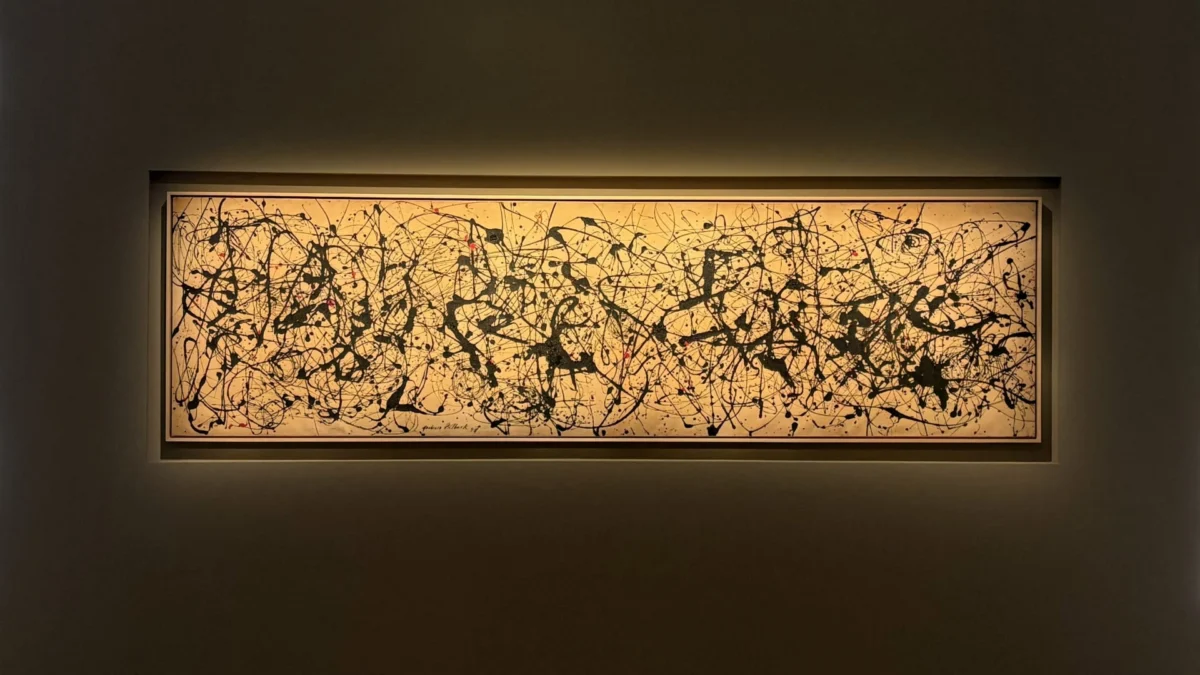
Three specific artworks are estimated to achieve prices of up to $100 million each. Among these headline lots are a monumental Jackson Pollock drip painting, "Number 7A, 1948," and Constantin Brancusi's 1913 sculpture, "Danaide." Adding to the high-end offerings, Mark Rothko's "No. 15 (Two Greens and Red Stripe)" is expected to command a price of around $80 million. The presence of over 20 works estimated at $20 million or more further underscores the depth of the market at its upper echelons, a figure more than triple that of the previous year. ArtTactic estimates that sales for the three auction houses will collectively range between $1.8 billion and $2.6 billion, with $2 billion in sales nearly doubling last year's total.
Marc Porter, chairman of Christie's Americas, observed a significant increase in foot traffic for the pre-auction viewings, describing the energy in the rooms as the most vibrant in nearly a decade. "There is an energy and buzz in the rooms that we haven't seen in a while," he said. Porter acknowledged the difficulty in pinpointing the exact drivers of this enthusiasm, whether it stems from the exceptional quality of the artworks, art's role as a refuge during turbulent times, or its function as a financial hedge. "It's tough to tell. We'll know in a week or two," he added, indicating that the results of the upcoming auctions are expected to provide clearer insights.
The current auction season builds upon a market recovery that gained significant momentum last fall. In 2023, auction sales had experienced a decline as sellers withheld their most prized works. This scarcity, particularly at the high end, led to reduced sales totals and prompted many galleries to scale back operations or close. However, the influx of significant private collections in the latter half of 2023 revitalized the market, leading to a notable upswing. Recent auctions in London, including a $175 million "white glove" sale at Sotheby's, demonstrated strong bidding across a wide range of price points and categories, according to advisors.
Key to the success of this month's New York sales are trophy pieces sourced from renowned collections. Christie's is featuring works from the estate of media magnate Samuel Irving "S.I." Newhouse Jr., who passed away in 2017. The collection includes "Danaide," a 1913 sculpture by Constantin Brancusi, estimated to sell for $100 million, and a large-scale Jackson Pollock drip painting titled "Number 7A, 1948," also estimated at $100 million. Christie's is also presenting works from the collection of Agnes Gund, including Mark Rothko's "No. 15 (Two Greens and Red Stripe)," estimated at $80 million.
Sotheby's, meanwhile, is presenting works from the collection of the late Robert Mnuchin, a former Goldman Sachs partner and father of former Treasury Secretary Steven Mnuchin. Mnuchin was a notable collector of Abstract Expressionist artists, including Rothko, Willem de Kooning, and Franz Kline. The auction features Rothko's towering "Brown and Blacks in Reds," estimated between $70 million and $100 million.
Provenance, the history of ownership of an artwork, is playing an increasingly critical role in valuation. Artworks previously owned by prominent collectors such as the Rockefellers, Paul Allen, the Lauder family, or S.I. Newhouse Jr. command higher premiums as new collectors seek the validation associated with such esteemed previous owners. Betsy Bickar, head of art advisory at Citi Private Bank, explained that these collectors were "connoisseurs" who understood the significance of their acquisitions and were willing to pay premium prices for pieces with such distinguished histories.
The Middle East remains a significant, albeit uncertain, factor for the auctions. Wealthy individuals and institutions from Saudi Arabia, Qatar, and the United Arab Emirates have been active participants in the art market in recent years, driven by initiatives to build cultural institutions and diversify their economies. However, the ongoing conflict in the region could potentially redirect capital towards domestic rebuilding efforts, impacting art acquisition budgets. Dealers and experts suggest that the impact on this particular auction cycle might be limited, as many Middle Eastern buyers have historically favored private sales over public auctions.
Furthermore, the long-term commitment of Middle Eastern leaders to developing cultural infrastructure remains a strong underlying support for the market. "There are Middle Eastern buyers who are still looking to bolster the holdings of these new museums, and making sure these museums have real quality work," Bickar stated. "I wouldn't be surprised if you see a lot of Middle Eastern buying in this round of sales." This suggests that despite geopolitical considerations, significant interest from the region is still anticipated.
American buyers are anticipated to be the primary driving force behind the New York sales. Porter emphasized that even with potentially subdued international bidding, the domestic market appears strong. "The bulk of buying is American buying," he asserted. "Americans who have money in the stock market or who are in the financial markets or in the technology markets, even the real estate markets, are all making a lot of money and buying works of art. The Europeans have been consistent and strong. The Asians, particularly the mainland Chinese, a little bit less represented, but still very strong."
Many of the high-value lots are secured with third-party guarantees or irrevocable bids. This practice, where a buyer commits to a minimum purchase price before the auction, reduces risk for both auction houses and sellers, though it may diminish the element of surprise during the live sale. Hoffman views this as a beneficial strategy, describing it as a "win-win situation" for clients, ensuring a degree of certainty in the sales process.
Overall, the May auctions represent a critical juncture for the art market, with nearly $2 billion in potential sales and the possibility of multiple artworks crossing the $100 million threshold. The event will gauge the appetite of major collectors and the resilience of the market in the face of global economic and geopolitical challenges, with American buyers expected to lead the charge.


