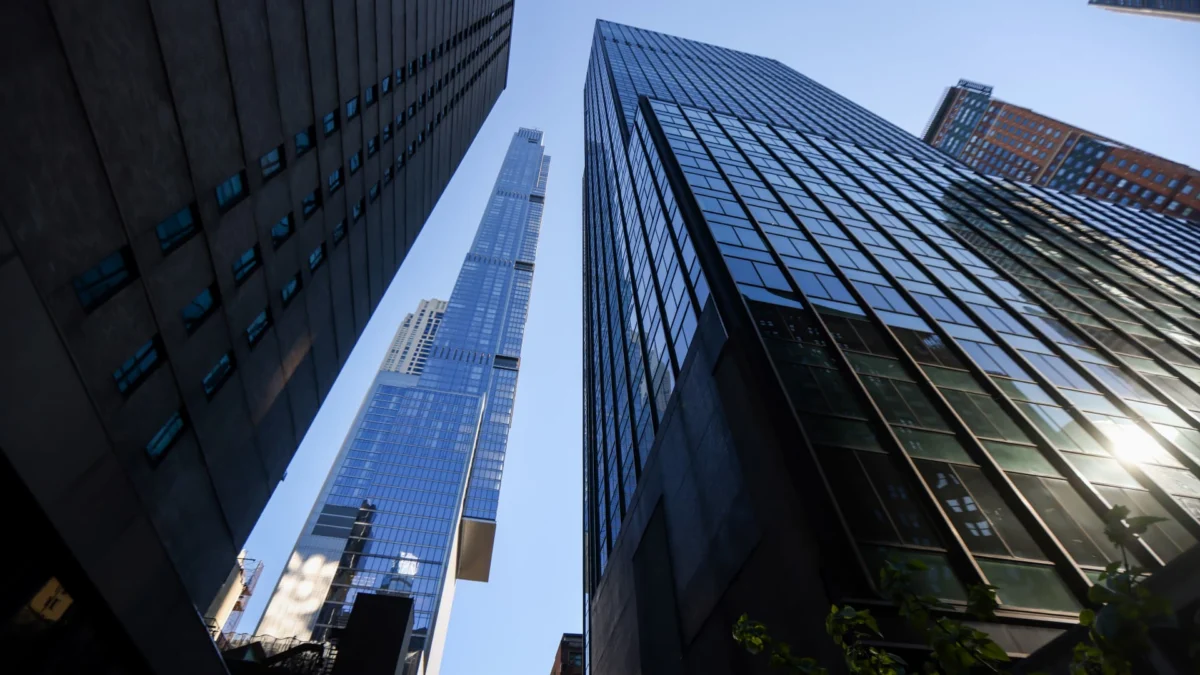
Manhattan's high-end real estate market has demonstrated notable strength in recent weeks, with sales of properties valued at $4 million and above showing an increase compared to the same period last year. This activity occurs despite the looming presence of a proposed pied-à-terre tax, which real estate professionals and business leaders have cautioned could deter wealthy buyers and impact the city's economy.
According to data compiled by Olshan Realty, 133 contracts were signed for apartments priced at $4 million or more between April 14 and May 10. This figure represents a slight uptick from the 130 contracts recorded during the equivalent period in the previous year. The overall dollar volume for these high-value transactions also saw a 10% increase, reaching $1.12 billion.
The luxury segment of the market, specifically properties priced at $10 million or more, exhibited particularly robust performance. Contracts for these ultra-luxury residences surged by 80%, with 34 such deals being finalized. This significant growth in the highest echelons of the market contrasts with concerns raised about the potential effects of the proposed tax.
Donna Olshan, president of Olshan Realty, commented on the recent sales figures, stating that the past four weeks indicate the impending pied-à-terre tax has not yet deterred activity in Manhattan's luxury market. However, she acknowledged that the market's trajectory could shift once the tax is officially implemented.
The proposed pied-à-terre tax, championed by New York Mayor Zohran Mamdani and supported by Governor Kathy Hochul, is designed as an annual levy on non-primary residences in New York valued at $5 million or more. Mayor Mamdani has stated that the tax is projected to generate $500 million in annual revenue and aims to ensure that part-time New Yorkers contribute their fair share to the city's finances.
In response to the proposal, real estate brokers and industry advocates have been actively lobbying against the tax in Albany. They argue that its imposition could negatively affect the real estate market, lead to job losses, and ultimately reduce tax revenues for the city. Owners of second homes in New York already contribute through property taxes and do not typically utilize many public services such as schools or public transportation to the same extent as primary residents.
Pamela Liebman, President and CEO of The Corcoran Group, indicated that the firm has observed numerous deals being put on hold, particularly in the $30 million to $40 million price range, as potential buyers adopt a wait-and-see approach regarding the tax's future. This cautious stance highlights the uncertainty the proposed legislation is creating among high-net-worth individuals and their advisors.
The debate surrounding the pied-à-terre tax intensified following Mayor Mamdani's announcement of the proposal. He released a social media video in front of the apartment building associated with Citadel CEO Ken Griffin, who resides in Miami. Griffin had purchased a Manhattan apartment in 2019 for $238 million, a transaction that set a record for the most expensive home sale in the United States. Citadel is also involved in significant development projects, including a new $6 billion building on Park Avenue and a new headquarters in Miami.
Ken Griffin, in a recent interview with CNBC, stated that he intends to expand Citadel's workforce in Miami over the next decade. He directly attributed this decision to Mayor Mamdani's proposal and the manner in which it was presented, describing the social media post as being "in poor taste."
A spokesperson for Mayor Mamdani responded to Griffin's comments, asserting that the mayor's objective is for all New Yorkers to prosper. The spokesperson further contended that the current tax system is fundamentally flawed, disproportionately benefiting extreme wealth while placing working individuals under significant financial strain.
Significant challenges remain regarding the practical implementation of the proposed tax, particularly concerning the valuation of New York properties. The city's existing property assessment system is considered outdated, often valuing properties considerably below their actual market worth. This system results in a limited number of apartments officially valued at $5 million or more, potentially affecting the scope and revenue generation of the proposed tax.
For instance, Ken Griffin's $238 million apartment is assessed by the city at $6.99 million and valued for tax purposes at only $15.5 million, according to previous reports. This discrepancy draws attention to how the pied-à-terre tax would be applied and how much revenue it could realistically capture from high-value properties.
Governor Hochul announced last week that an agreement on the broad framework of the state budget had been reached with the legislature, which includes the pied-à-terre tax. However, specific details regarding the tax rates, implementation timeline, and the precise valuation methodology have not yet been disclosed, leaving many stakeholders in anticipation.


