Despite President Donald Trump's assertion that he would "remember" companies that did not seek refunds for tariffs paid, many of the largest U.S. corporations have proceeded to apply for this money. Among the prominent businesses seeking to recoup duties are Walmart, Apple, Nike, Home Depot, General Motors, FedEx, and Costco. Business groups and lobbyists have been working to interpret the president's statement, while companies consider how to utilize any recovered funds in a manner that satisfies both the White House and their customer base.
President Trump had previously suggested he would be mindful of companies that opted out of seeking tariff refunds, particularly after the Supreme Court's decision to strike down his broad global duties. Early on, some major firms, such as Amazon, reportedly hesitated to request refunds, fearing they might alienate the president and face repercussions, according to CNBC reporting earlier this year. However, a shift has occurred, with major U.S. companies from Walmart to Apple now confirming their pursuit of owed funds, irrespective of potential consequences.
Other significant U.S. corporations that have indicated they are seeking refunds include Home Depot, General Motors, John Deere, FedEx, and Costco. These actions, while not necessarily signaling a fundamental change in how companies interact with Trump, highlight instances where they are willing to publicly diverge from the president's expressed preferences. This willingness comes after Trump told CNBC he would "remember" if companies decided not to seek refunds.
The business rationale for applying for these refunds is strong, often aligning with fiduciary responsibilities to shareholders. Major companies have the opportunity to recover potentially billions of dollars, thereby maximizing shareholder returns. The U.S. Customs and Border Protection reported in a court filing earlier this month that over $35 billion in refund money has already been processed and is being disbursed to businesses. The government's total outstanding refund obligation is approximately $166 billion.
During an appearance on "Squawk Box" last month, President Trump responded to CNBC's Andrew Ross Sorkin's observation that Apple had initially held back on applying for a refund, seemingly to avoid upsetting the president. In response, Trump said it was "Brilliant if they don't do that." He further elaborated, "Actually, if they don't do that, they've got to know me very well." Trump concluded by stating, "If they don't do that, I'll remember them."
These remarks generated considerable attention in Washington, with lobbyists and business groups noting that they initially caused some importers to pause and consider whether to proceed with their refund applications. Companies have been attempting to decipher the precise meaning of the president's statement and the potential for administrative retaliation. Nevertheless, the threat has not deterred major U.S. companies from seeking to reclaim their tariff payments.
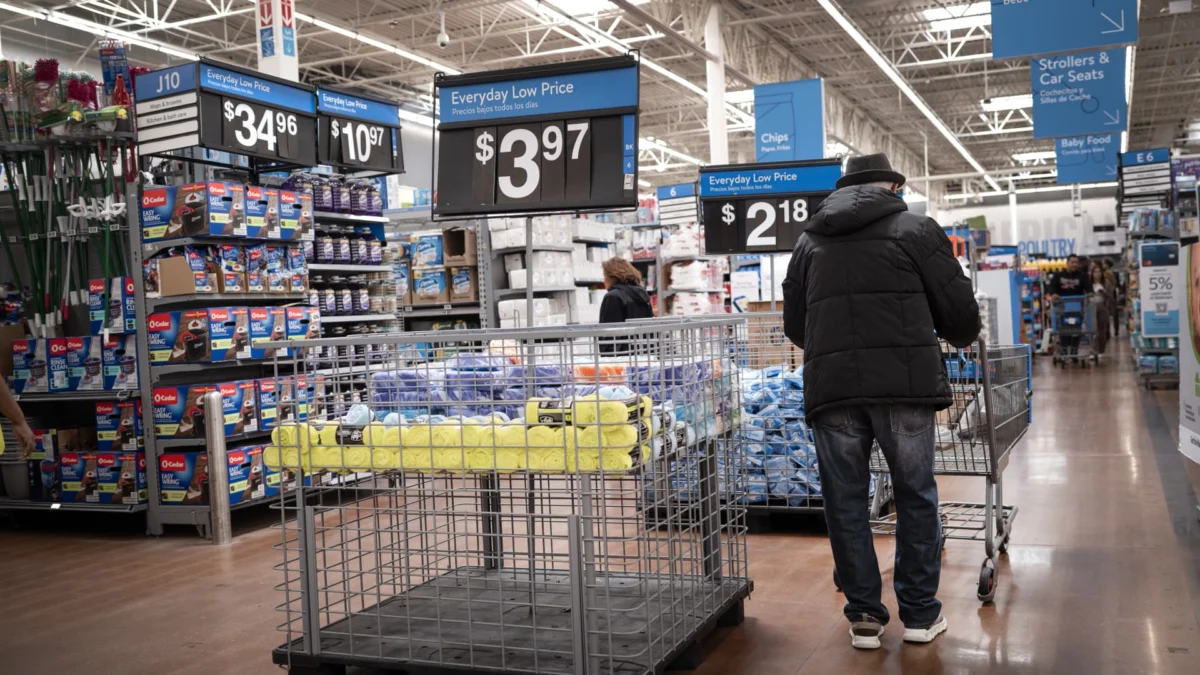
Walmart, the nation's largest retailer, which had previously faced Trump's criticism when it suggested that tariffs might necessitate price increases, leading Trump to tell the retailer to "eat the tariffs" and that he would be "watching," has confirmed its application for refunds. In an interview with CNBC on Thursday, Walmart's finance chief, John David Rainey, confirmed the company's pursuit of refunds for what are termed IEEPA tariffs. However, Rainey indicated that the company does not anticipate a substantial financial windfall from these refunds, describing it as a "relatively small part of our overall business."
Rainey explained that to be eligible for these refunds, a company must be the importer of record. For Walmart, this applies to about half of 1% of its U.S. sales. In fiscal year 2026, Walmart U.S. reported net sales of $483 billion. Consequently, half of 1% would amount to approximately $2.42 billion. While this sum is considerable compared to the annual revenue of many companies, Rainey emphasized that it is not material for a business that generated over $713 billion in total revenue in the last fiscal year. He added, "every little bit matters."
Walmart intends to prioritize the deployment of any recovered refunds toward price investments for its customers. Rainey stated, "We're going to prioritize those refunds if and when we get them towards investing in price for our customers." He further elaborated on the strategic rationale, noting, "We recognize that given where we are right now with both the stress on the consumer as well as the retention of the share gains that we've seen, the best ROI on that dollar of capital is to invest in price for our customers."
Companies are increasingly viewing the use of tariff refunds as a means to benefit consumers, even indirectly. Neil Bradley, chief policy officer at the U.S. Chamber of Commerce, noted that a common theme among companies seeking refunds is that the money will help them avoid raising prices as rapidly as they had anticipated. He described this as a difficult but real benefit.
Walmart's confirmation of its refund application followed Target CFO Jim Lee's statement on Wednesday that the company was "working through the process" of obtaining a refund. Home Depot finance chief Richard McPhail also indicated on Tuesday that the retailer had applied for and received an "immaterial amount to date," adding that they had "assumed that that could provide a significant offset to those costs."
Some companies are exploring ways to allocate their refund money that would be viewed favorably by both the White House and their customers. For instance, Apple has publicly stated its intention to apply for a tariff refund since Trump's comments. CEO Tim Cook announced plans to reinvest any recovered funds into "U.S. innovation and advanced manufacturing," areas that are a significant priority for President Trump.
Meanwhile, other major companies have remained silent on their plans regarding tariff payments. Amazon, which is currently facing a class-action lawsuit over its decision not to pursue a refund, has not responded to requests for comment on its application status. Lowe's CEO Marvin Ellison, when asked on Wednesday, declined to state whether the retailer is applying for refunds, saying, "We're just monitoring the situation." He added, "We haven't talked publicly about whether we filed or not, but what we have done is paid really close attention to the situation, understanding that when tariff refunds go out, they go out to everybody, and so we're right now trying to determine if and when those refunds happen."
This situation underscores the combination between corporate financial strategies, government policy, and presidential influence. While the financial implications of these refunds may be material for some and less so for others, the act of applying itself signals a corporate willingness to navigate potential political sensitivities in pursuit of financial recovery. The total amount of refunds processed and the overall government liability highlight the significant scale of these duties and the subsequent reclamation efforts by businesses across various sectors.


