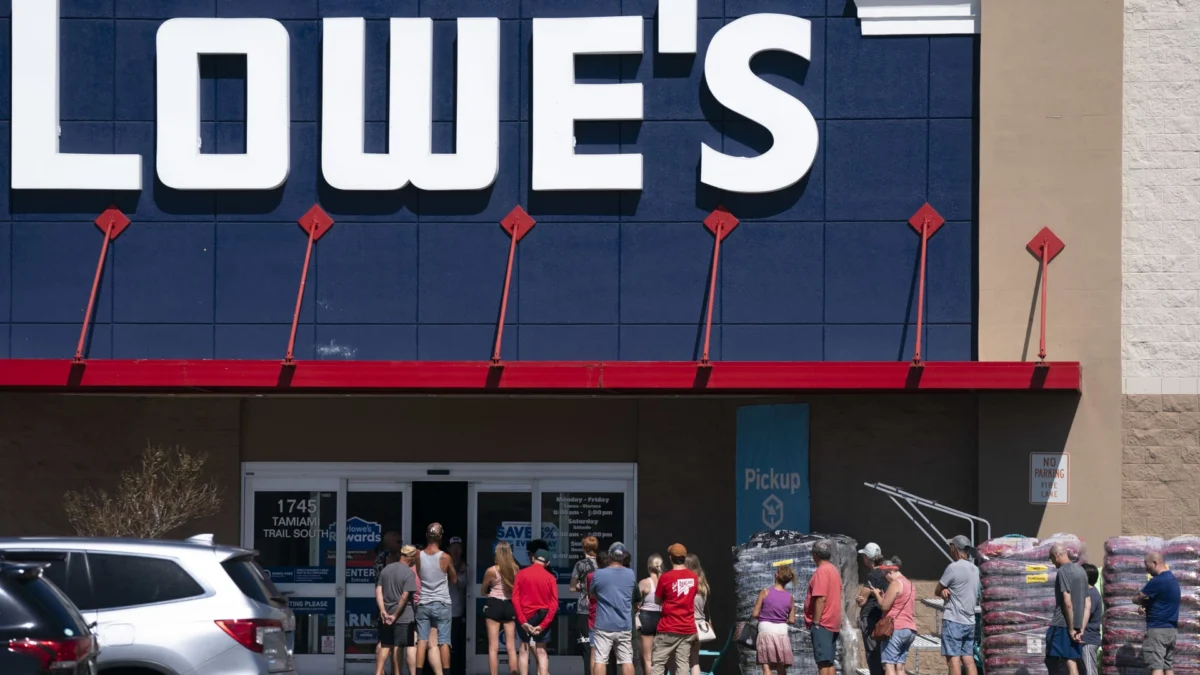
Lowe's reported its fiscal first-quarter results, surpassing Wall Street's earnings and revenue expectations despite a challenging housing market. The home improvement retailer announced that its growth in the quarter was bolstered by strong spring execution, an increase in online sales, and robust performance in appliances, home services, and sales to professional clients.
CEO Marvin Ellison acknowledged the prevailing "challenging housing macro" during a call with analysts on Wednesday. He noted that while do-it-yourself (DIY) demand remains under pressure, Lowe's has continued to grow market share in a difficult housing environment characterized by elevated interest rates, higher costs, and low housing turnover. Ellison expressed confidence in the company's strategy, stating, "While we expect a broader market to remain flat in 2026, our focus remains on disciplined execution of our total home strategy, driving continued growth regardless of market conditions."
For the fiscal first quarter ended May 1, Lowe's reported net income of $1.63 billion, or $2.90 per share. Excluding one-time factors such as acquisition costs, the company posted adjusted earnings per share of $3.03. This figure exceeded Wall Street's consensus estimate of $2.97 per share. Revenue for the quarter reached $23.08 billion, also surpassing the expected $22.97 billion.
Lowe's saw comparable sales increase by 0.6% for the quarter. The company attributed this growth to its spring execution initiatives and a significant 15.5% surge in online sales. Ellison highlighted the company's performance with DIY customers, who constitute roughly 60% to 65% of Lowe's revenue. "This has been a really difficult do-it-yourself housing market, so for us to do four consecutive quarters of positive comps, we were pleased with that," Ellison told CNBC.
Despite broader macroeconomic concerns and soaring gas prices impacting consumer sentiment and discretionary spending, Ellison indicated that Lowe's core homeowner customer base is largely insulated from high fuel prices. However, he noted that the combination of gas prices with other macro concerns is contributing to lower consumer sentiment overall.
Looking ahead, Lowe's reaffirmed its full-year guidance. The company anticipates total sales to be between $92 billion and $94 billion, representing a year-over-year increase of 7% to 9%. Comparable sales are projected to be flat to up 2% compared to the previous year. Lowe's expects its full-year adjusted earnings per share to range from $12.25 to $12.75.
Ellison described the current economic landscape as K-shaped, with higher-income consumers increasing their spending while lower-income consumers are curtailing theirs. He emphasized Lowe's track record of performing well and managing expenses to drive sales growth irrespective of macroeconomic conditions. "We have a track record of performing well, managing expenses and finding ways to grow sales, irrespective of the macro, and we plan to take share this quarter," he stated.
The company's performance comes against a backdrop of a struggling housing market, with Ellison characterizing the current environment as the most difficult he has encountered since the financial crisis. He believes that a sustained reduction in interest rates, particularly a move below 6% for 30-year fixed and short-term rates, is crucial to stimulating activity in the housing and home improvement sectors.
Lowe's executive vice president of merchandising, Bill Boltz, commented that the company's professional customer segment remains actively engaged with repair and maintenance projects. Executives also noted that high oil prices have exerted pressure, with the impact becoming more pronounced in the current quarter compared to the first quarter.
In February, Lowe's implemented workforce reductions, cutting approximately 600 corporate and support roles to better align resources and enhance focus on store employees. The company is closely monitoring the situation regarding tariff refunds, though it has not publicly disclosed its application status, unlike its rival Home Depot, which has applied for such refunds to potentially offset rising fuel costs.


