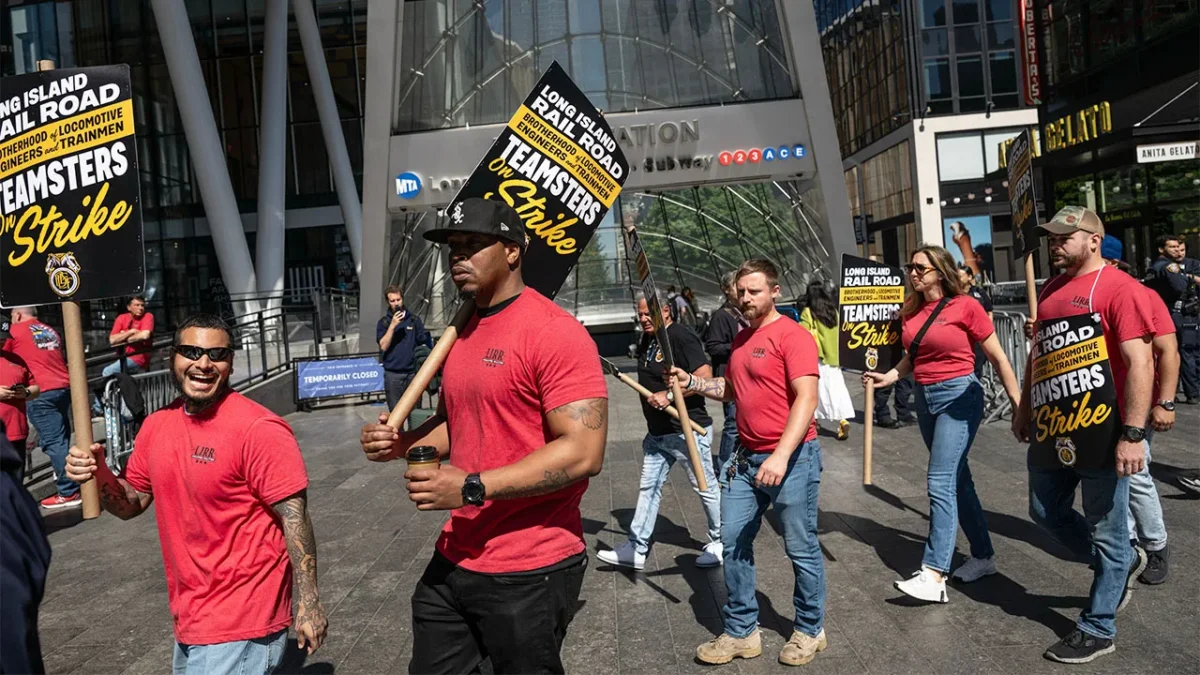
Thousands of Long Island Rail Road workers initiated a strike at midnight Saturday, bringing the nation's busiest commuter railroad to a standstill. This marks the first strike in over three decades and threatens significant economic disruption across the New York region just before the busy Memorial Day travel period. The labor action has halted service for approximately 300,000 daily riders following the failure of last-minute contract negotiations between the Metropolitan Transportation Authority (MTA) and a coalition of five rail unions to secure a wage agreement.
The MTA confirmed the complete suspension of LIRR service on Saturday, advising commuters that there are "no substitutes" for the railroad. Officials urged those who can work remotely to do so, anticipating severe congestion and delays throughout the metropolitan area. The economic impact is projected to be substantial, with New York State Comptroller Thomas DiNapoli’s office estimating the strike could cost the regional economy up to $61 million per day in lost economic activity. Commuters are now scrambling for alternative transportation, and businesses are bracing for potential disruptions.
Workers involved in the coalition have reportedly gone more than three years without a raise while negotiating a new labor agreement. Mark Wallace, president of the Brotherhood of Locomotive Engineers and Trainmen and the Teamsters Rail Conference, stated that the strike "would not have happened if the MTA and LIRR offered our members the reasonable terms the government recommended multiple times. But management refused." He added, "We hope LIRR gets serious soon to avoid further unnecessary disruptions for hundreds of thousands of New Yorkers. They know where to find us when they’re ready: on the streets."
MTA officials, however, defended their bargaining stance. They argued that the unions' demands for wage increases could ultimately lead to fare hikes and place further strain on the transit system's finances. MTA Chair and CEO Janno Lieber stated that the agency "cannot responsibly make a deal that implodes MTA’s budget," warning that taxpayers and riders might eventually bear the cost of any significant wage increases. Lieber also suggested that union leaders had planned to strike regardless of the MTA's offers, asserting that the latest proposal provided workers with "everything they said they wanted in terms of pay."
New York Governor Kathy Hochul characterized the strike as "reckless," expressing concerns about its potential negative impact on commuters, businesses, and the broader regional economy. With her reelection campaign underway later this year, Hochul noted that the unions' demands could necessitate fare increases and higher taxes for Long Island residents.
President Donald Trump also commented on the dispute, placing blame on Governor Hochul for permitting the strike to occur. "If you can’t solve it, let me know, and I’ll show you how to properly get things done," Trump posted on Truth Social.
The current standoff highlights the increasing pressures faced by public transit systems nationwide. Labor unions are advocating for higher wages, while transit agencies are simultaneously dealing with post-pandemic budget challenges and evolving commuting patterns. The situation at the Long Island Rail Road is emblematic of these broader trends.
Transit officials have not provided a timeline for when negotiations might resume or how long the strike is expected to last. In the interim, commuters across the New York area are actively seeking alternative transportation methods, facing uncertainty and potential travel complications as the holiday weekend approaches.
This labor dispute is the first strike to affect the Long Island Rail Road since 1994, underscoring the rarity and potential severity of the current disruption. The railroad's critical role in the daily lives of hundreds of thousands of New Yorkers makes its operational halt a significant event with far-reaching consequences for individuals and the economy alike.
The economic ramifications extend beyond direct commuter costs. Businesses that rely on a steady flow of employees and customers are bracing for potential losses. Retailers, restaurants, and service industries that depend on the daily influx of workers and residents from Long Island could experience a noticeable downturn in activity during the strike period.
Officials are urging patience and preparedness from the public. The MTA's warning about the lack of substitutes emphasizes the LIRR's unique position in the region's transportation network. The reliance on this single rail line for so many commuters means that alternative options, such as buses, subways, or personal vehicles, are likely to become overwhelmed, leading to significant traffic congestion and extended travel times for many.
The negotiations have reportedly stalled over wage increases, with both sides expressing concerns about financial sustainability. The unions are seeking compensation that reflects the years without raises, while the MTA is focused on maintaining fare affordability and fiscal responsibility. This classic labor-management conflict is playing out against a backdrop of economic uncertainty and evolving public transit needs.
The strike's timing, immediately preceding a major holiday weekend, exacerbates the inconvenience and potential economic damage. Memorial Day weekend typically sees increased travel for leisure and family gatherings, and the disruption to the LIRR will undoubtedly affect many of these plans. The ripple effects could be felt across various sectors, from hospitality to retail, as travel patterns are altered.
As the situation unfolds, commuters are left to navigate a challenging transportation landscape. The duration of the strike remains uncertain, adding another layer of difficulty for those who depend on the LIRR. The resolution of this dispute will likely depend on the willingness of both the MTA and the rail unions to find common ground and compromise on their respective positions, balancing the needs of workers with the financial health of the transit system and the economic well-being of the region.
The union leaders have expressed a clear desire for the MTA to return to the negotiating table with a more amenable offer. Their stance suggests that a swift resolution is possible if management is willing to meet their demands for fair compensation after a prolonged period without wage adjustments. The ball appears to be in the MTA's court to present a proposal that could satisfy the workers and end the strike.


