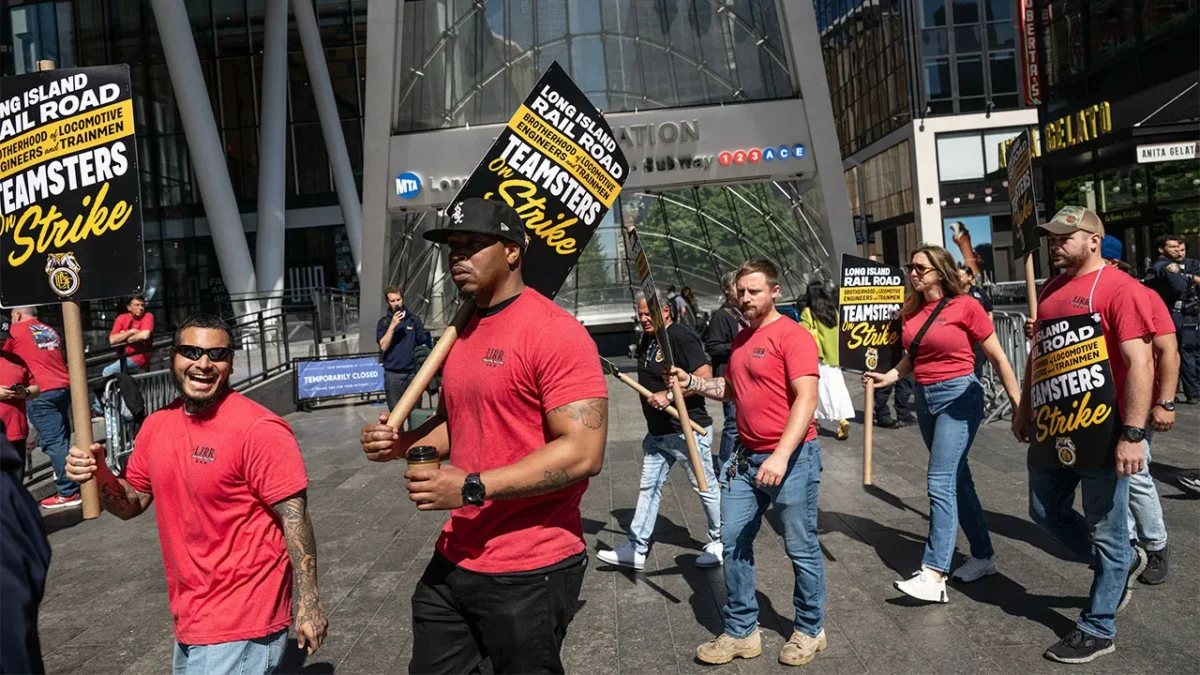
New York Governor Kathy Hochul announced Monday that the Long Island Rail Road (LIRR) strike would conclude, following a resolution reached between the Metropolitan Transportation Authority (MTA) and union leaders. Phased service was slated to resume Tuesday at noon, offering relief to hundreds of thousands of commuters across the New York region.
In a post on X, Hochul stated that the MTA had secured a fair agreement with the five LIRR unions, which includes provisions for worker raises while also safeguarding the interests of riders and taxpayers. "Tonight, the [MTA] reached a fair deal with the five LIRR unions that delivers raises for workers while protecting riders and taxpayers," she wrote. "I’m pleased to announce that phased LIRR service will resume beginning tomorrow at noon."
The agreement averted a significant economic disruption that loomed over the New York metropolitan area, particularly with the approaching Memorial Day holiday. The strike, which began at midnight on Saturday, May 16, 2026, had effectively halted operations at the nation's busiest commuter railroad for the first time in over three decades. Thousands of LIRR workers participated in the labor action.
The work stoppage impacted approximately 300,000 daily riders. It stemmed from a failure to reach a wage agreement during last-minute contract negotiations between the MTA and a coalition of five rail unions. The MTA had confirmed the suspension of all LIRR service on Saturday, advising commuters to work remotely if feasible and warning of substantial congestion and delays throughout the region due to the lack of alternative transportation options.
An estimate from the office of New York State Comptroller Thomas DiNapoli projected that the strike could impose a daily economic cost of up to $61 million on the regional economy. This figure accounts for lost economic activity as commuters sought alternative travel methods and businesses prepared for potential disruptions.
This labor dispute marked the first LIRR strike since 1994. Union representatives indicated that members of the coalition had been working for more than three years without salary increases while the new labor agreement was under negotiation.
Union leaders expressed dissatisfaction with the MTA's negotiation stance. Mark Wallace, president of the Brotherhood of Locomotive Engineers and Trainmen and the Teamsters Rail Conference, stated, "This strike would not have happened if the MTA and LIRR offered our members the reasonable terms the government recommended multiple times. But management refused." He added, "We hope LIRR gets serious soon to avoid further unnecessary disruptions for hundreds of thousands of New Yorkers. They know where to find us when they’re ready: on the streets."
MTA officials defended their position during the negotiations, asserting that substantial wage hikes could lead to increased fares and place undue financial pressure on the transit system. MTA Chair and CEO Janno Lieber emphasized the agency's commitment to fiscal responsibility, stating that the MTA "cannot responsibly make a deal that implodes MTA’s budget." He cautioned that any increased costs resulting from larger wage settlements could ultimately be borne by taxpayers and riders.
Governor Hochul had previously characterized the strike as "reckless," expressing concerns about its potential negative impact on commuters, businesses, and the broader regional economy. President Donald Trump also commented on the situation, attributing responsibility for the strike's occurrence to Governor Hochul. "If you can’t solve it, let me know, and I’ll show you how to properly get things done," Trump posted on Truth Social.
The resolution of the strike brings relief to a critical transportation artery for the New York metropolitan area. The LIRR serves as a vital link for commuters traveling between Long Island and Manhattan, and its disruption posed significant challenges to daily life and economic activity. The agreement, while averting further economic losses, highlights the ongoing tension between labor demands and the financial constraints faced by public transit authorities.
Negotiations for the new contract had been ongoing for an extended period, with union members expressing frustration over the lack of wage increases for over three years. The MTA, conversely, pointed to the need to maintain fare affordability and the overall financial health of the transit system as key considerations in their bargaining strategy.
This situation underscores the complex dynamics involved in public sector labor relations, particularly within essential services like commuter rail. The economic impact of such disruptions can be substantial, affecting not only individual commuters but also businesses that rely on a functioning transportation network.
The agreement reached between the MTA and the five rail unions is expected to provide a framework for labor relations moving forward, aiming to prevent similar disruptions in the future. The details of the wage increases and other terms of the agreement were not immediately disclosed, but the resumption of service indicates a mutually acceptable compromise was found.
The strike's halt in service, which began on Saturday, May 16, 2026, at midnight, had a cascading effect on traffic and public transportation across the city and its surrounding suburbs. Commuters faced lengthy delays and increased costs as they sought alternative routes, including buses, subways, and ride-sharing services.
Officials had braced for significant gridlock, and the MTA's warning about "no substitute" for the LIRR highlighted the railroad's indispensable role in the region's transportation infrastructure. The economic cost, estimated at $61 million per day, reflects the interconnectedness of transportation and economic vitality.
The resolution, announced on Monday, came after intense negotiations and underscores the pressure on both sides to reach a compromise. Governor Hochul's intervention and the subsequent agreement helped to restore normalcy for hundreds of thousands of daily riders.
The first strike since 1994 serves as a stark reminder of the potential for labor disputes to impact major public services. The resolution aims to ensure stability for the foreseeable future, though the underlying financial considerations for the MTA remain a key factor in future contract talks.
The agreement's terms, designed to address worker compensation while managing the MTA's budget, represent a delicate balancing act. The successful resumption of service is a positive outcome for the region's commuters and businesses.


