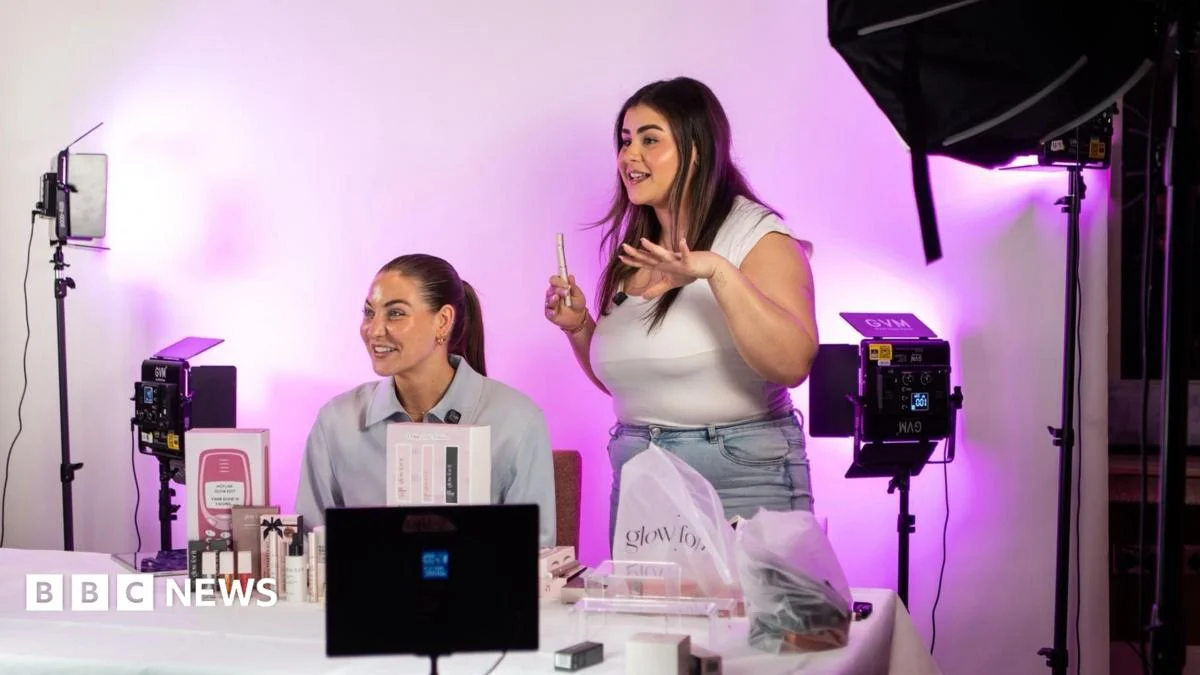
Daisy Kelly started Glow For It in 2020 from her mother’s kitchen table after a personal health challenge, and today the cosmetics and lash-growth brand posts about £6 million in annual sales. More than 40% of its revenue comes from TikTok Shop UK, with livestreams playing a growing role in drawing customers and converting interest into orders. Kelly notes that a 12-hour TikTok live event generated over £100,000 in revenue, illustrating how live selling can alter a small business’s trajectory.
Glow For It streams from a studio for at least six hours daily, with presenters engaging directly with shoppers, showcasing products and answering questions. The format is described as akin to having 500 people in a physical shop, but in a digital environment where viewers tune in from all over the country.
Across platforms, livestream shopping has become a notable channel for retailers. Markets and platforms such as Instagram Live, YouTube Shopping, eBay Live, and Amazon Live are expanding their live-selling features, each with different fee structures. In the UK, TikTok Shop says year-on-year UK sales growth hit more than 30% in June, with live shopping identified as the fastest-growing format and more than 6,000 livestreams now taking place daily.
Events at Covent Garden showcased how small businesses are leveraging live selling to reach audiences nationwide. One meat butcher, Manny Malik of Wolverhampton, described a three-hour TikTok live session that sold about £8,000 worth of meat, a level that would typically take several days in-store. Malik says the platform is enabling expansion, with plans to open a second shop in Stoke.
However, the growth comes with costs. TikTok Shop UK applies a standard commission that keeps up to 9 pence for every £1 sold on the platform, while eBay’s live format charges depending on category, ranging approximately from 6.9p to 14.9p. eBay Live’s combined fees, including payment processing, can reach up to 8.42p. For some sellers, such as jewellery brand Adorina, the livestreaming opportunity has transformed order volumes—from about 50 orders a month to roughly 500 orders a week since May, with production scaling accordingly.
The live-shopping wave is drawing attention from entrepreneurs who value flexibility. Buket Sevik, 34, notes she can go live at times that suit her family life, helping her balance motherhood with business. Analysts and retailers caution that while live selling lowers barriers to entry, it can also lead to overspending among consumers. A Savvy Marketing poll finds that 30% of shoppers surveyed reported buying something during a live event, while 66% of Gen Y and Gen Z buyers said they were drawn in by items selling out or going viral.
Critics worry about consumer finance implications. Money Wellness, a debt-advice group, describes live shopping as potentially prompting rapid purchases driven by dopamine-like responses, especially when one-tap payments bypass checkout frictions. The expansion of live selling continues to reshape how small businesses reach customers and how consumers manage everyday spending, with platforms racing to refine tools that connect sellers and shoppers in real time.


