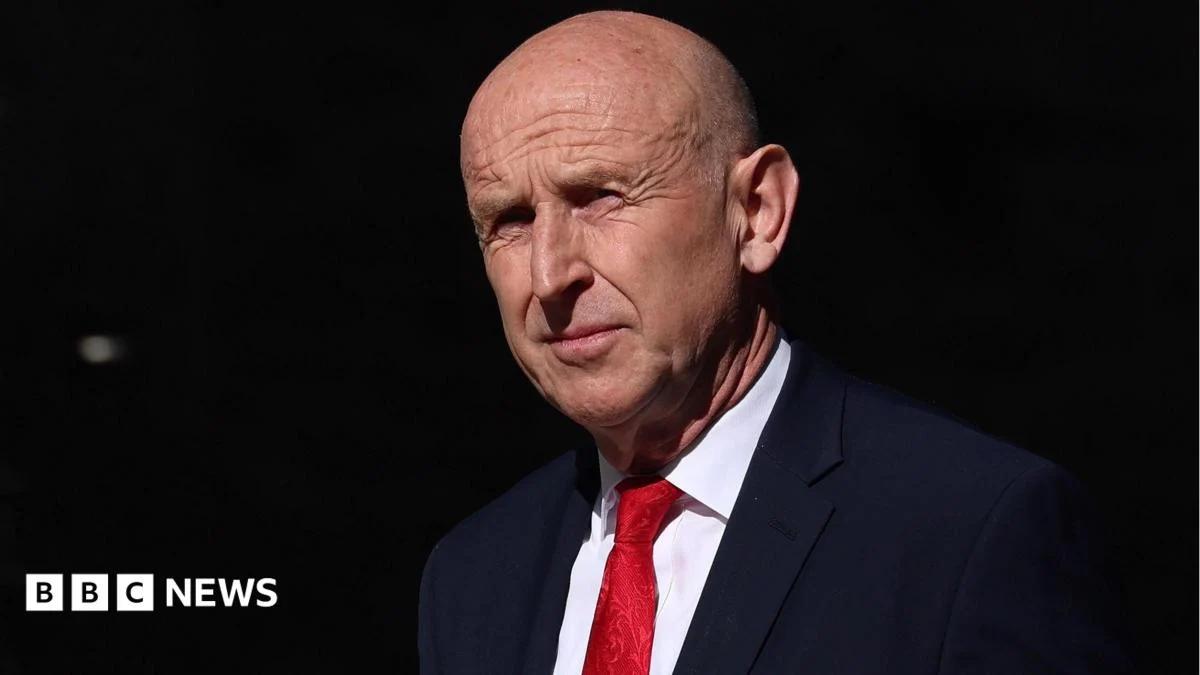
John Healey has been appointed as Andy Burnham’s Chancellor of the Exchequer, a move that instantly makes him the custodian of funding across every arm of government. The 66-year-old Healey’s rise comes just over a month after his abrupt resignation as Sir Keir Starmer’s defence secretary, an act that the BBC notes was all the more shocking given the timing and political context. In his new role, Healey replaces Rachel Reeves, who had served as chancellor since Labour’s landslide victory in 2024, and he arrives at a moment when the government’s defence and broader fiscal plans are under intense scrutiny.
Healey’s critics and supporters alike highlighted his long tenure within the Labour frontbench and his reputation for being loyal and unafraid to speak plainly. The BBC’s coverage says Healey is “the ultimate safe pair of hands” who has been a consistent presence in Labour circles for three decades. The long-serving politician’s decision to resign, described in the BBC report as a principled move, followed a clash with Reeves in which Healey argued that the Treasury had been unwilling to commit the resources that the nation needs to defend itself amid rising threats. He told Reuters and other outlets that he would not stay in a role that he felt could not deliver the necessary funding for national security.
The comeback to government is notable for its speed and its scope. Healey’s return places him in charge of the country’s defence budget and, effectively, the entire public purse. The transition also places him at odds with the tone of cabinet deliberations under Prime Minister Burnham, who is navigating a pivotal moment following his party’s 2024 victory. A number of insiders told the BBC that Burnham and Healey share a similar outlook on key priorities, including reindustrialisation, tackling the cost of living, and boosting growth across the country.
Healey’s background includes a long record in housing and local government in the early 2000s, time spent in the Treasury during Tony Blair’s and Gordon Brown’s governments, and a stint as shadow housing secretary during Jeremy Corbyn’s leadership. He was elected MP for Wentworth in 1997, which later became Rawmarsh and Conisbrough after boundary changes, and he increased his majority to 6,908 in the 2024 general election amid a competitive field. His education at Christ’s College, Cambridge, and his pre-political work as a journalist, editor of Parliament’s The House, and disability rights campaigner and trade union official are frequently cited in profiles.
Healey’s stance on defence has been firm over the years. He was a strong supporter of Ukraine in its war with Russia and made several trips to meet President Zelensky. In September 2024, at his first meeting with NATO allies, Healey stated that Labour could meet a commitment to raise defence spending and to implement a long-term plan to strengthen the country’s armed forces against evolving threats. He pushed for a defence investment plan that, in his view, needed to be strengthened beyond the previous budgets to keep pace with modern security challenges.
Beyond defence, Healey advocated for a notable housing program for service families, highlighted by a £9 billion investment package. He also pushed for a clear plan to lift UK defence spending to 3% of GDP by 2030, a target he reiterated as he moved into the finance portfolio. The new chancellor inherits a funding environment that has been fraught with debates over how much new money the Ministry of Defence will receive and how Treasury rules will shape that allocation.
The political trajectory Healey has followed since entering Parliament in 1997—rising through housing, local government, and Treasury roles, then serving as shadow defence secretary before becoming defence secretary—frames him as a figure trusted by many in Labour circles. His appointment comes at a moment of heightened attention to national security and the nation’s fiscal commitments. Analysts will watch closely to see how Healey balances defence needs with broader public spending priorities as the Burnham administration navigates a complex policy agenda and a challenging funding environment.
Sources close to the leadership and party observers indicate that Healey’s philosophy aligns with Burnham’s direction on major priorities, including a push to reindustrialise the economy, ease living costs, and spur growth across regions. Healey’s tenure will be watched for how it translates into concrete plans that can reassure markets, allies, and ordinary voters about the government’s ability to fund essential services while pursuing ambitious long-term defence and economic goals.


