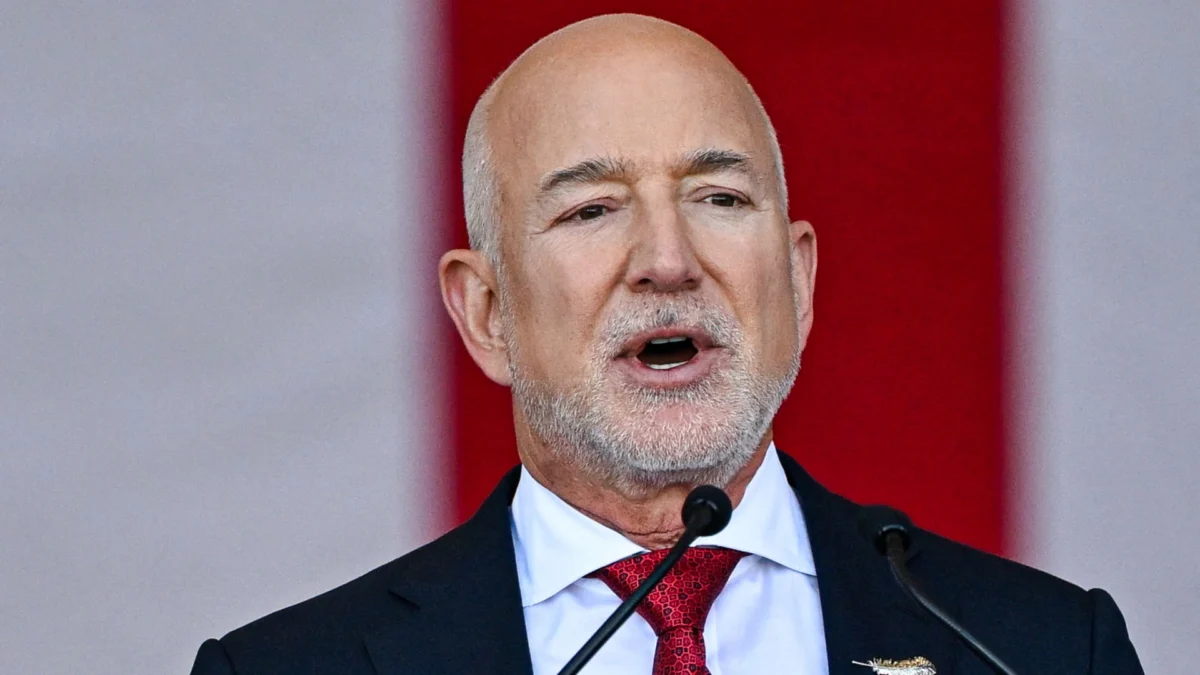
Amazon Executive Chairman Jeff Bezos has stated that the controversial "buy, borrow, die" tax strategy, often attributed to wealthy individuals, is largely a myth and lacks factual basis. In a wide-ranging interview with CNBC's Andrew Ross Sorkin, Bezos expressed skepticism about the strategy's prevalence and effectiveness.
"There's no truth to this 'buy, borrow, die' thing," Bezos told Sorkin, adding, "I don't even know where this comes from." The "buy, borrow, die" strategy purportedly involves wealthy founders and investors borrowing against their substantial assets, using the loan proceeds as a form of income that circumvents immediate taxation. Because loans are not typically considered taxable income, this method allows individuals to defer or avoid income taxes. Furthermore, the strategy is often associated with the "step-up in basis" tax provision, which, upon the individual's death, can erase any capital gains tax liability on the appreciated value of their assets.
While the strategy has been linked to prominent figures such as Oracle co-founder Larry Ellison and Tesla CEO Elon Musk, Bezos's comments suggest a different perspective. Ellison has reportedly not taken a taxable salary from Oracle, instead pledging over $30 billion of his stock as collateral for loans. Musk, likewise, has pledged billions of dollars worth of Tesla shares as collateral. Despite these practices, Musk reported paying $11 billion in federal and state income taxes in 2021, primarily when he exercised Tesla stock options.
Bezos, who is the world's fourth-richest man with an estimated net worth of $269 billion according to Forbes, clarified his own tax practices. He stated that he pays taxes on the Amazon stock he regularly sells to finance his other ventures, including his space exploration company, Blue Origin. "Whenever I sell, I pay taxes on it," Bezos affirmed.
Despite his skepticism about the "buy, borrow, die" strategy being a widespread loophole, Bezos indicated a willingness to support tax reforms that might target such practices, though he did not offer specific proposals. "I'm a little skeptical that that's a true loophole," he commented. "But if it is, and we can fix it, then we should. I don't think such a loophole should exist."
However, Bezos also cautioned against viewing the closure of such a specific loophole as a panacea for broader economic issues. He argued that addressing the fundamental challenges of government spending, economic inequality, and supporting lower-income individuals would require more comprehensive solutions. Using the hypothetical example of a nurse in Queens, New York, facing significant tax burdens, Bezos suggested that closing a single loophole would not alleviate her financial pressures. "If you fix that loophole, it's not going to solve the full problem," he stated. "It's not going to help her at all."
This discussion highlights ongoing debates surrounding wealth taxation and the methods employed by the ultra-wealthy to manage their tax liabilities. While some lawmakers advocate for wealth taxes to address perceived inequities, figures like Bezos emphasize the importance of practical tax obligations on realized gains and question the existence of widespread, exploitative tax avoidance strategies.


