Islington, a north London borough long seen as a family-friendly pocket near central London, is facing a stark and growing challenge: one of England’s lowest fertility rates and a demographic drift that could reshape the area and the city’s economy for decades. Reporters spending time in Islington found parents pushing strollers along leafy streets, but behind the sidewalks lies a widening gap between the desire to start families and the reality of expensive housing, high childcare costs, and crowded, undersupplied living spaces.
The borough’s fertility picture stands out even in a city accustomed to rapid change. Islington’s total fertility rate sits at around 0.99, the second-lowest in the capital after the City of London, and among the lowest in England. To put that in a national frame, England and Wales saw the average number of children born per woman fall to just under 1.4 in 2025, down from about 1.9 in 2010. The data illuminate a broader reality: housing costs and the price of raising children are weighing heavily on family formation.
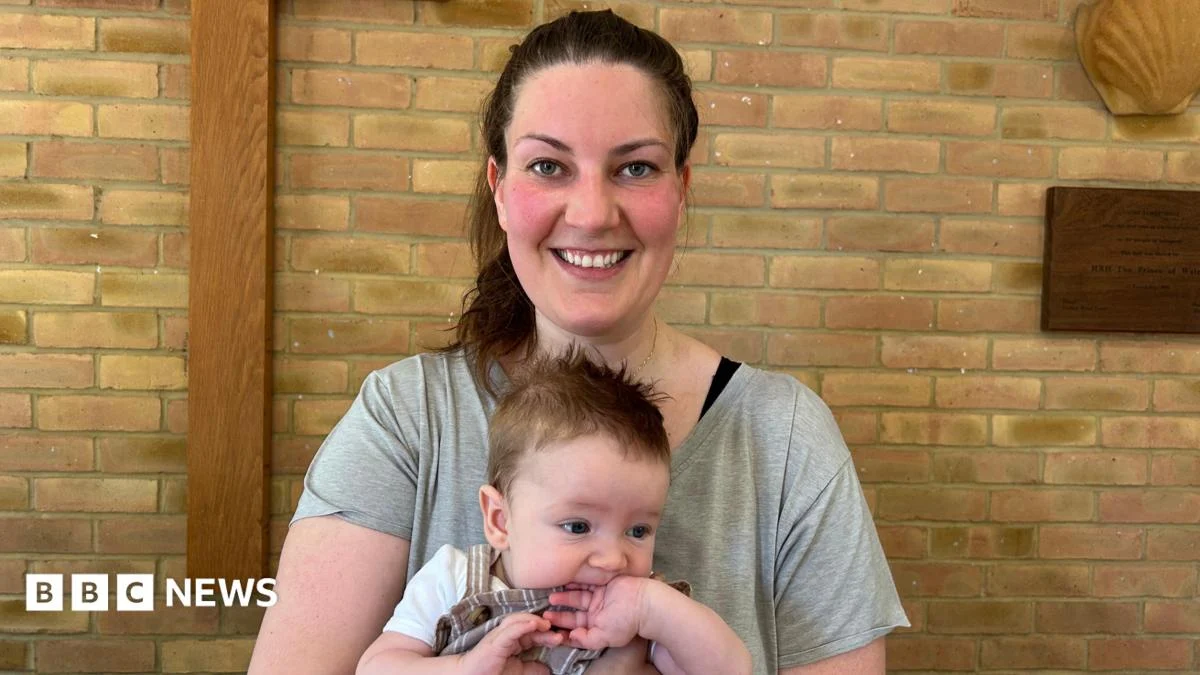
The lived experience of Islington families underscores the numbers. Tiphanie Frutuoso, who recently had her first child, described the pressure of a two-bedroom flat in a market where a three-bedroom is prohibitively expensive. “Childcare is £2,000-£3,000 a month,” she said, explaining why some families are relocating to other countries with different cost structures. Another mother, originally from Toronto, found it harder to secure a suitable home with enough space in Islington. A father in the borough lamented how his family’s one-bedroom home becomes a makeshift suite for a growing household, saying, “Our living room becomes our bedroom… our one bed becomes the kids’ room.” These anecdotes echo a broader inquiry: is Islington’s housing market, its schools, and its childcare system compatible with families staying and growing in the borough?
Zip-Zap co-founder Laura Edwards noted a measurable outflow: families are moving to other parts of London or farther afield in search of better schools, greater space, and more affordable homes. The population shift points to longer-run implications: if many families leave, Islington could lose a critical labor force and consumer base that supports local services and businesses. As Bassam Mahfouz, chair of the London Assembly’s Economy, Culture and Skills Committee, put it, the trend is an existential challenge for London, with “huge implications in 40-50 years when there’s nobody to do the jobs and support the economy.” He urged both the mayor and the government to treat this as an emergency, arguing that “what’s happening in Islington is happening right across London.”
The data paint a telling picture of a city where affordability gaps reinforce a cycle of delayed family formation. Between 2013 and 2023, London’s 0–9-year-old population fell by 99,100 even as the total city population rose by 506,000, a trend more pronounced in inner London than in outer areas.
The pushback against parenthood is not only financial. High rents and the overall cost of living have been repeatedly cited as barriers for would-be parents. In 2023-24, renters in Islington spent a substantial share of income on rent, placing the borough among the higher rent-to-income ratios in England and Wales. By 2025, the median house price in Islington was about 12 times the median annual income, a level that ranks among England’s least affordable local authorities. The social housing waiting list reflected the demand: more than 16,000 households were on the list by March 2025, a sizable queue that underscores the difficulty for families to secure truly affordable accommodation.
The intimate stories of local residents reflect a wider political and governance debate. Stakeholders emphasize the need for child-friendly housing standards, well-mapped play and recreation spaces across boroughs, and a broader approach to making London a city where families can realistically settle down. The Center for London has highlighted that London cannot be a city devoid of families, but inequality in family life is becoming more evident as housing costs and childcare pressures rise. In Islington, these pressures are not abstract—they are lived daily by people trying to balance ambition with the practical realities of housing, work, and care.
Community voices also point to a desire for policy action that could help stabilize family life. Some locals question whether schools’ closures and space constraints can be addressed quickly enough, while advocates call for a comprehensive housing strategy that increases genuinely affordable homes and improves access to childcare. The discussion has drawn responses from city and national officials alike. A spokesperson for the Mayor of London said the city should remain affordable and welcoming for families, with a focus on housing supply and cost-of-living supports like free school meals in state primary schools. A government spokesperson highlighted existing rights for paternity and unpaid parental leave and noted 30 hours of funded childcare weekly for working families, while signaling ongoing efforts to expand council housing stock.
As Islington and similar areas confront these headwinds, observers say London’s future depends on policies that facilitate family life—an indicator that the city’s employers, retailers, schools, and housing providers will be watching closely how decisions at the local and national levels may reshape housing supply, childcare affordability, and the incentives for family formation.


