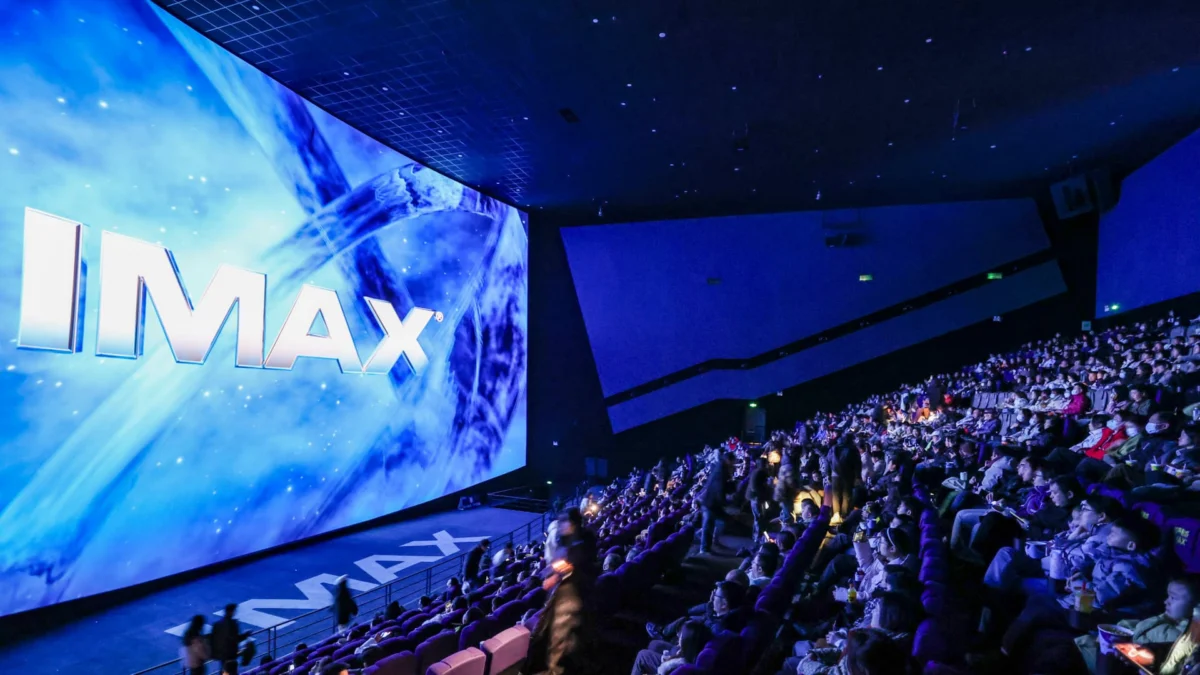
IMAX Considers Sale Amidst Market Speculation
Shares of IMAX experienced a significant increase on Friday, driven by circulating speculation that the cinema technology company is exploring a potential sale. While IMAX has not officially initiated any pitches, a source close to the company informed CNBC that preliminary discussions have taken place through intermediaries. Wall Street analysts generally perceive IMAX as a highly desirable asset, capable of attracting interest from a broad spectrum of entities, including major Hollywood studios, theatrical partners, and technology firms.
The Wall Street Journal was the first to report on the potential sale process. Although IMAX may not be actively seeking a buyer at this juncture, CEO Rich Gelfond has previously expressed an openness to a buyout. During the company’s investor day in December, Gelfond stated that IMAX is “an incredibly valuable player, either as a wholly differentiated publicly-traded company or as part of a larger company.” This sentiment has fueled ongoing market discussions regarding a possible acquisition.
A consensus among analysts suggests that IMAX is currently undervalued. Alicia Reese, Senior Vice President of Equity Research at Wedbush, noted in a research report released Friday that IMAX possesses a “rare combination of a globally recognized premium brand, an asset-light licensing model, and a structurally expanding earnings profile.” She further elaborated that IMAX is trading at a discount relative to its intrinsic value as a standalone business, let alone as a strategic acquisition target. As of midday Friday, IMAX shares were trading near $39 each, reflecting a market capitalization of approximately $2.1 billion.
Reese commented that any potential acquirer would be securing “one of the most defensible moats in entertainment for what amounts to a rounding error on the balance sheet of any major studio or technology platform.” This perspective highlights the significant strategic value attributed to IMAX within the current entertainment industry landscape.
Potential Acquirers and Market Dynamics
Several entities have been identified as plausible suitors for IMAX. Reese suggested that private equity firms, Netflix, Apple, and Sony are among the most likely candidates. Private equity firms, in particular, would bypass potential conflicts of interest, as they would not be in direct competition for screen access with other studios, making them a logical choice for acquiring a company with such a unique market position. A source familiar with the company told CNBC that IMAX has held “preliminary talks” through intermediaries, but no official pitches have been made by the company.
Netflix presents a different acquisition dynamic, given that its business model does not heavily depend on traditional theatrical releases. Consequently, its conflict of interest would be less pronounced compared to established Hollywood studios. Furthermore, acquiring IMAX could offer filmmakers associated with Netflix the advantage of premium theatrical runs, serving as a significant “powerful recruiting tool,” according to Reese.
Apple and Sony, both possessing substantial technology divisions alongside their content creation and streaming operations, also represent compelling possibilities. While Sony lacks its own dedicated streaming platform, Apple operates AppleTV. The strategic fit for these tech giants lies in integrating IMAX’s premium viewing experience into their broader entertainment ecosystems. However, Eric Wold, executive director of equity research at Texas Capital Securities, expressed skepticism regarding major Hollywood studios pursuing an acquisition. He noted in a Thursday research note that such a move would create competition for key IMAX release windows and necessitate sharing box office revenues with another studio. Similarly, he believes major exhibitor circuits would be reluctant to cede control over IMAX’s release slate and revenue sharing to a competitor.
Mike Hickey, an equity research analyst at Benchmark, offered a broader perspective on the potential buyer pool. He posited that IMAX’s operational model, which leans more towards a premium entertainment technology platform than a traditional theater chain, widens the range of logical strategic candidates. His list includes Sony, Apple, Amazon, Disney, Comcast/NBCUniversal, Netflix, Sphere Entertainment, and Cinépolis, as well as sovereign-backed entertainment investors.
IMAX’s Financial Performance and Future Outlook
IMAX demonstrated robust financial performance last year, generating a record $1.28 billion at the global box office. This figure represents a significant increase of over 40% compared to 2024 and surpasses its previous record set in 2019 by 13%. This rebound highlights the strong recovery and growth trajectory of the company post-pandemic.
Looking ahead, Wold projects IMAX’s revenue to reach $448 million in 2026, an increase from the $396 million earned in 2019. He also anticipates adjusted profit to climb to $197 million, up from $149 million in 2019. Despite this positive outlook, Wold pointed out that IMAX’s valuation has not yet returned to pre-pandemic levels, even as it surpasses 2019 financial metrics. He maintained a price target of $53 per share for the company.
The stock reached a 52-week high of $43.16 in late February. However, it experienced a pullback following challenging first-quarter comparisons to 2025, a period that notably included the record-breaking success of the Chinese film “Ne Zha 2.” The company also faced a setback with the postponement of Greta Gerwig’s “Narnia” film due to an on-set injury, creating a notable gap in its release schedule. IMAX has since filled this slot with David Fincher’s “The Adventures of Cliff Booth,” a film based on a popular character from Quentin Tarantino’s “Once Upon a Time in Hollywood.” The company’s slate for the remainder of the year and beyond remains strong. Upcoming releases include Universal’s “The Odyssey” and Warner Bros.’ “Dune: Part Three,” both anticipated to drive significant box office sales from IMAX screenings. Further bolstering the lineup are Disney’s “Toy Story 5” and “Moana,” Warner Bros.’ “Supergirl,” Lionsgate’s “Hunger Games: Sunrise on the Reaping,” and Universal’s “Minions & Monsters.”
Looking further out, Steve Frankel, a senior research analyst at Rosenblatt, noted in a Friday report that IMAX has at least 10 “filmed for IMAX” titles scheduled for 2027. This slate includes anticipated entries in major franchises like “Star Wars” and “Superman,” alongside other films such as “The Thomas Crown Affair” and “Miami Vice.” Beyond Hollywood productions, IMAX is expanding its portfolio of local-language titles and alternative content, including live broadcasts of Formula 1 races, which help fill scheduling gaps.
The production of content specifically “filmed for IMAX” is accelerating and is expected to see substantial growth through 2028. Films shot with IMAX cameras, designed for the immersive large-screen experience, continue to draw audiences. Past successes include Christopher Nolan’s “Oppenheimer,” James Cameron’s “Avatar” films, and various entries from the Marvel Cinematic Universe and DC Studios. IMAX is also actively diversifying its content beyond Hollywood, forging partnerships in China, Japan, and South Korea to screen local-language films, thereby reducing its reliance on any single market or content provider, as pointed out by Reese.
IMAX is also pursuing aggressive expansion, with plans to install approximately 160 to 175 new systems in 2026. The company has already secured contracts for hundreds of additional installations. Frankel expressed continued confidence in IMAX’s trajectory, citing the ongoing consumer shift towards premium viewing experiences, the company’s increasing influence with filmmakers, and a diversified film slate that extends beyond Hollywood blockbusters to include local productions and alternative content. This strategic positioning, he believes, sets the stage for robust box office growth and enhanced profit margins.


