Chinese Automakers Surge Ahead
Global automotive giants are confronting significant challenges as Chinese manufacturers rapidly advance, not only in the electric vehicle (EV) sector but also in crucial areas such as battery technology, sophisticated software development, and innovative design. A recent BBC visit to factory floors in Beijing and Hefei, coinciding with Auto China 2026, the world’s largest automotive exhibition, revealed striking levels of automation and swift software innovation. This progress has left many foreign brands, which historically dominated the Chinese market, struggling to maintain their competitive edge.
The intensity of this shift has not gone unnoticed by industry leaders. Honda’s chief executive, Toshihiro Mibe, expressed his company’s difficulties after observing a highly automated factory in Shanghai, stating, “We have no chance against this.” Similarly, Ford’s chief executive, Jim Farley, has issued a stark warning, noting that Western carmakers are “in a fight for our lives” as Chinese rivals increasingly expand their global reach.
For decades, foreign carmakers primarily supplied technology and brand recognition, relying on local Chinese partners for manufacturing facilities and market access. However, this dynamic is undergoing a significant transformation. “The biggest mistake that the developed world is making is believing that the transition is only about electric cars,” observes Bill Russo, an auto analyst based in Shanghai. “It’s about who will lead the next generation of mobility technology.” This perspective highlights that the competition extends far beyond powertrains to encompass the entire ecosystem of future transportation.
China’s Dominance in EV Supply Chains and Innovation
China’s influence in the automotive sector is multifaceted, extending beyond the vehicles themselves to encompass a vast array of related industries. According to a report by Rhodium Group, China now leads in exports across more than 315 product categories, a substantial increase from 163 categories in 2016. A significant portion of these exports are linked to the EV supply chain, including batteries, essential components, and manufacturing machinery. The International Energy Agency estimates that producing a small electric SUV in China is at least 30% cheaper than in more advanced economies, primarily due to lower battery costs and highly developed supply chains.
This cost advantage has been cultivated over years of substantial state support. Rhodium Group data indicates that China has channeled tens of billions of dollars into EV and battery manufacturing in recent years. While these subsidies have drawn criticism from the EU and US for market distortion, they have undeniably fueled rapid expansion and price reductions for Chinese manufacturers. This state-backed growth has fostered intense competition within China, further accelerating innovation. Tech giants such as Xiaomi, Huawei, and Alibaba have entered the EV market, integrating consumer technology into automotive design and functionality. “They’re not racing the West anymore,” Russo remarks. “They’re racing each other.”
As vehicles become increasingly reliant on software for functions ranging from driver assistance to in-car entertainment, Chinese companies possess a distinct advantage. This technological prowess is evident in facilities like Xiaomi’s EV factory near Beijing, where a new car rolls off the production line approximately every 76 seconds. Despite launching its first EV only in 2024, Xiaomi has rapidly become one of China’s top-selling brands, focusing on integrating cars with phones, apps, and smart-home devices into a cohesive system. At Nio’s plant in Hefei, production lines feature a high degree of automation. BYD has pioneered ultra-fast charging systems capable of adding 400km (249 miles) of range in about five minutes, a charging speed comparable to refueling a gasoline-powered car.
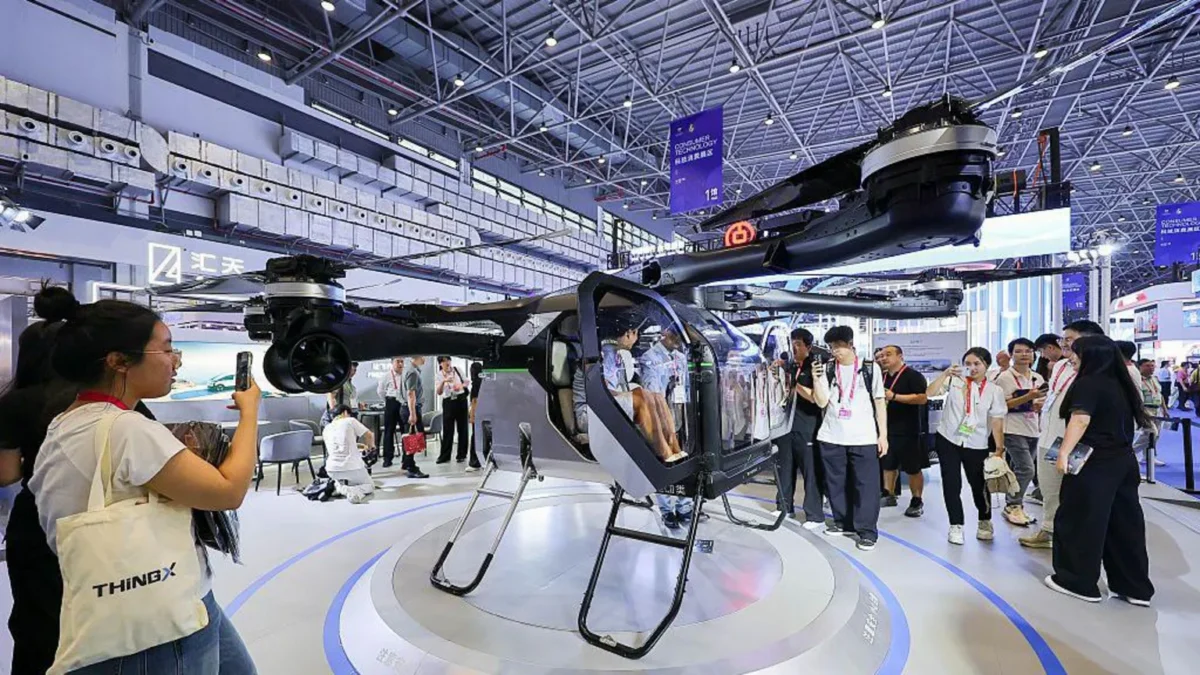
XPeng’s founder and CEO, He Xiaopeng, told the BBC that the company’s future development priorities include humanoid robots and flying cars alongside EVs. He predicts, “In the next decade, any car company will also be a robotics company.” This forward-looking strategy underscores the evolving definition of an automotive manufacturer in the 21st century.
Shifting Market Dynamics and Foreign Carmakers’ Strategies
Foreign carmakers are already dependent on China for supplying global markets, with companies like Tesla exporting Shanghai-built Model 3s to Europe and BMW selling Chinese-made electric Minis internationally. However, their performance within the Chinese domestic market has been increasingly challenging. Consultancy Automobility reports that foreign brands’ share of China’s car market has plummeted from 64% in 2020 to just 32% in the current year. This decline has significantly impacted the earnings of major players like General Motors (GM) and German manufacturers, who previously relied heavily on China for substantial profits.
Even luxury brands are facing intense pressure. Huawei’s Maextro S800 luxury sedan has emerged as China’s best-selling car priced above $100,000 (£74,145), surpassing combined sales of imported models such as the Porsche Panamera and the BMW 7 Series, vehicles that once dominated this premium segment. This shift signifies a fundamental change in consumer preference and brand loyalty within the Chinese market.
In response to these evolving market conditions, foreign automakers are recalibrating their strategies. Stellantis recently finalized a €1 billion ($1.16 billion; £863 million) agreement with the state-backed Dongfeng to produce Peugeot and Jeep models in China for both domestic and international sales. Stellantis also plans to introduce Dongfeng’s Voyah electric brand to the European market and is exploring the possibility of manufacturing Chinese-designed vehicles at a plant in France. Volkswagen has invested $700 million to gain access to XPeng’s software architecture and autonomous driving systems, acknowledging its own limitations in developing such advanced technologies rapidly in-house.
XPeng’s He views these collaborations as mutually beneficial, stating, “We study each other, so we trust each other, so we help each other.” Other major manufacturers, including Toyota, Hyundai, Ford, and Nissan, are expanding their research operations within China or investigating the production of Chinese-designed vehicles in overseas factories. This approach leverages local expertise and knowledge for development rather than solely for manufacturing purposes.
However, not all strategies have proven successful. Audi has been compelled to offer significant discounts on its E5 model, specifically designed for the Chinese market, due to weaker-than-anticipated demand. GM has recorded billions of dollars in write-downs from its China operations and reported a sales decline exceeding 21% in the first quarter of this year. Japanese manufacturers have been notably slower in transitioning to fully electric vehicles, leaving them vulnerable not only in China but increasingly in Southeast Asia, where Chinese brands are rapidly capturing market share.
In early 2026, Volkswagen briefly reclaimed the position of the top-selling car brand in China. This temporary resurgence may have been influenced by the conclusion of Beijing’s EV subsidies, which, in turn, weakened domestic competitors. The broader Chinese domestic market is also experiencing a slowdown, with growth decelerating after years of expansion. This, coupled with overcapacity and an aggressive price war, is squeezing industry profits.
This challenging domestic environment is a primary driver behind the expansion efforts of Chinese manufacturers into international markets. Brands such as BYD, Chery, and SAIC are actively targeting Europe and emerging markets, even in the face of substantial tariffs, such as up to 45% in the EU. Chery’s Jaecoo 7, for instance, became one of the UK’s best-selling new models within 14 months of its introduction. Conversely, tariffs exceeding 100% have effectively barred Chinese brands from the US market.
Experts caution that as vehicle production, battery technology, and software development continue to concentrate in China, manufacturing hubs in Southeast Asia and Europe could face economic repercussions, impacting local employment and economies. Consultant James Pearson suggests that imposing tariffs may not be a definitive solution: “If you lock them out of one market, they will just find another.” Bill Russo concurs, stating that the industry’s center of gravity has already shifted. He believes that companies willing to collaborate have a viable path forward, while those attempting to impede China’s ascent risk falling behind.


