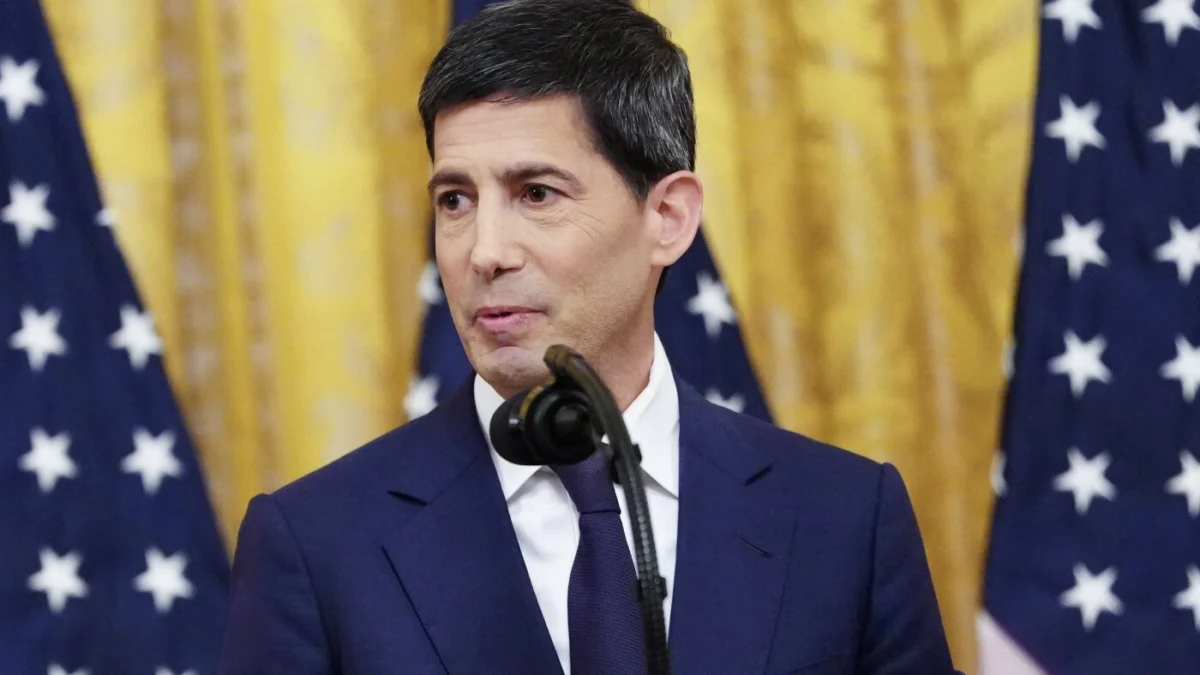
Kevin Warsh chairs his first meeting of the Federal Reserve’s rate-setting committee this week, a session expected to leave the policy rate steady as inflation remains elevated and supply shocks linger. The 2026 transition at the top of the central bank comes as markets balance hopes for a slower pace of tightening with the stubborn pace of consumer price increases, driven in part by energy costs tied to regional tensions in the Strait of Hormuz. Warsh has signaled a cautious approach to policy communication, focusing on credibility and the committee’s forward guidance rather than signaling dramatic shifts in direction.
The backdrop is a landscape where the Fed must weigh the still‑high inflation level against the risk of slowing growth. May’s consumer price index showed a 12‑month rise of 4.2%, a figure that underscores why officials have been reluctant to ease policy before clearer signs inflation is trending down. While energy prices have moved lower from recent peaks, gasoline costs remain markedly higher than before the wartime spike, complicating the inflation picture even as oil markets show some relief.
Policy path remains uncertain. Several participants on the rate‑setting committee have warned that a shift in policy is possible if inflation reaccelerates, while others argue that rate cuts are unlikely until inflation convincingly eases. The ongoing debate places particular emphasis on the Fed’s dot plots and projections, which Warsh has suggested should be interpreted with caution rather than treated as a fixed roadmap. Market participants will scrutinize today’s projections for clues on the committee’s longer‑term stance and any potential revisions to the expected path of rates.
Powell’s departure from the chair’s role leaves Warsh with the task of steering a delicate balance between credibility and independence. Powell remains at the board table, a stay that some analysts view as a stabilizing influence even as Warsh charts a new leadership approach. The central bank’s communications framework, including guidance on how it links policy decisions to evolving inflation data, will be in focus as investors assess how Warsh plans to navigate the politics around monetary policy while keeping a careful eye on energy price dynamics.
As the committee updates its forecasts this afternoon, traders will be listening for any hints about the path of interest rates, the risks to inflation, and the potential for policy shifts in the months ahead. The Fed has repeatedly stressed a data‑driven approach, but the current environment has heightened sensitivity to incoming data and forecast revisions as energy prices and supply considerations continue to influence consumer inflation.
In this environment, Warsh’s stance on communication and inflation expectations will matter for financial conditions, mortgage costs, and corporate financing as the economy adapts to higher energy bills and a cost of living that remains under pressure. The market will also be watching for any signs of how the committee views risks to growth and the potential for policy adjustments if inflation proves to be more persistent than anticipated.
The broader political backdrop adds another layer of complexity. President Trump’s relationship with the Fed has been central to the political discourse around the central bank, and Warsh’s leadership will be judged, in part, on how well the Fed can maintain its independence while delivering clear, data‑driven policy directions. Powell’s decision to remain on the board, despite no longer chairing, underscores the unusual transition but also the potential for continuity in governance as Warsh begins his term at the helm.
Across financial markets, traders will be sizing up the balance of risks: inflation persistence, energy price volatility, and the prospect of a higher‑for‑longer policy rate that could shape borrowing costs for households and businesses in the quarters ahead.


