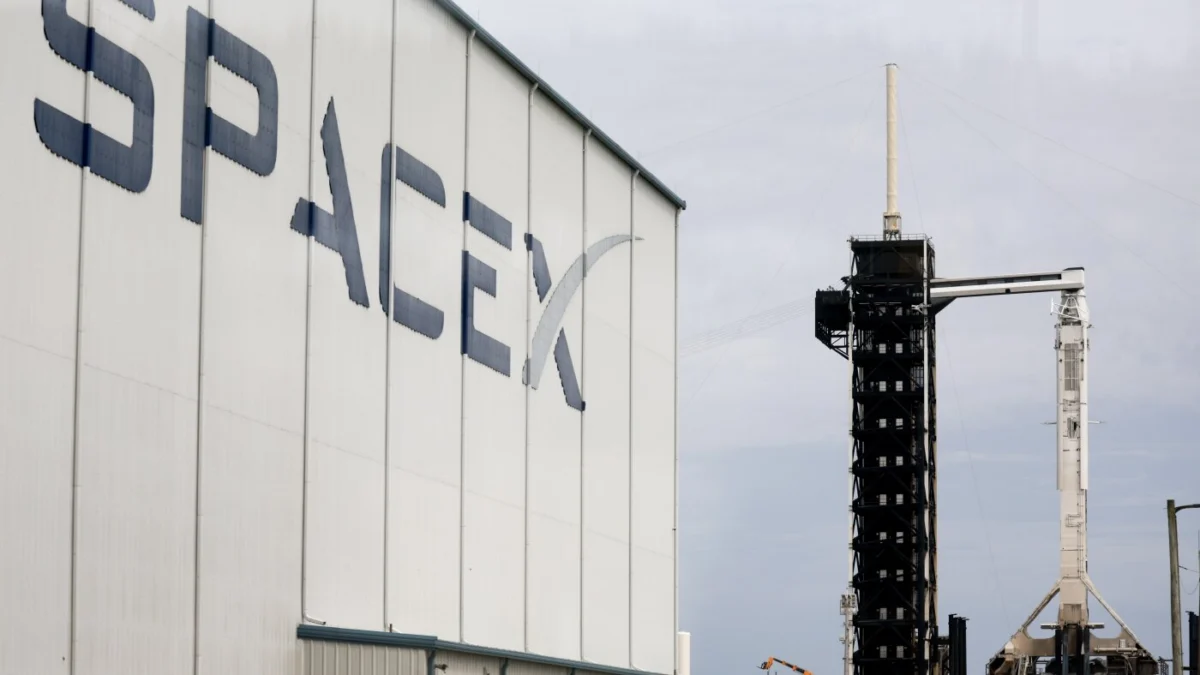
SpaceX Poised for Record-Breaking IPO
Elon Musk’s SpaceX has filed financial information with regulators, signaling its intent to pursue what is anticipated to be the largest initial public offering in history. This move could significantly increase the wealth of Musk, already one of the world’s richest individuals, and potentially position SpaceX as one of the most valuable companies globally, possibly surpassing Tesla in valuation.
While the exact amount SpaceX aims to raise has not been disclosed, previous media reports suggest the company could seek approximately $80 billion through its IPO. Such a figure would dwarf the $29 billion raised by Saudi Aramco in its 2019 offering, making SpaceX’s potential IPO the largest ever by a considerable margin. The deal could also propel the company’s valuation beyond $1 trillion.
SpaceX, founded by Musk in 2002 with the ambitious goal of establishing a self-sustaining colony on Mars, has evolved into a dominant force in the aerospace industry. The company revolutionized rocket technology with its reusable first-stage boosters, drastically reducing launch costs. This innovation has enabled SpaceX to secure substantial contracts from government agencies like NASA and the Department of Defense for launching defense satellites, commercial payloads, and astronauts.
An analysis by the independent firm Brycetech indicates that SpaceX rockets were utilized in 85% of all launches last year, placing the private company ahead of national space programs of countries like China and Russia. However, according to Tim Farrar, president of TMF associates, the core business of launching objects into space represents only a minor portion of SpaceX’s overall revenue. The primary revenue stream is derived from its satellite internet service, Starlink.
Financial Performance and Market Context
Recent financial disclosures reveal a mixed performance across SpaceX’s business segments. In the first quarter of the current year, two of its three main operations incurred losses. The rocket launching division reported a loss of $662 million, while its artificial intelligence (AI) business experienced a deficit of nearly $2.5 billion. In contrast, the satellite communications business, operating under the Starlink brand, generated a profit of $1.1 billion. Overall, the company recorded a net loss of $4.2 billion during the January-to-March period.
The impending IPO is seen by many as a significant event for the broader market, particularly for the technology sector. SpaceX’s move follows confidential paperwork filed with the U.S. Securities and Exchange Commission in April, as reported by the Associated Press and other outlets. This IPO is anticipated to be a key indicator for the market, especially with other major AI companies like OpenAI and Anthropic also expected to go public. These offerings could provide public investors with access to some of the leading private technology firms driving advancements in artificial intelligence.
Analysts are hopeful that the SpaceX IPO will invigorate a market for initial public offerings that has been relatively subdued in recent years. However, potential investors should be aware of certain risks associated with post-IPO companies. Research indicates that companies tend to see their share prices underperform the broader market after going public. Franco Granda, a research analyst specializing in SpaceX for PitchBook, noted that this trend has been historically significant and quite pronounced.
For highly scrutinized companies like SpaceX, which has seen its valuation surge under private ownership, the transition to public trading also entails increased oversight from financial regulators and the public. Granda added that the substantial valuations of such companies can become more challenging to justify under this heightened scrutiny.
The public valuation of SpaceX is intrinsically linked to Elon Musk. Musk, who also founded Tesla, has a controlling interest in SpaceX, as indicated in the filed documents. His vision and leadership are central to the company’s narrative and perceived value. Farrar suggests that the company’s valuation is less dependent on its current business operations and more on the market’s belief in Musk’s future endeavors and vision.
SpaceX’s journey began in 2002 with a long-term objective of enabling human space colonization. Over the years, it has expanded its services to include launching defense satellites and commercial payloads, alongside its Starlink internet service and its AI ventures following a merger with Musk’s xAI. The company’s ability to execute complex missions and its strategic integration of various technology sectors position it as a unique entity in the global market.
The filing with the Securities and Exchange Commission marks a critical step in SpaceX’s evolution from a private enterprise to a publicly traded company. This transition is expected to attract significant investor interest, given SpaceX’s prominent role in space exploration, satellite communications, and its growing involvement in the AI sector. The success of this IPO could set a precedent for future offerings from other high-profile technology firms.
The company’s dual focus on pioneering space technology and developing advanced AI capabilities, coupled with its established satellite internet service, presents a compelling investment case. However, the inherent volatility and scrutiny associated with public markets, particularly for companies with ambitious valuations tied to visionary leadership, will be key factors for investors to consider.
SpaceX’s IPO is not just a financial event but also a potential bellwether for the broader tech and AI markets. The performance of its shares post-listing will be closely watched as an indicator of investor appetite for high-growth, technology-focused companies, especially those with significant ties to influential figures like Elon Musk.
The company’s financial disclosures, showing both profitability in its Starlink division and losses in its rocket and AI segments, highlight the diverse nature of its operations and the strategic importance of each business unit. The ability to manage these varied segments effectively will be crucial for its long-term success as a public entity.
As SpaceX prepares to list on Wall Street, the market anticipates a significant influx of capital and a potential re-evaluation of valuations for companies at the forefront of technological innovation. The coming months will be critical in determining the final structure of the IPO and its impact on the global financial landscape.
The company’s history of innovation, its dominant market position in rocket launches, and its ambitious future projects, including Mars colonization and AI development, contribute to the high expectations surrounding its public debut. Investors will be looking for a clear path to sustained profitability and growth across all its business lines.


