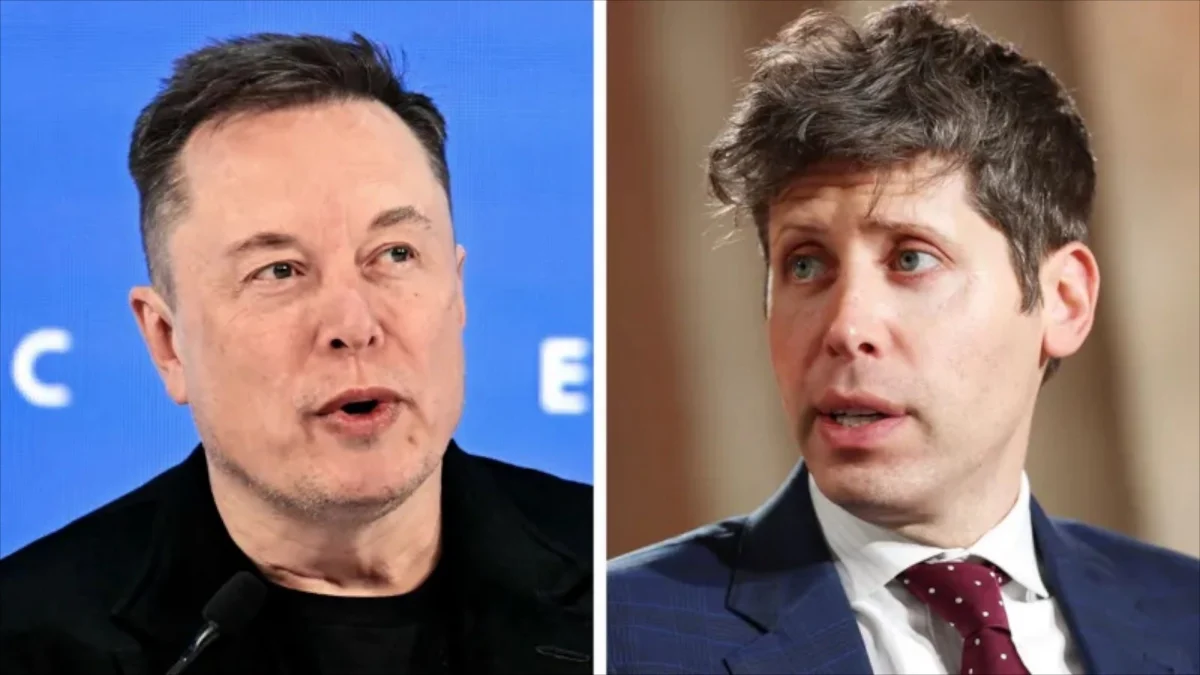
A high-stakes legal battle has unfolded in a California federal court, centering on allegations made by Tesla CEO Elon Musk against Sam Altman, the co-founder of OpenAI. Over the past three weeks, Musk and his legal team have contended that Altman has engaged in financial misconduct and deviated from the original non-profit mission of the artificial intelligence company, which they co-founded.
Musk's central argument is that Altman has "swindled him out of millions of dollars" and broken promises made at the inception of OpenAI. The lawsuit claims that the company, now renowned for its ChatGPT model, has strayed from its foundational purpose of developing AI for the benefit of humanity in a non-profit capacity. Musk alleges that the shift towards a for-profit structure and the pursuit of commercial interests have undermined the original vision.
Both Musk and Altman took the stand during the trial, offering their perspectives on the contentious issues. The proceedings have drawn significant attention not only for the personal dispute between the two tech titans but also for the potential implications for the future trajectory of artificial intelligence development. The case has been framed as one where the very future of AI could be at stake, highlighting the profound impact OpenAI's direction could have on the broader technological landscape.
As the trial moves towards jury deliberations, the core arguments presented by both sides are coming into focus. Musk's legal team has emphasized the alleged breaches of trust and financial impropriety, painting a picture of a mission corrupted by commercial ambitions. They argue that Altman's actions have prioritized profit over the altruistic goals that initially brought Musk and Altman together to establish OpenAI.
Conversely, Altman and OpenAI's defense likely centers on the necessity of a for-profit arm to secure the substantial funding required for cutting-edge AI research and development. The immense computational power and talent needed to advance AI technologies necessitate significant financial investment, which a non-profit structure might struggle to sustain. The defense may argue that the changes were essential for OpenAI's survival and continued innovation, rather than a betrayal of its founding principles.
The trial has also brought to light the complex relationship between Musk and Altman, who were instrumental in launching OpenAI in 2015. Initially conceived as an open-source research laboratory, the organization has since evolved into a major player in the AI industry, attracting billions in investment, notably from Microsoft. The differing visions for the company's future appear to be at the heart of the legal dispute.
Musk, who has since founded his own AI venture, xAI, has been a vocal critic of OpenAI's current direction. His lawsuit seeks to hold Altman accountable for what he perceives as a betrayal of their shared founding ideals. The outcome of this trial could set precedents for how AI companies are governed and how founder disputes are resolved in a rapidly advancing technological sector. The jury's decision will weigh heavily on the interpretation of the original agreements and the subsequent actions taken by OpenAI's leadership.


