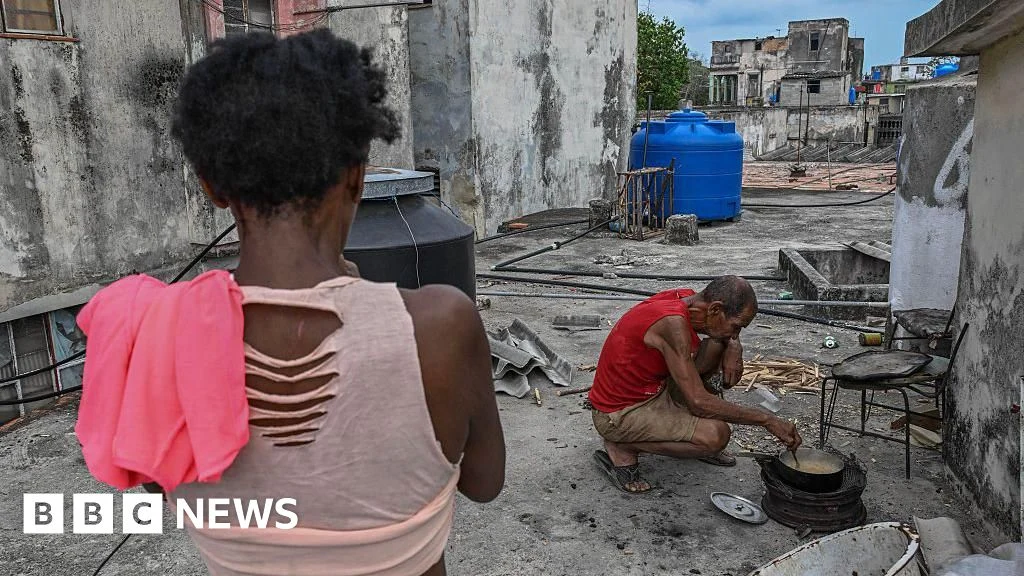
Cuba has completely depleted its reserves of diesel and fuel oil, according to Vicente de la O Levy, the nation's energy minister. In an interview with state-run media, de la O Levy stated that while limited quantities of gasoline are available, the country's energy infrastructure is in a "critical" condition due to a U.S.-imposed blockade that is severely restricting fuel supplies. This dire situation has led to scattered protests against prolonged power outages in Havana, the capital, as reported by Reuters.
The U.S. has recently reiterated its offer to provide $100 million in aid to Cuba, contingent upon the implementation of "meaningful reforms to Cuba's communist system." Minister de la O Levy detailed the extent of the shortage, explaining, "The sum of the different types of fuel: crude oil, fuel oil, of which we have absolutely none; diesel, of which we have absolutely none – I am being repetitive – the only thing we have is gas from our wells, where production has grown."
The U.S. blockade has resulted in significant disruptions, with parts of Havana experiencing blackouts lasting between 20 to 22 hours daily. The minister acknowledged that the overall situation in the country has become "extremely tense." Essential services are severely affected, with hospitals struggling to operate normally, and schools and government offices being compelled to close their doors.
Furthermore, tourism, a vital sector for Cuba's economy, has also suffered considerable impact from the ongoing crisis. The island nation typically depends on Venezuela and Mexico for its oil supply to its refinery system. However, these supplies have been largely curtailed following threats of tariffs from former U.S. President Donald Trump against nations that send fuel to Cuba.
Last week, U.S. Secretary of State Marco Rubio claimed that Havana had rejected a U.S. offer of $100 million in humanitarian aid. Cuba has denied this assertion. The U.S. State Department reiterated its offer on Wednesday, indicating that the humanitarian assistance would be managed in collaboration with the Catholic Church and other "reliable" humanitarian organizations.
"The decision rests with the Cuban regime to accept our offer of assistance or deny critical living-saving aid and ultimately be accountable to the Cuban people for standing in the way of critical assistance," the State Department stated. Washington's intensified blockade against Cuba began in early May, with the U.S. imposing sanctions on senior Cuban officials accused of "human rights abuses."
Cuban Foreign Minister Bruno Rodriguez denounced these sanctions as "illegal and abusive." The ongoing fuel crisis highlights the profound economic and social challenges confronting Cuba, exacerbated by international political pressures and sanctions that impact the daily lives of its citizens and the functioning of its key industries.


