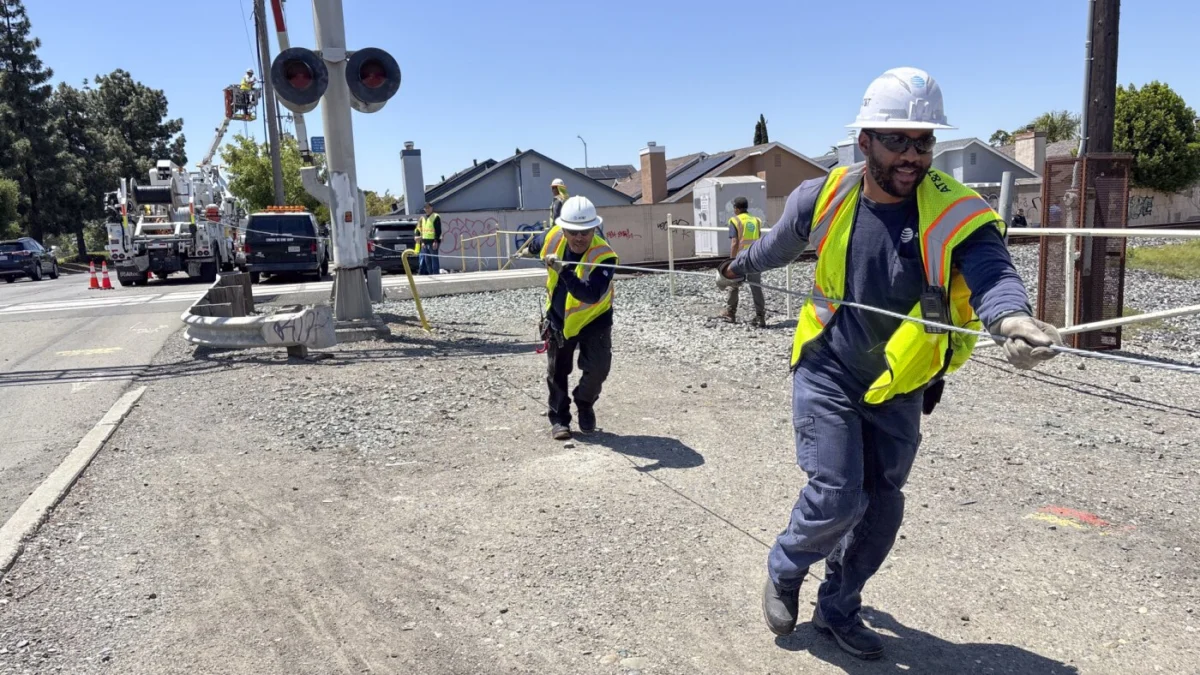
In an industrial yard off a highway east of San Francisco, AT&T workers recently gathered around a pile of cold, hard evidence representing a rapidly growing national crisis. Todd Swenson, an executive from AT&T's construction and engineering division, pointed to a tangled mass of recovered cables and wires roughly the size of a truck tire. The bundle, which had been retrieved from a local metal recycler, belonged to AT&T and had been illegally cut down from telephone poles by thieves. Over the past few years, the United States has experienced an alarming rise in copper wire theft, a trend driven by a dramatic increase in the global market value of the metal.
According to Swenson, the price of copper has roughly doubled over the past year, buoyed in part by the massive expansion of artificial intelligence data centers. This surge in commodity value has created a direct correlation between market prices and criminal activity. When the price of copper rises at recycling centers and on global markets, theft incidents spike immediately. While a stolen pile of wire might only fetch a few hundred dollars for a thief at a scrap yard, Swenson noted that the resulting physical damage and service disruptions can cost AT&T tens of thousands of dollars to repair, taxing work crews and frustrating corporate executives.
To demonstrate the severity of the issue, AT&T representatives invited reporters on a ride-along to witness the immediate aftermath of a theft. The destination was a railroad crossing in Hayward, California, where an automated alarm had triggered at 3:40 in the morning. The alarm alerted the company that cables had been severed from nearby telephone poles. Scott Gonzaga, another AT&T employee on the scene, explained that thieves typically cut the cables down, drag them to a secluded area, strip off the protective outer sheath, and burn the remaining materials in dirt pits to isolate the bare copper before selling it to scrap metal dealers or middlemen.
Upon arriving at the Hayward tracks before noon, the scale of the destruction was fully visible. The phone and internet cables that should have stretched high above the railroad tracks were completely gone. In the dirt below, the thieves had left behind a pair of bolt cutters, discarded bits of rubber and plastic stripping, and a series of freshly charred patches of earth known as "burn pits." Nearby, an abandoned tent filled with clothes and junk sat next to a small, hidden pile of wires. Further down the train tracks, the AT&T crew spotted two individuals pushing a large plastic laundry bin, prompting Michael Riensch of AT&T's global security unit to note that encountering active suspects on-site during an inspection was an unprecedented occurrence.
The Growing Toll on Infrastructure and Communities
Although the AT&T crew kept their distance and contacted local law enforcement, the suspects remained just out of reach. Gonzaga reported seeing one of the individuals standing directly by a burn pit when the team first arrived. The incident highlights a massive operational challenge for the telecommunications giant. Last year, AT&T recorded more than 10,400 incidents of copper wire theft nationwide, which translates to roughly 200 thefts every single week. In California alone, the company recorded 4,300 wire theft incidents last year, representing a significant portion of the national total.
This high volume of theft is particularly burdensome because only about 3% of AT&T's customer base is still connected via legacy copper wire networks. These customers include rural households without access to cellular service or fiber optic connections, as well as certain businesses that rely on older lines for internet or fax transmissions. The copper cables, which utilize technology pioneered over 180 years ago by Samuel Morse, often hang directly alongside modern fiber optic lines. Because the two types of cabling look nearly identical, thieves frequently slice through fiber optic lines by mistake, which is what triggered the automated alarm at the Hayward crossing.
Susan Santana, the president of AT&T West, emphasized that these thefts have severe consequences for local communities. When cables are cut, critical institutions such as homes, hospitals, airports, and schools can instantly lose vital communication links. Santana explained that AT&T is actively implementing various security measures to protect its infrastructure, including locking down manhole lids with extra bolts, installing sensors across its lines, hiring private security guards, and offering a $20,000 bounty for information leading to the arrest and conviction of copper thieves.
However, the copper theft epidemic is not limited to telecommunications infrastructure. Electric utilities and municipal services are also facing severe disruptions. In San Jose, California, local authorities have established an online tracker to monitor streetlights that have gone dark due to wire theft. Electric vehicle charging networks are also frequent targets. Rick Wilmer, the CEO of ChargePoint, stated that cable theft is a daily struggle for his company. Wilmer became so frustrated with the issue that he personally began prototyping solutions using materials like Kevlar and wire from home improvement stores, testing them with pruning shears. ChargePoint engineers subsequently developed charger cables impregnated with cut-resistant materials designed to damage thieves' tools and prevent them from targeting multiple stations.
Regulatory Battles and the Transition to Fiber
Back at the Hayward railroad crossing, arriving police officers questioned the two individuals but ultimately released them due to a lack of probable cause, as there were no direct witnesses to the cutting and no stolen property or tools were found on their persons. The Hayward Police Department subsequently declined to release records related to the case, citing an active and open investigation. In California, copper thieves face up to three years in prison and significant fines, and the state has recently tightened regulations on scrap metal dealers.
California Attorney General Rob Bonta highlighted that effective law enforcement and the perception of a high likelihood of being caught are the most reliable deterrents. Bonta noted that authorities are utilizing a collaborative, cross-jurisdictional playbook—previously used to combat catalytic converter thefts and retail smash-and-grabs—to share intelligence and conduct surveillance. However, he acknowledged that local law enforcement agencies must balance these efforts against prioritizing violent crimes like murders, rapes, and robberies.
For AT&T, the ultimate solution lies in transitioning entirely away from legacy copper infrastructure to modern fiber optics. However, California regulatory frameworks present a major obstacle. Because AT&T is designated as the state's "carrier of last resort," it is legally mandated to maintain copper services for the small fraction of customers who still rely on them. Santana expressed hope that California would establish a regulatory pathway to allow the company to transition its resources into fiber and wireless networks, as most other states have already done.
In late May, AT&T filed a lawsuit against California seeking authorization to discontinue its legacy copper wire-based phone service, aligning with Federal Communications Commission guidelines to phase out the technology. The company has pledged $19 billion to modernize its network through 2030. While Bonta's office is currently reviewing the lawsuit, consumer, agricultural, and small business advocacy groups continue to oppose the retirement of copper networks, arguing that doing so could leave vulnerable rural communities without reliable emergency communications. Meanwhile, on the ground, splicing managers like Rommel Maghonay continue to divert crews from normal assignments to repair sliced lines, a process that takes hours and occurs multiple times a week.


