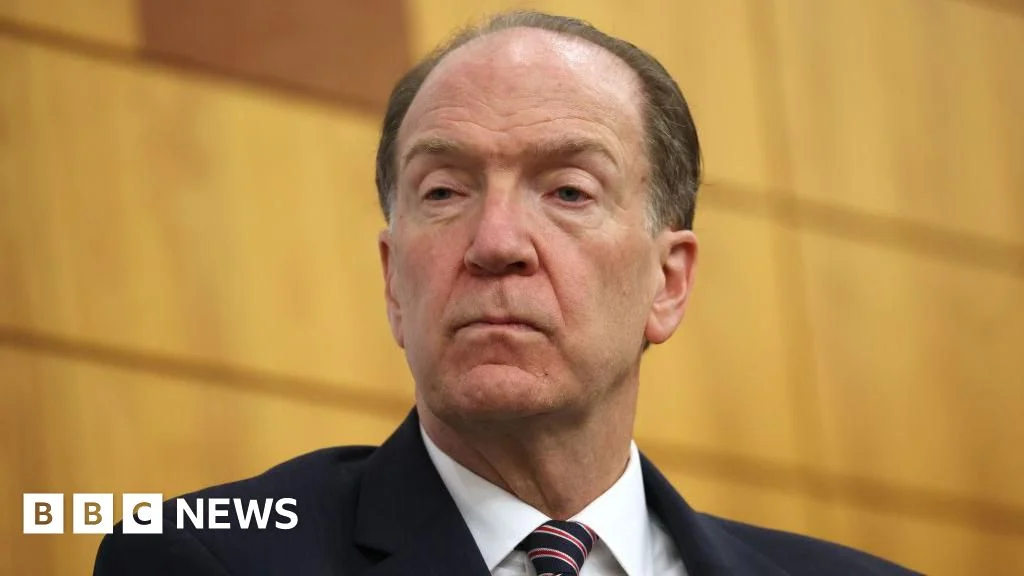
Former World Bank President David Malpass has urged China to cease its stockpiling of food and fertilizer, stating that such actions are contributing to a global supply crisis exacerbated by the conflict in Iran. Speaking to the BBC's World Business Report, Malpass highlighted that China possesses the world's largest stockpiles of agricultural commodities and fertilizers. He suggested that Beijing could "stop building their stockpiles" to alleviate international pressure.
These remarks come as nations globally are struggling to secure essential fertilizer supplies for their upcoming spring planting seasons. The situation is further complicated by disruptions to shipping routes, particularly the closure of the Strait of Hormuz, a vital transit point for global trade, which has severely disrupted shipments.
China has itself halted fertilizer exports since March, citing the necessity of ensuring adequate domestic supply. This policy has contributed to the scarcity faced by other nations dependent on these imports for their agricultural output.
Malpass, who led the World Bank from 2019 to 2023 and previously served as Treasury Under Secretary for International Affairs under US President Donald Trump, also questioned China's continued classification as a developing nation. He argued that given China's status as the world's second-largest economy and its considerable wealth, the pretense of being a developing country within international bodies like the World Trade Organization (WTO) and the World Bank is no longer credible. "They present themselves as a developing country when they're the second biggest economy in the world and in many ways rich," he said. "And yet they still have the pretence of being a developing country in the WTO and in the World Bank, and they could suspend that," Malpass added. The BBC has contacted the Chinese embassy in Washington for comment.
On the ongoing tensions surrounding Iran, which President Trump described as being on "massive life support," Malpass urged global unity behind the United States in seeking a resolution. He emphasized the dangers of a "rogue state with plutonium" and the critical importance of keeping the Strait of Hormuz open.
Malpass expressed hope that China could play a constructive role in resolving the deadlock in the Strait of Hormuz, saying that the free movement of maritime traffic is fundamentally in China's own economic interest. "China benefits from open waterways worldwide," Malpass stated. He added that the nation's significant profits from international trade would be jeopardized if Iran were to gain control over the Strait of Hormuz, as "they run the shipping lines, own the containers, and make huge profit from trade with the rest of the world."
Looking ahead to the economic outlook for ordinary Americans, Malpass anticipates further price increases. He projected that upcoming inflation data for April would likely show rising prices for many products. Despite these inflationary pressures, Malpass noted that the U.S. economy is demonstrating resilience, supported by "robust" employment figures, suggesting a strong underlying economic performance.


