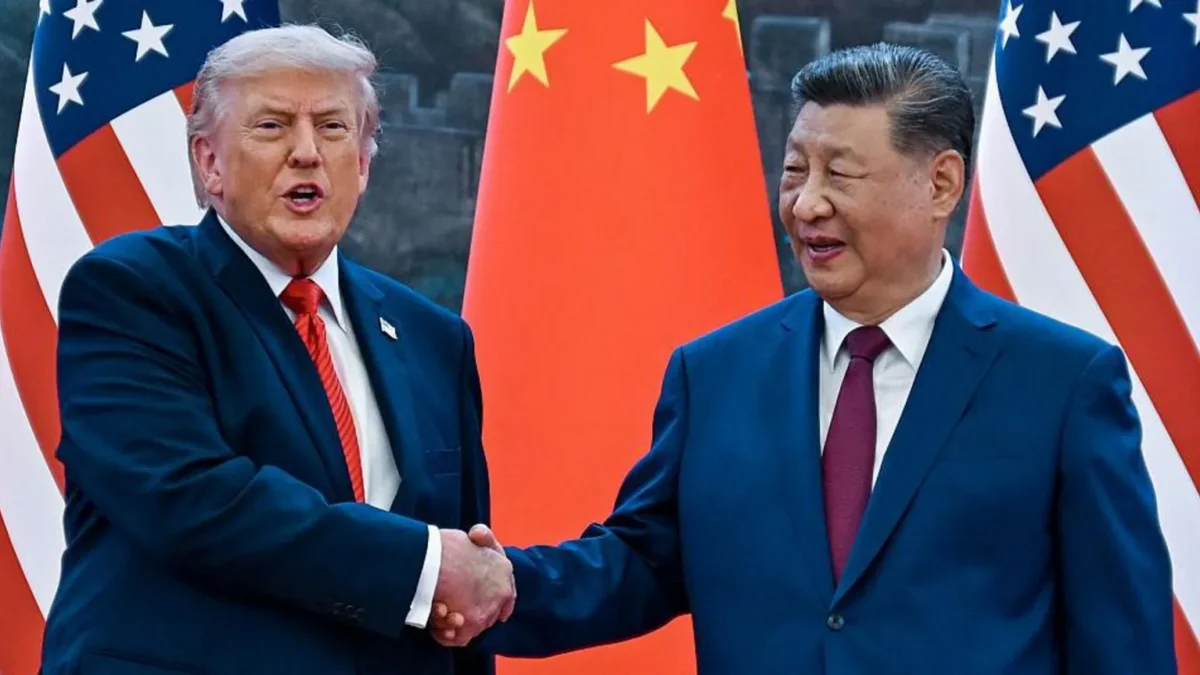
China has officially confirmed its intention to purchase 200 aircraft from Boeing, a significant development following the recent summit between US President Donald Trump and Chinese President Xi Jinping. The agreement includes assurances from the United States regarding the supply of essential aircraft engine parts and components to China, as announced by China's Ministry of Commerce on Wednesday.
Beyond the substantial aircraft order, both nations are committed to exploring an extension of the existing tariff truce. This truce, initially agreed upon in October, is set to be discussed for further continuation. Additionally, the parties aim to negotiate tariff reductions on a considerable volume of goods, potentially impacting over $30 billion worth of products from each side.
The timing of this announcement is noteworthy, coinciding with President Xi Jinping's discussions with Russian President Vladimir Putin, occurring just days after President Trump concluded his visit to China. Trump's diplomatic trip yielded several trade-related commitments between the two global economic powerhouses, prominently featuring the Boeing deal and enhanced market access for American agricultural producers.
President Trump remarked to journalists on Air Force One after his departure from China, "We made a lot of great trade deals, including over 200 planes for Boeing, with a promise of 750 planes, which would be by far the largest order ever." Boeing's CEO, Kelly Ortberg, was a member of the US delegation accompanying Trump on the trip, which also included prominent figures like Tesla CEO Elon Musk and Nvidia CEO Jensen Huang.
Boeing expressed satisfaction with the outcome, stating, "We had a very successful trip to China and accomplished our major goal of reopening the China market to orders for Boeing aircraft." The company further clarified that the current agreement represents an initial commitment for 200 aircraft, with expectations for additional orders to materialize after this first tranche is fulfilled.
This trade détente has roots in an earlier agreement reached in Kuala Lumpur, Malaysia. That accord, preceding a Trump-Xi meeting in South Korea in October 2025, extended the tariff truce until November of the current year. The previous deal had already facilitated a reduction in US tariffs on Chinese goods and a suspension of Beijing's restrictions on exports of critical rare earth minerals and magnets.


