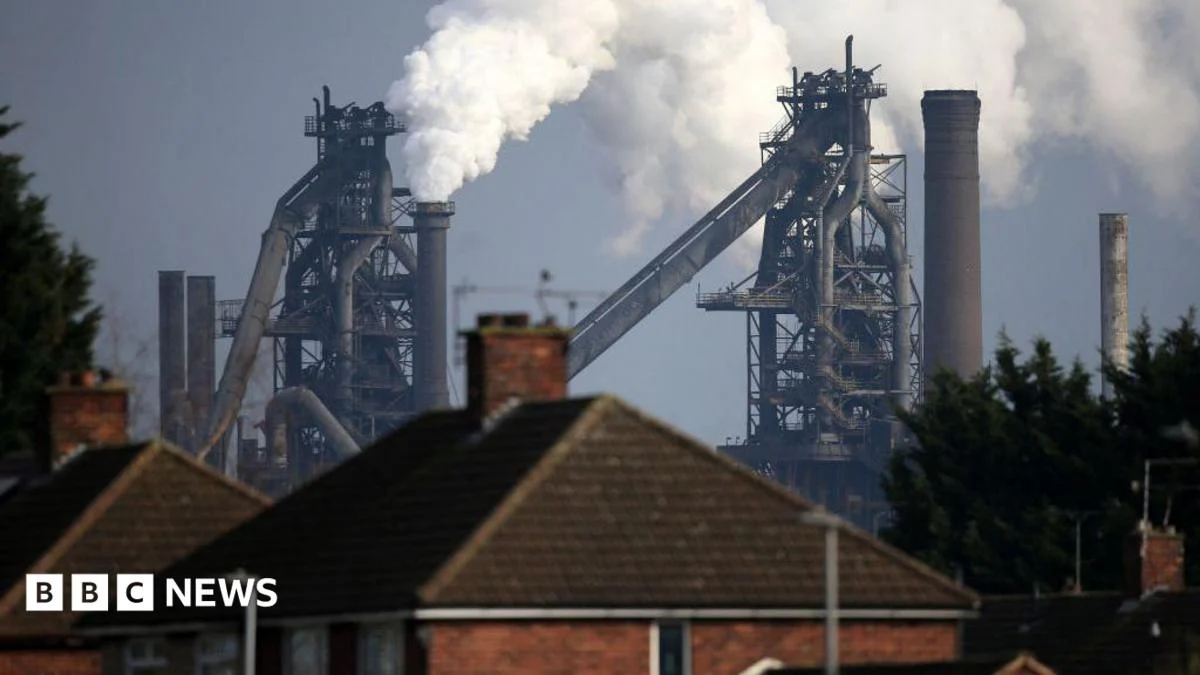
British Steel has been brought into public ownership after years of uncertainty over the future of the Scunthorpe steelworks, with the move following months of government intervention to safeguard a vital national capability. The plant, which sits at the heart of the UK’s virgin-steel production, has long been a flashpoint in a sector under pressure from declining domestic output, volatile global markets and high energy costs. Authorities insist the nationalisation buys time and gives policymakers room to decide the plant’s longer-term future while keeping the blast furnaces running.
Scunthorpe’s operation remains a linchpin of Britain’s steelmaking. The site employs about 2,700 people, roughly three-quarters of British Steel’s workforce, and the plant is the last in the UK producing virgin steel—a form with fewer impurities and preferred for critical infrastructure such as major construction projects and railways. Its continued operation is seen as essential to the UK’s ability to undertake primary steel production, a capability viewed by the government as an economic-security issue given the risk of dependency on foreign suppliers if virgin-steel capability were lost.
British Steel’s origins trace back to 2016, when Tata Steel sold the loss-making long-products arm—responsible for rails and structural sections—for £1 to Greybull Capital, which renamed the business British Steel. Following a 2019 financial collapse, the company was taken into the government’s insolvency regime and subsequently sold to Jingye in 2020. In July 2025, the government formally moved the company into public ownership as part of a response to ongoing losses and structural pressure within UK steelmaking. Jingye has since signalled it will seek compensation for the nationalisation based on the company’s value, a process the government says will be determined by an independent assessor.
The case for nationalisation is framed around protection of jobs and the preservation of a strategic capability deemed vital to the country’s security. Business Secretary Peter Kyle told the BBC that while there is an option to allow the business to fail, such an outcome would erode the UK’s ability to produce primary steel and increase reliance on global supply chains. The government emphasises that nationalisation provides the time and authority to decide the plant’s future while keeping the blast furnaces operational during the transition.
Jingye has highlighted the financial strain at Scunthorpe, stating in late March 2025 that the plant was losing around £700,000 a day and launching a consultation on potential closure. It argued the blast furnaces were no longer financially sustainable, pointing to highly challenging market conditions, tariff barriers, and costs associated with shifting to lower-carbon production techniques. A later National Audit Office report noted the Scunthorpe site was costing the government about £1.3 million a day, underscoring the fiscal pressures weighing on UK steelmaking. The global context has intensified these pressures; UK steel production has fallen for decades, and a 25% US tariff imposed last March on steel imports further squeezed margins. UK domestic demand, higher electricity costs relative to peers, and a global surplus of steel have complicated policy choices around nationalisation and potential compensation for Jingye.
The government stresses that keeping the blast furnaces running is central to preserving the UK’s virgin-steel capability, even as refurbishment and restart costs loom large. The four blast furnaces at Scunthorpe—named Bess, Mary, Anne and Victoria—face different statuses, with Bess and Anne still operational. Restarting or refurbishing furnaces is technically complex and expensive; a salamander risk arises if a furnace is cooled and then restarted. Supplies such as coking coal and iron pellets remain in tight supply, complicating production plans. Beyond Scunthorpe, the UK steel sector comprises around 1,160 businesses and directly supports about 40,000 other firms. In 2024, the UK’s steel industry contributed roughly £1.7 billion to the economy, equating to about 0.1% of total output and 0.8% of manufacturing output. In 2023 the UK produced 5.6 million tonnes of crude steel, about 0.3% of global production, while China produced more than 1,000 million tonnes, around 54% of world output. The EU’s 2023 total was about 126 million tonnes.
UK steel imports in 2024 totalled nearly 7 million tonnes, with roughly two-thirds coming from the EU. The Netherlands, Spain and Germany were the top three sources for finished steel imports in 2024, according to industry body UK Steel. Related developments include Tata Steel’s Port Talbot plant, which in 2024 halted its blast furnace due to losses before an agreement with the government to support greener steelmaking, and Liberty Steel’s UK operations where the government intervened last year to cover ongoing wages and costs while a buyer was pursued.
Overall, nationalisation is presented as a strategic measure to protect a critical, carbon-intensive industry’s core capability and to stabilize a sector undergoing material structural and competitive pressures, all while policymakers determine longer-term options for Scunthorpe and the broader British Steel portfolio.


