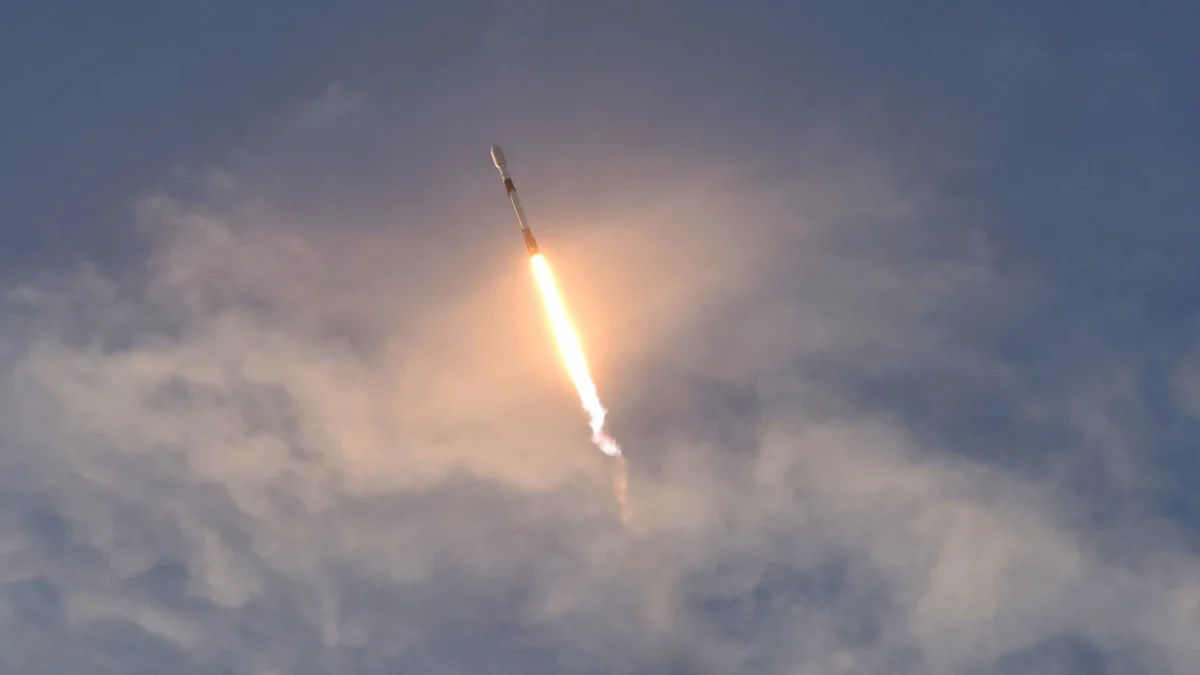
Beyond SpaceX dominates headlines as the countdown to a historic SpaceX IPO nears, but CNBC’s interviews with ultra-rich investment firms show that family offices are lining up beyond Musk’s launch titan. Several backers say the opportunity set extends to space infrastructure, hardware ecosystems, and defense-linked networks, not just rockets or consumer space ventures. In a scene captured from SpaceX’s activities, a Falcon 9 rocket carrying 60 Starlink satellites lifts off from pad 39A at the Kennedy Space Center on October 6, 2020, the 13th batch of Starlink satellites designed to provide global broadband. The image underscores SpaceX’s scale, but the reporting line emphasizes that family offices see a broader, multi-year growth narrative in the space economy by funding infrastructure and related technologies that serve broader end markets.
Gary Lauder, a cosmetics heir turned investor, has backed SpaceX via a special purpose vehicle and two venture funds. He told CNBC he was drawn to Starlink’s satellite technology and its role as a communications backbone, rather than a fascination with space tourism. Lauder noted that much of his early investing was in telecommunications, including a satellite communications seminar in the early ’90s, which he says helps frame satellites as essential infrastructure rather than novelty ventures.
Jason Blanck, who started his family office in 2024, focuses on the “picks and shovels” of space—mission-critical hardware and data networks. He told CNBC that public markets are still fixated on rocket cadence and flight-development costs, while managing permanent family capital allows a longer-run view that embraces a broader, evolving space infrastructure narrative.
Robin Lauber’s Infinitas Capital invested in SpaceX in early 2025 through a secondary offering. Lauber cited Musk’s track record and Starlink’s performance as a reason to maintain exposure, while noting the valuation was “reasonable” against upside scenarios that place SpaceX at a multi-trillion-dollar scale. He said Infinitas might have sold some shares before the IPO if a willing buyer emerged at the right discount and he remains open to re-entering or expanding positions depending on pricing and liquidity.
Looking ahead, Lauber weighs additional bets on European space companies such as Isar Aerospace, a German launch service provider, and on Alpine Space Ventures’ new fund, which counts SpaceX veterans among its founding partners. “European sovereignty is a huge topic everywhere,” he remarked, signaling how regional capabilities and government programs could shape investment risk and opportunity.
Investing in space-related firms was not always popular, according to Jon Kutler of Admiralty Partners. Kutler, who spent 10 years in the U.S. Navy before becoming an investment banker in aerospace and defense in the early 1980s, said he left Wasserstein Perella & Co. in 1992 to start his own firm to focus more on the sector. He recalled being told he was an idiot because the Cold War had ended and there would be no more defense spending, a belief he called ludicrous and one he countered with his own capital and time. Kutler later sold that investment firm in 2002 to focus on Admiralty Partners.
Kutler’s portfolio includes Firefly Aerospace, a rocket maker with clients including Lockheed Martin and the U.S. Space Force. He cautioned that investing in aerospace requires patience, noting that family offices have an edge over traditional private equity because they aren’t pressured to realize returns on a fixed timetable. While the prospect of traveling to Mars remains exciting, he said space exploration companies face a harder path to financial success because federal government spending is less predictable. Defense spending will be a recurring theme with ups and downs tied to administration priorities, but there will always be an end market, he argued. Kutler warned that enthusiasm around SpaceX’s IPO masks significant risks in aerospace, including swings in federal funding for research and development, and he questioned whether cuts to research funding could threaten the startup pipeline.
Overall, the CNBC reporting frames a market where family offices diversify into a broader space economy—covering satellites, ground infrastructure, hardware ecosystems, and defense-oriented supply chains—seeking multiyear growth rather than chasing single-stock moves. The private-wealth channel is presented as a counterweight to traditional private equity in a sector whose publicly visible milestones may outpace the pace of public funding and federal programs.
Taken together, the interviews describe ultra‑rich investors building exposure to space through a layered approach: backing infrastructure hardware, data networks, and regional space players while monitoring regulatory and budget cycles that could shape the pace of growth in the broader space economy.


