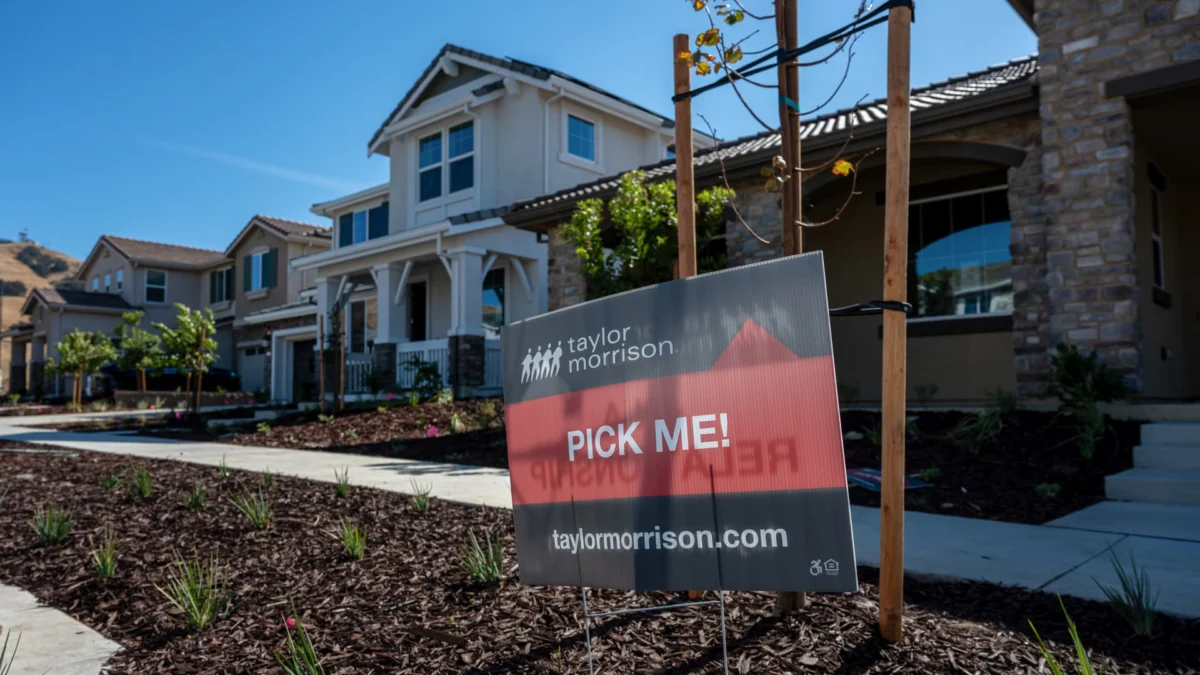
Berkshire Hathaway has reached an agreement to acquire homebuilder Taylor Morrison Home in a $6.8 billion transaction, a move that has drawn attention within the industry. While surprising to some, the consensus among analysts suggests this strategic investment may indicate a long-term optimistic outlook for the U.S. housing market, which has faced recent challenges.
The acquisition positions Berkshire Hathaway with a significant stake in the housing sector, aligning with an expected recovery. Sheryl Palmer, CEO of Taylor Morrison, emphasized the rare synergy between her company's operational cycles and Berkshire's investment philosophy. Palmer stated, "I think one of the things we're so excited about is homebuilding runs in 5-, 7-, 10-year cycles. Berkshire thinks in probably 7-, 10-[year] and longer cycles. That alignment is very rare."
The deal, announced on Sunday, involves Berkshire Hathaway purchasing the nation's sixth-largest publicly traded builder. The offer includes a 24% premium over Taylor Morrison's closing price on May 29, valuing the company at approximately $8.5 billion, including debt. This transaction occurs during a difficult period for the U.S. housing market, which is contending with elevated and volatile mortgage rates, rising construction costs, and diminished consumer confidence. Geopolitical factors, such as the war with Iran, have also reportedly impacted the market.
Approximately 15 months prior to the acquisition, Taylor Morrison had outlined an ambitious multiyear growth plan. Palmer affirmed the company's commitment to those targets despite recent market shifts. "We've certainly seen some shifts in the market, so the targets we put out, we stand behind. The timing certainly might have been at risk," Palmer noted during an interview on CNBC's "Squawk on the Street" on Monday.
Long-Term Strategy Amid Market Headwinds
Analysts largely agree that Berkshire's long-term perspective is crucial for understanding the timing of this deal. Margaret Whelan, founder and CEO of Whelan Advisory, a firm specializing in homebuilder mergers and acquisitions, commented, "What it says is that very sophisticated buyers think the valuations have bottomed." She added that sophisticated investors typically wait for market declines to stabilize before making significant acquisitions. Whelan further explained that stock values often anticipate fundamental market turns, suggesting that the housing market itself is likely beginning to stabilize soon, which is viewed as a positive development given the uncertainty surrounding interest rates.
John Burns, founder and CEO of John Burns Research and Consulting, acknowledged that the short-term outlook for the housing market remains challenging, leading to a punishment of homebuilder stocks. However, he emphasized that "long-term thinkers like Berkshire Hathaway and the Japanese companies are seeing that as a platform to acquire great companies for the long term, and it's really that simple."
This trend of long-term investment in U.S. homebuilders extends beyond Berkshire Hathaway. Japanese companies have also been active acquirers in the sector. Sumitomo Forestry recently finalized a $4.5 billion deal to acquire Tri Pointe Homes. In total, Japanese firms now own 33 homebuilders operating within the U.S. Burns noted that many homebuilder stocks are currently valued at or below book value due to the industry's short-term outlook, presenting what he described as "great bargains" for long-term oriented investors.
Recent market data underscores the difficulties faced by the housing sector. Sales of newly built homes in April were 11.3% lower year-over-year, according to a government reading. Both single-family housing starts and building permits also experienced annual declines. Furthermore, homebuilder sentiment has remained in negative territory for the past two years, as reported by the National Association of Home Builders/Wells Fargo Housing Market Index.
Despite these challenges, Whelan expressed optimism about future demand. "I think we have pent-up demand," she said, anticipating that the war with Iran could conclude by next spring. She suggested that the market might be ready for a recovery by 2027, making an investment six months early a reasonable move for a company like Berkshire Hathaway.


