A Bold Response to Economic Headwinds
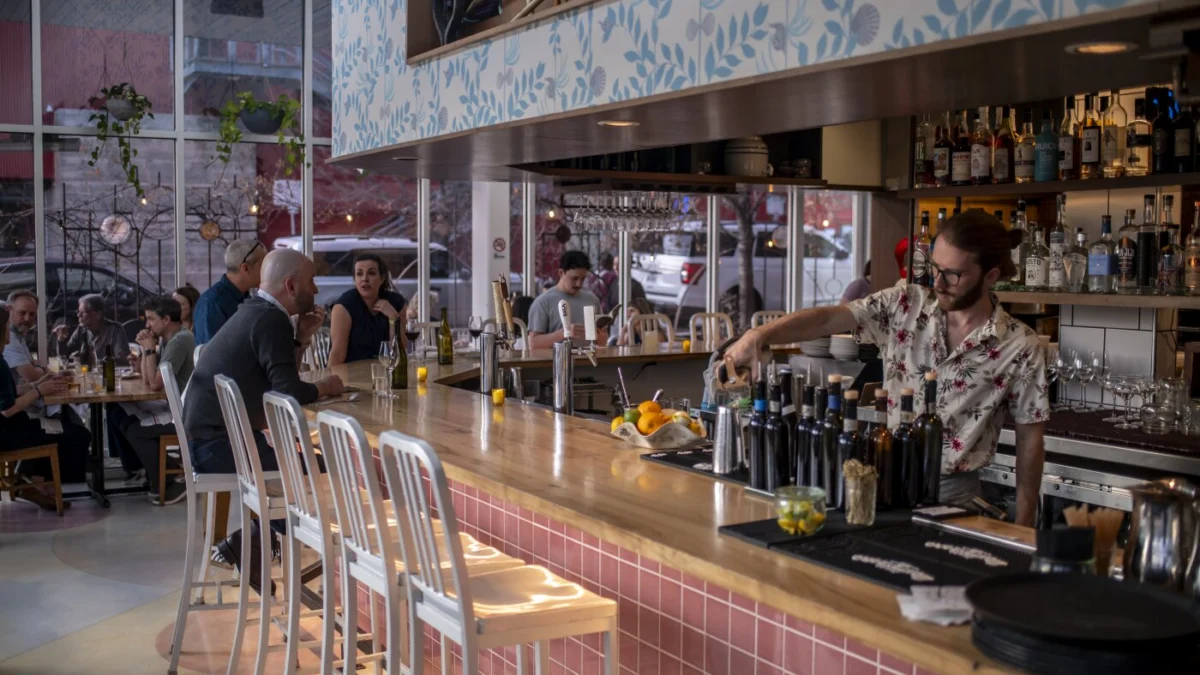
In a unique initiative aimed at combating the effects of persistent inflation and shifting consumer habits, L’Oca d’Oro, an Italian restaurant in Austin, Texas, has introduced a pay-what-you-will promotion for its food menu on Tuesday nights. This innovative strategy allows patrons to decide the price they pay for their meals, a move designed to make dining out accessible to a broader audience while addressing the economic challenges faced by both consumers and businesses.
The restaurant, co-owned by Adam Orman and Fiore Tedesco III, launched the program in December. The decision came after grappling with a confluence of factors including disruptive tariffs, escalating food costs, labor shortages, and the necessity of raising their own menu prices. Orman explained that the partners sought a method to counteract the declining number of individuals who could afford to dine out. “Getting drive-thru is not going out. Sitting down, being treated with hospitality, being a guest is a thing that everybody should be experiencing regularly, because it feels good,” Orman stated. “This is a way of making sure that that is accessible for everyone.”
While diners still pay the full price for beverages, they have the freedom to select any item from the regular food menu and determine their own payment amount. A 20% service charge is applied to the customer-determined total, which, according to Orman, helps fund living wages, benefits, and paid time off for the restaurant’s staff. This fee is applied to all patrons, regardless of the price they choose for their food.
Co-owner Fiore Tedesco III acknowledged that the strategy might seem counterintuitive in an environment where conventional wisdom suggests raising prices due to increased costs. “There’s a way in which it seems like we should raise prices right now because everything’s more expensive, [that] we should lean that way,” Tedesco said. However, he prefers to challenge this notion, attributing a noticeable drop in the restaurant’s volume over the past two years to political and financial instability. Tedesco expressed a personal philosophy behind the initiative: “I feel really confident and I feel lighter and more loving and more full and more generous in practicing the spirit of leaning that other way,” he said, “of saying, no, the lesson here is this is for everybody. This really is a time to be less inhibited about going out.”
Consumer Behavior Shifts Amidst Rising Costs
The decision by L’Oca d’Oro reflects a broader trend observed across the United States. A YouGov report from October indicated that 37% of U.S. diners were dining out less frequently compared to the previous year, with only 8% reporting an increase in their dining-out frequency. The primary drivers for this shift, according to the research group, were rising menu prices and a general desire among consumers to save money.
This trend has also influenced how people consume restaurant meals when they do opt to dine out. Data from the National Restaurant Association revealed that nearly three out of every four meals served by U.S. restaurants were takeout orders. This highlights a significant move towards off-premise dining, driven by both cost considerations and convenience.
Hanna Garth, a Princeton University anthropology professor who has researched food access, noted that restaurants serve a vital role beyond just providing food. They act as a “third space”—an environment outside of home and work where social interactions occur. “For a lot of people, it’s just about breaking from the routine and the monotony of eating at home. For a lot of women, it’s about alleviating the burden of the work of cooking a meal and cleaning up after the meal,” Garth said, referring to her research on Los Angeles residents. “And I think for a lot of people it’s also a social activity.”
Garth further elaborated on the importance of these social connections. “Those connections, even though they’re teeny-tiny connections that seem like they don’t matter that much, they’re a really really big deal for making us feel like we belong to a community and we’re connected with others around us,” she explained. The inaccessibility of restaurants due to economic pressures means the loss of these incidental social exchanges, such as chatting with staff or other patrons.
Patron Experiences and Financial Realities
Diners at L’Oca d’Oro’s pay-what-you-will nights have shared varied experiences and perspectives. Armand Daniels and Robin Wiley, who learned about the promotion via Instagram, saw it as an opportunity for a more special occasion. “We didn’t have a really great Valentine’s Day,” Daniels remarked, viewing the outing as a more spectacular alternative to a typical celebration. They enjoyed a spinach salad with pickled pineapple oranges and candied almonds, and Daniels indicated they would decide on their payment amount after reviewing the final bill, considering paying less than the full price.
Another pair, Erin Weber and Michelle Valencia, visited for a “girls night.” Valencia, who works for the city’s public health department, and Weber, an editor pursuing graduate studies in clinical social work, had visited the restaurant before. “But when we saw this we were like, ‘oh that’s a really cool special,'” Valencia said. Weber, a native Austinite, praised the experiment, stating, “This is a really great way for people from … all walks of life to just be able to enjoy amazing food.” Their bill totaled $117, and they opted to pay $100, describing it as their “happy hour total” and “a little bit of a discount.”
Chris Ortiz and Rickyann Ramos, celebrating their second anniversary, expressed their intention to pay their full bill. “I think we would just fully take care of it from our end,” Ortiz said, “because we’re in a position to do so and hopefully that can help others out.” This sentiment reflects a desire among some patrons to support the restaurant’s initiative and contribute to its sustainability.
Zayed Al-Hamad, whose party of four planned to share several dishes, including focaccia, mozzarella, polpette, and two types of pasta, acknowledged a sense of internal conflict. “I’ll be honest, there’s a level of guilt, you know? I go to order, and I have to fight through this feeling of, like, ‘am I allowed to do this?'” Al-Hamad admitted. “I’m not going to write $10 down, but man it just doesn’t feel like it should be possible.” Al-Hamad, who works as a menu planner and uses rental assistance for his apartment, hopes to increase his contributions to businesses like L’Oca d’Oro as his financial situation improves.
Restaurant Performance and Future Outlook
Despite the apparent generosity of the pay-what-you-will model, the restaurant’s financial performance has shown encouraging signs. Orman reported that on one particular Tuesday night, the restaurant earned $70 less than it would have at full price. However, on another occasion, they actually made $12 more than the full menu price. He estimates that typically, diners pay about two-thirds of the food bill’s value, with a few paying significantly less and many paying close to the expected amount.
Orman stated that the co-owners are satisfied with the financial outcomes. The promotion has led to an average increase in traffic and revenue on what is usually a slower weekday. This positive trend has prompted discussions about potentially expanding the pay-what-you-will concept to other nights, possibly over the summer, as new menu items are introduced. The initiative, while unconventional, appears to be a viable strategy for L’Oca d’Oro to navigate the current economic climate, foster customer loyalty, and maintain its community presence.


