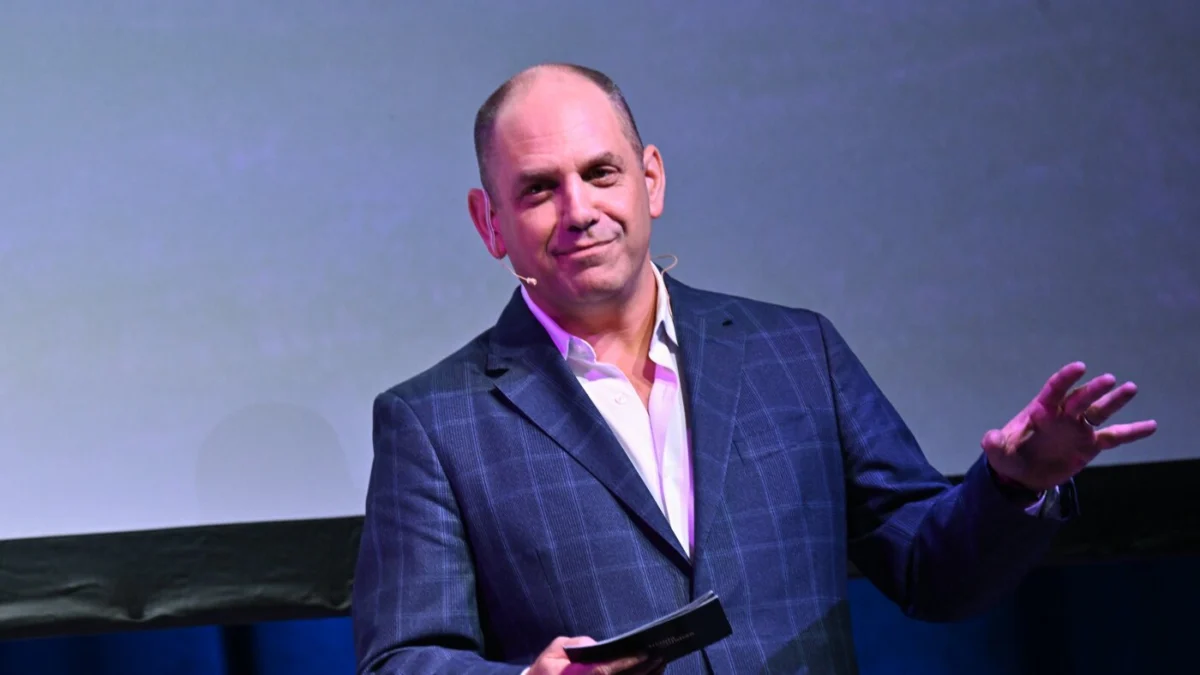
Andrew Morse, the driving force behind a significant digital transformation at The Atlanta Journal-Constitution, is stepping down as publisher and president of the newspaper. His departure comes nearly three and a half years after he took the helm with a bold vision and a substantial investment from the paper's parent company, Cox Enterprises. Morse had initially set an ambitious target of reaching 500,000 paying digital subscribers by the close of 2026. While he acknowledges that this goal remains attainable, he concedes it will require more time than originally projected.
Morse's tenure began in January 2023, following a successful career in digital strategy at major media organizations like CNN and Bloomberg. He was tasked with reinventing the Atlanta Journal-Constitution, a storied publication, into a modern media company. This endeavor was backed by a $150 million investment from Cox Enterprises, a significant commitment aimed at pivoting the newspaper towards a digital-first future. The strategy involved introducing new content formats, infusing the organization with fresh energy, and ultimately, making a decisive move away from print.
In a significant strategic shift, the Atlanta Journal-Constitution abandoned its print edition at the end of last year, dedicating its resources entirely to digital innovation. This move represented a substantial gamble, positioning the paper as the largest metropolitan area in the United States without a major daily print newspaper. The paper's owners, the Cox family, who have a long-standing connection to the publication, provided the financial backing for this ambitious transformation. Cox Enterprises, controlled by the Cox family, has substantial reserves derived from investments in sectors such as cable television, broadband internet, and automotive sales, enabling them to subsidize their hometown paper.
Under Morse's leadership, the Journal-Constitution implemented a series of changes designed to broaden its appeal and reach. The newspaper expanded its journalistic focus beyond the immediate metro Atlanta region, establishing a stronger presence in other Georgia cities where local daily journalism had been in decline. This expansion included distributing print copies in these areas to reintroduce the AJC brand. The paper also moved away from traditional geographic beats, opting instead for subject-based coverage that extended beyond local county lines. This strategic realignment aimed to capture a wider audience interested in specific topics rather than just local news.
Significant investments were also made in new content formats to engage a digital audience. The Journal-Constitution developed and promoted newsletters, podcasts, and social media content to complement its more traditional reporting. Morse stated that over half of the AJC's 320 staff members are now part of its newsroom. These efforts have garnered recognition, including the paper's first Peabody Award for its social media video coverage of Immigration and Customs Enforcement (ICE) activities in Georgia. This award highlighted the success of the paper's innovative approach to storytelling and its ability to cover complex issues in new ways.
Shereta Williams, the executive vice president of growth operations at Cox Enterprises, acknowledged that the AJC had been lagging in its digital transition prior to Morse's arrival. She described Morse as the catalyst for change, stating that the organization was "primarily still operating as a print newspaper when he got there." Williams emphasized the profound transformation of the team and operations, noting that the entire organization now understands the imperative of being a digital-first entity and is focused on rapid growth. She expressed confidence that financial sustainability is within reach, though it may take a few more years.
Morse himself described his decision to step down as "bittersweet." He cited personal and family reasons for his departure, explaining that he had been commuting between Atlanta and his family in New York for three years and needed to make a change. He expressed pride in the journey the AJC has undertaken, aiming to transform a "really proud, storied daily newspaper into a modern media company." He believes the ambitious subscriber goal is still achievable, but acknowledges that the timeline has shifted.
Morse attributed the slower-than-anticipated progress to several factors. He noted that building the necessary leadership team and analytical tools to translate strategic goals into tangible success required more effort than expected. Furthermore, he pointed to significant shifts in the digital landscape, including social media platforms reducing their promotion of news content and the widespread adoption of AI for information retrieval. These trends have led to a sharp decline in referral traffic to news websites, a phenomenon sometimes referred to as "Google Zero," where search engines direct fewer users to original reporting.
Industry analyst Ken Doctor characterized Morse's initiative as a "big gamble" for Cox, acknowledging the potential for significant failure. However, he also suggested that the strategy might prove effective over a longer period. Doctor noted that while the AJC's chances are not diminished, the success of Morse's approach hinges on the time it takes to yield results. Morse echoed this sentiment, stating that while the goal is still achievable, the timing has changed due to unforeseen challenges in the digital ecosystem.
Paul Curran, a senior advertising executive with Cox Media, will succeed Morse. Cox Media is a joint venture in which the Journal-Constitution's parent company holds a significant minority stake. Curran's appointment is set to take full effect on June 29. Cox Enterprises, the parent company, has reiterated its unwavering commitment to the Journal-Constitution's mission of delivering high-quality journalism to Atlanta and the broader Southern region. The Cox family, which has owned the Journal since 1939 and the Constitution since 1950, has a deep-rooted history with the publication.
The financial pressures facing legacy newspapers have been immense, leading to widespread consolidation and cost-cutting measures by major media groups like Gannett and Lee Enterprises, as well as private equity firms such as Alden Global Capital and Chatham Asset Management. In contrast, Cox Enterprises, with its diversified revenue streams and substantial financial reserves, has been able to invest heavily in the AJC's transformation. This contrasts sharply with other publications, such as the Pittsburgh Post-Gazette, which faced permanent closure before a last-minute reprieve and sale to a nonprofit entity, though reports indicated significant newsroom cuts post-acquisition.
The AJC's pivot to a digital-only model is a critical test case for the future of local journalism in the United States. As traditional revenue streams from print advertising and circulation diminish, newspapers are increasingly exploring digital subscriptions, diversified content offerings, and innovative engagement strategies. The success or failure of the AJC's ambitious reinvention under Morse's leadership, and now under Curran's, will provide valuable insights for other news organizations navigating similar challenges in a rapidly evolving media landscape. The long-term viability of local news outlets is a significant concern for civic engagement and informed communities.
Morse's departure marks the end of a significant chapter in the Journal-Constitution's history, one characterized by bold experimentation and a determined effort to adapt to the digital age. While the immediate subscriber targets have not been met within the initial timeframe, the underlying strategy of investing in digital infrastructure, diversifying content, and expanding reach continues. The company's commitment to the paper's mission and its willingness to support this transformation underscore the belief that a sustainable future for high-quality journalism is possible, even in the face of considerable market headwinds and technological disruption. The journey toward achieving that future is ongoing.


