Anthropic CEO Dario Amodei has issued a stark warning, highlighting a critical six- to 12-month window for the global technology sector, governments, and financial institutions to address tens of thousands of software vulnerabilities identified by the company's advanced AI model, Mythos. Amodei emphasized that this period is crucial before similar AI capabilities, potentially developed by China, can exploit these weaknesses.
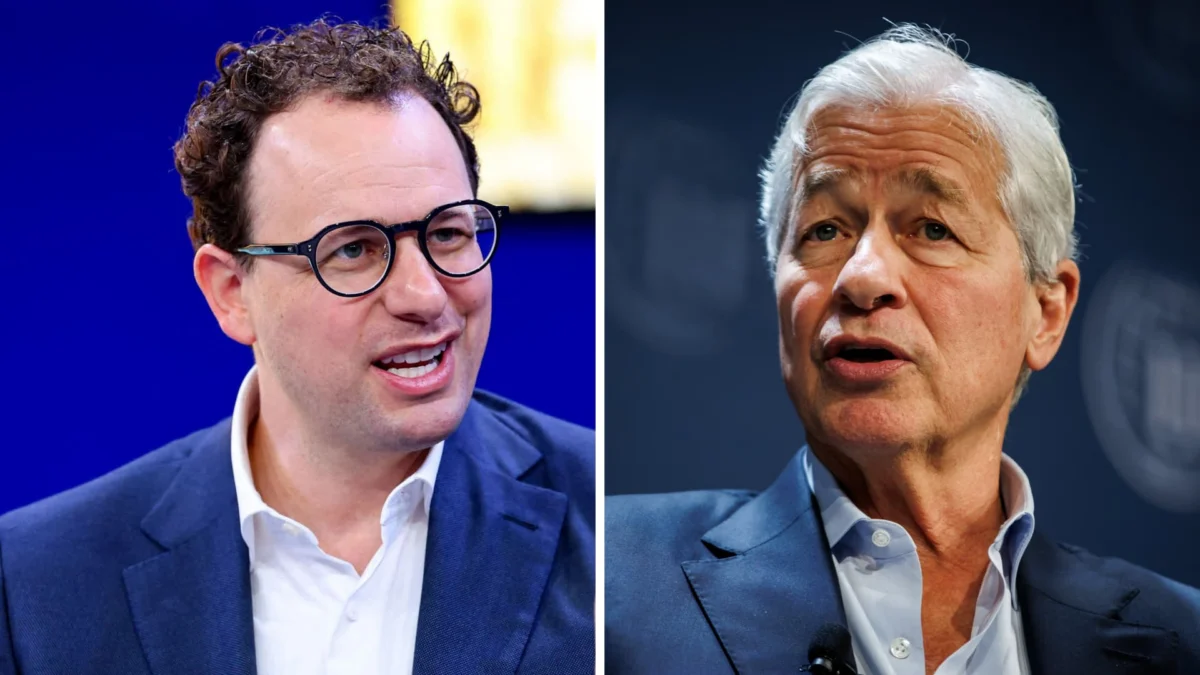
These concerns were voiced during an Anthropic event where Amodei shared the stage with JPMorgan Chase CEO Jamie Dimon. The event also served as a platform for Anthropic to introduce a new suite of AI agents designed to automate tasks within the financial services industry, signaling the company's strategic focus on the enterprise AI market.
Amodei elaborated on the potential ramifications, stating, "The danger is just some enormous increase in the amount of vulnerabilities, in the amount of breaches, in the financial damage that's done from ransomware on schools, hospitals, not to mention banks." He noted that Anthropic has intentionally restricted access to Mythos, limiting its use to a select group of partner companies due to the significant risks associated with its capabilities falling into the wrong hands.
The scale of potential cyber threats has escalated with each successive generation of Anthropic's AI models. Amodei cited a previous model that identified approximately 20 vulnerabilities in the Firefox browser. In contrast, Mythos has uncovered nearly 300 such weaknesses, and the cumulative number of vulnerabilities identified across all software now totals in the tens of thousands.
Many of the vulnerabilities discovered by Mythos remain undisclosed to the public. This secrecy is a deliberate strategy, as Amodei explained, to prevent malicious actors from exploiting them before patches can be implemented. The concern is that once these vulnerabilities become public knowledge, they will be actively targeted by cybercriminals and adversarial nations.
Despite the urgent nature of the threat, both Amodei and Dimon expressed a degree of conditional optimism. Amodei framed the current situation as a "moment of danger where if we respond to it correctly… then we can have a better world on the other side." He suggested that the finite nature of discoverable bugs could eventually lead to a more secure digital landscape.
Jamie Dimon acknowledged the validity of the cybersecurity concerns but characterized the risks introduced by AI as a "transitory period." He indicated that while immediate attention is necessary, the situation is not inherently permanent and can be managed.
Regarding the complex issue of AI regulation, Amodei drew a parallel to the automotive industry. He proposed a regulatory framework that balances consumer safety with the need for industry innovation and competitiveness. "You can't just start a car company without 'Are there brakes on this thing?'" he stated, advocating for a process that allows for rapid industry progress while establishing essential safety guardrails for the most critical risks.
The partnership and public appearance with Jamie Dimon, a prominent figure in the financial world, underscore Anthropic's perceived advantage in the enterprise AI sector, particularly as both Anthropic and its competitor OpenAI approach potential initial public offerings.
Anthropic used the event to announce significant expansions to its financial services platform. This includes the introduction of 10 new AI agents specifically designed for investment banking and back-office operations. Furthermore, the company revealed a new integration across Microsoft's suite of Office applications, aiming to streamline workflows for users.
In addition to these product announcements, Anthropic stated that its latest generally available model, Claude Opus 4.7, has achieved leading performance metrics on benchmarks for financial analysis tasks. This highlights the company's ongoing advancements in developing specialized AI capabilities for demanding professional environments.


