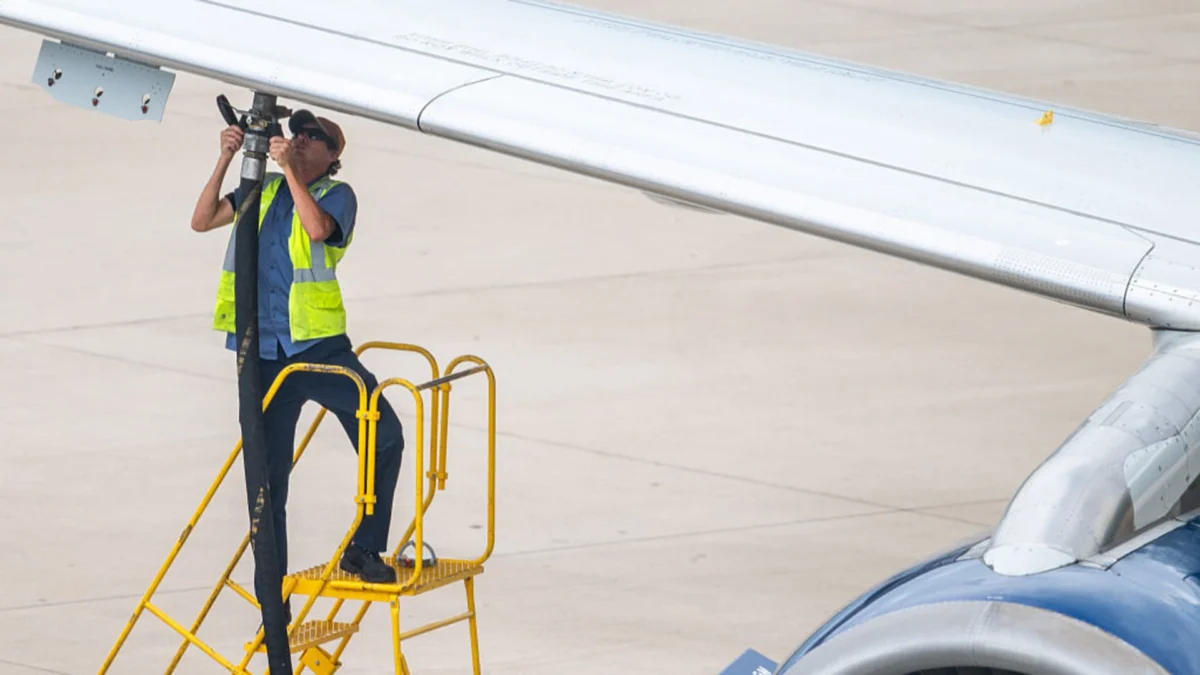
U.S. airlines experienced a significant surge in jet fuel expenditures in March, spending 56.4% more than in the preceding month, according to data released by the U.S. Department of Transportation. This substantial increase followed the commencement of U.S.-Israel strikes on Iran, an event that effectively led to the closure of the Strait of Hormuz, a critical global shipping lane.
In March, the total expenditure on jet fuel by U.S. carriers reached $5.06 billion. This marks a considerable rise from the $3.23 billion spent in February. The Department of Transportation also noted that this figure represented a 30% increase compared to what airlines paid for jet fuel in March of the previous year, 2025.
The escalating cost of fuel, which is the second-largest operational expense for airlines after labor, has prompted several carriers to revise their financial outlooks. Many have either lowered or completely withdrawn their earnings guidance for 2026, citing the volatile fuel prices as a primary reason.
In response to the increased costs and to mitigate financial strain, some airlines have begun to scale back their expansion plans. This strategic adjustment aims to reduce overall expenses and avoid accumulating excessive capacity in a market impacted by higher operating costs.
The upward pressure on jet fuel prices intensified in April, with costs in some regions exceeding $4 per gallon. This continued escalation is directly linked to the ongoing conflict and the sustained closure of the Strait of Hormuz.
The financial repercussions of the jet fuel surge have been particularly severe for some carriers. Spirit Airlines, which recently collapsed, cited the sharp rise in jet fuel costs as a major impediment to its plans to exit bankruptcy proceedings by mid-year.
Looking ahead, major airlines have communicated to investors that they anticipate passing on the increased jet fuel costs to consumers. Projections suggest this could occur by early 2027, or potentially by the end of the current year.
Despite the rising costs and economic pressures, current booking trends indicate that consumer travel demand remains robust. Data from the Airlines Reporting Corp. shows that travel agency ticket sales increased by 12% in March compared to the previous year, reaching $10.4 billion. This growth was accompanied by a 5% rise in domestic trips and a 1% increase in international travel.


