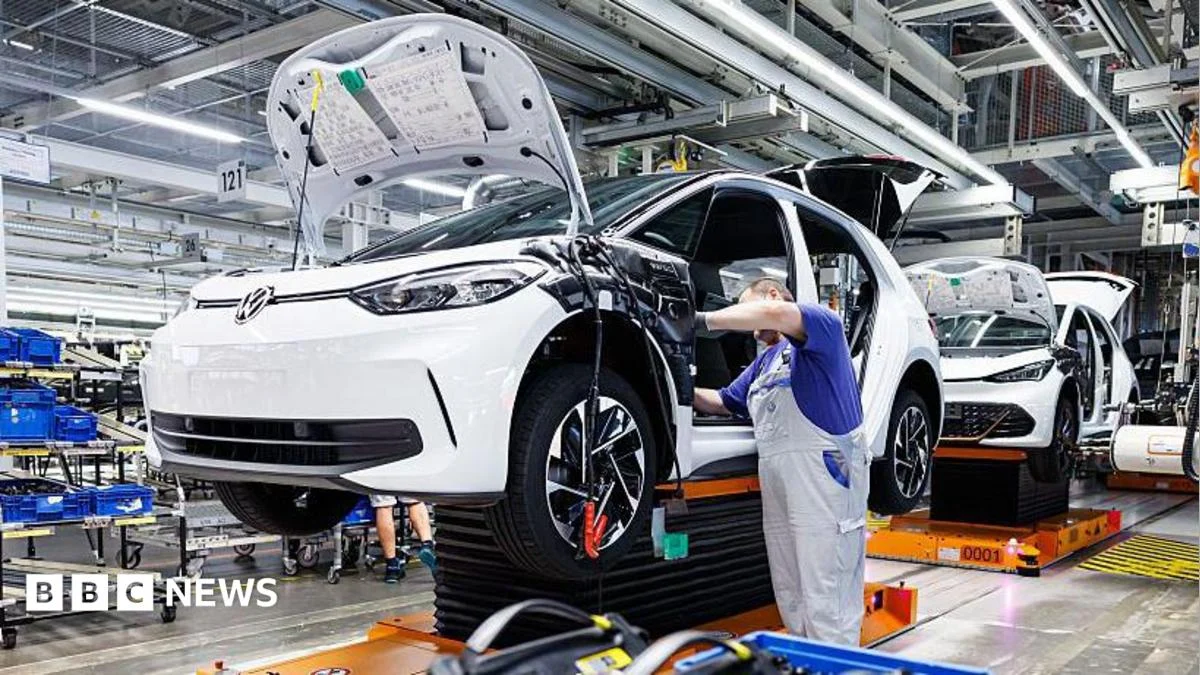
Volkswagen Group is reviewing a plan to reduce its global workforce by as many as 100,000 positions, a figure that doubles previous projections and points to broader restructuring across the group that includes Porsche, Audi, Seat, Skoda, and the VW brand. The update comes after a year of falling profits, driven by softer sales in key markets and intensified competition from Chinese brands expanding into Europe. In a widely circulated internal memo, chief executive Oliver Blume said the company’s costs were about 20% higher than those of rivals, and that further reductions in outlays were necessary.
He warned that the moves could translate into a theoretical loss of 50,000 jobs worldwide. “We are currently assessing across all brands, companies and regions how many adjustments are actually necessary and feasible,” Blume said, stressing a need to become more efficient, robust, and simpler, and to reduce costs. He also noted difficulty confirming alternative uses for four German plants that have faced closure threats; two plants, in Zwickau and Emden, are used for electric-car production, while others in Hanover and Neckarsulm are considered expensive to operate.
VW has faced a sequence of profit declines in recent years, with operating profit dropping from €22. 6 billion in 2023 to €19. 1 billion in 2024, and then to €8.
9 billion last year. The group has suffered from weaker sales in China, a previously strong market, with a 26% year-to-date drop in the first half of the year and more than 7% fall in US sales, partly attributed to tariffs on car imports under the Trump administration. The broader competitive environment features aggressive expansion by Chinese brands abroad, aided by lower production costs and new technologies, pressuring established automakers to keep costs under control and protecting thinner margins.
In late 2024, VW reached a deal with the German IG Metall union to cut 35,000 jobs at the VW brand by 2030, plus 15,000 jobs at other brands, in a “socially responsible manner. ” The latest discussions suggest a far larger, perhaps more sweeping set of adjustments. Last week, protests at VW sites across Germany preceded a meeting of VW’s supervisory board, which includes labor representatives alongside management.
Some analysts told Agence France Presse that VW may be using the 100,000 figure as a negotiating lever, with the final count likely to be lower.


