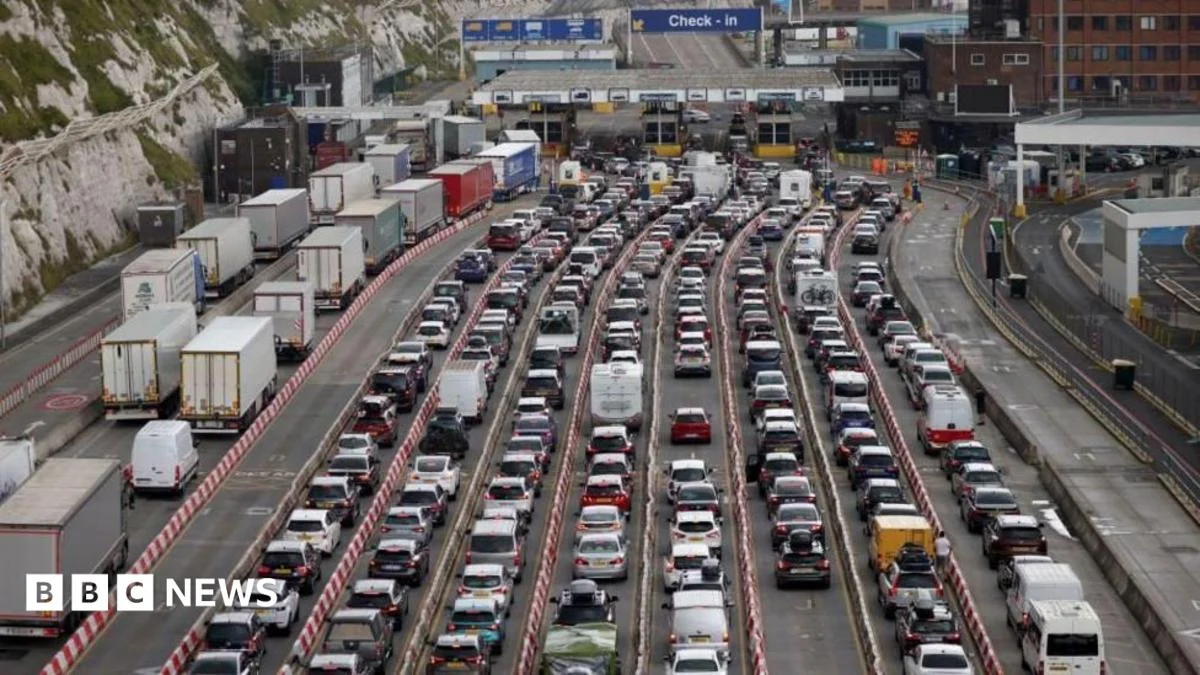
The Port of Dover has said it has done absolutely everything possible to prepare for the peak summer getaway, even as it faces ongoing questions about the EU’s Entry Exit System (EES) checks. Doug Bannister, the port’s chief executive, described as very disappointing that a dedicated EES processing facility at the Western Docks, built as part of a £40m investment, is not yet being used for cars because the technology has not been activated. EES, rolled out fully in April, requires passengers to have fingerprints registered and a photograph taken to enter the Schengen Area.
The port has already declared a critical incident in May during half-term after travel times surged to four-and-a-half hours on a day when about 8,500 outbound vehicles were processed. While many UK travellers pass through border controls at foreign airports, Dover, along with Eurotunnel’s Folkestone terminal and London St Pancras, houses juxtaposed border controls where EES checks can also occur. Bannister warned MPs that the port could face repeated episodes of severe congestion this summer unless the EU allows more flexibility in EES, a change that has not yet materialised.
With schools breaking up, outbound traffic is expected to rise as families head abroad. The port is projecting roughly 7,500 outbound cars for Friday, increasing to nearly 10,000 on Saturday, and around 10,500 outbound cars on 24 and 25 July. Earlier plans hoped more of these vehicles would complete EES registrations at the Western Docks facility, which features 84 kiosks to record biometric details. However, the French authorities have not yet switched the kiosks on, and no start date has been set for activation. Bannister reiterated that the facility had been delivered after a £40m capital investment and stressed the aim to handle peak volumes safely, even as he noted the remaining uncertainties around how EES will affect travel.
Transport Secretary Heidi Alexander recently met with French counterpart Philippe Tabarot to press for a pragmatic approach to EES checks. Bannister added that he had personally leaned in to ensure the messaging was clear. In addition to the operational investments, the government announced about £20m in new funding to boost Kent infrastructure to reduce delays, on top of a prior £10.5m investment shared by the three English sites with juxtaposed border controls.
Travel guidance from the port urges holidaymakers to use main roads and to arrive no more than two hours before their booked sailing. The port has also prepared new border positions in its ferry terminal in anticipation of the peak season. The ongoing EES rollout remains a critical factor for Dover’s summer operations, with the outcome hinging on EU flexibility and activation of the Western Docks facilities.


