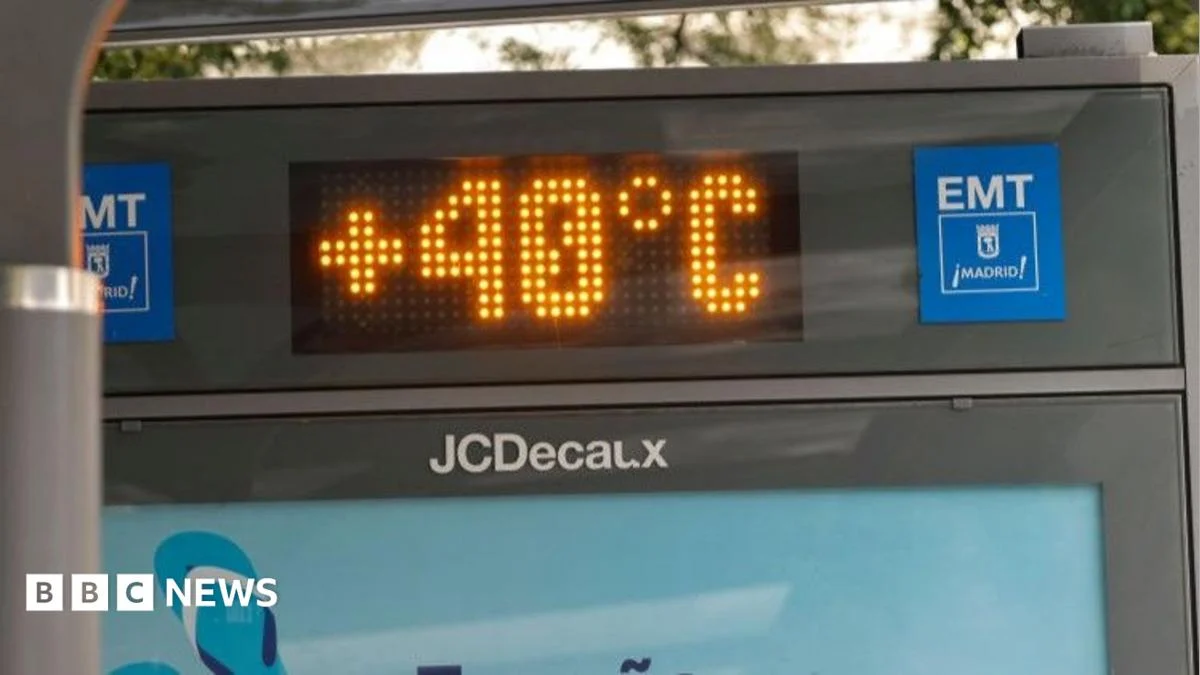
As one of France’s hottest days on record unfolded on 23 June, residents in Paris faced disruptions, with the Eiffel Tower closing early as temperatures soared. In Brittany’s Ergué-Gabéric, a transformer buckled under around 40C, the chunky metal cabinet malfunctioning and initially plunging more than 100,000 people into darkness. Local authorities labeled the incident heat related, and a BBC video appeared to show smoke emanating from one of the facility’s components. A spokeswoman for power company RTE confirmed to the BBC that the footage depicted a firm installation.
Just a day before, RTE issued a statement saying there was “no concern” about electricity availability across its network for the summer. Yet the episode highlights a broader truth: technology itself has limits when exposed to soaring temperatures. Electrical and telecoms equipment, and railway signalling cabinets, can falter during heatwaves, sometimes even triggering alarms. Heat-troubled tech is increasingly a focus as climate change drives more frequent, intense heat events.
The issue extends beyond a single transformer. For instance, six NHS trusts in England reported critical IT-system disruptions amid hot weather, affecting scanners, cancer and laboratory equipment. As engineers adapt infrastructure to cope, they are confronting how heat reduces efficiency across networks. Iain Staffell of Imperial College London notes, “Anything to do with the electricity network – the power lines, interconnectors and transformers – they all struggle to keep themselves cool enough.” In tests, Staffell and colleagues estimate that at 40C, gas-fired power-station output drops roughly 10% relative to 20C. Solar panels, while also affected by higher temperatures, have shown improvements with newer panel generations, and in the UK data indicate that once temperatures exceed 27C, solar output plateaus and starts to fall gradually as heat continues. Still, sunny spells during heatwaves can boost solar output versus previous cloudier days, according to Utility Bidder.
Beyond generation, transmission lines themselves are challenged. Metal cables expand in heat, causing sagging that can threaten safety or trigger outages if lines touch trees or structures. “There is a limit to how much sag you can allow,” says Simon Hogg, a Durham University consultant. To minimize risk, operators curtail electricity flow during heatwaves. The Energy Networks Association notes ongoing climate-resilience strategies as the UK’s energy networks cope with heat, a standing described by Hogg as a “success story.”
Historical heat events also illustrate the risk. During the July 2022 British heatwave, temperatures surpassed 40C in parts of the UK, and overheating led to power cuts affecting thousands. In London, hospital data centres at Guy’s and St Thomas’ hospitals failed, forcing operation cancellations. A report published the following year traced the sequence of events, including cooling attempts at 13.30 on 19 July and subsequent temperature spikes in the data rooms: 36.2C at one centre within the hour, and 50.3C at another.
Security systems can also react to unusual heat. Motion sensors in security alarms may misinterpret rapid temperature changes as movement, prompting false alarms. Electronic components such as processors and circuit boards dislike excessive heat, with excessive temperatures causing expansion of metal connections and tiny cracks, raising the chance of data errors, also known as bit errors. In some exposed cabinets, operators have added shielding or cooling to mitigate heat, though many sites remain vulnerable to extreme conditions.
Rail infrastructure faces its own thermal challenges. Metal cabinets housing signalling equipment can see interior temperatures exceed 70C during heatwaves. Last year, rail operator Southeastern began testing liquid-based cooling in such cabinets, a method that does not require electricity to operate. Industry observers note a trend toward insulating or ventilating cabinets, and expanding cooling capacity as more heat-generating equipment accumulates in those spaces. Still, the risk of widespread communications problems due to overheating is considered low by some experts.
However, the wider effects are clear. Knock-on outages from power cuts caused by extreme heat could disrupt digital payments, transport services and public services, with the independent Climate Change Committee warning of potential billions in costs in a May report. To address thermal stress, experts advocate expanding network capacity and improving ventilation, cooling, and related infrastructure. They emphasize that adapting to more frequent and hotter summers will be essential for maintaining reliability across critical tech and energy systems.
In the longer run, the message is that Europe’s and Britain’s essential tech networks will require continued adaptation to climate realities. As Staffell puts it, “There's going to be more and more summers like this. We are going to have to adapt.” With heatwaves set to persist, engineers and policymakers alike are weighing how best to balance reliability, resilience, and cost as temperatures climb.


